EasyManua.ls Logo

Panasonic U-140PZ2R5 - User Manual

Panasonic U-140PZ2R5
20 pages
Print Icon
To Next Page IconTo Next Page
Loading...
Operating Instructions
Air Conditioner
Model No.
INDOOR UNIT
Low Silhouette Ducted
(Type F1)
S-36PF1E5B
S-45PF1E5B
S-50PF1E5B
S-60PF1E5B
S-71PF1E5B
S-100PF1E5B
S-125PF1E5B
S-140PF1E5B
Ceiling
(Type T2)
S-36PT2E5B
S-45PT2E5B
S-50PT2E5B
S-60PT2E5B
S-71PT2E5B
S-100PT2E5B
S-125PT2E5B
S-140PT2E5B
OUTDOOR UNIT
Single Split
See the page 82.
ENGLISH
2 ~ 9
Before operating the unit, read these operating instructions thoroughly and
keep them for future reference.
FRANÇAIS
10 ~ 17
Avant d’utiliser l’appareil, lisez ce mode d’emploi dans son intégralité et
conservez-le pour toute référence ultérieure.
ESPAÑOL
18 ~ 25
Antes de operar la unidad, lea atentamente estas instrucciones de
funcionamiento y guárdelas para futuras consultas.
DEUTSCH
26 ~ 33
Bevor Sie das Gerät in Betrieb nehmen, lesen Sie bitte diese
Bedienungsanleitung aufmerksam durch und bewahren Sie sie für die
künftige Verwendung auf.
ITALIANO
34 ~ 41
Prima di utilizzare l’unità, leggere a fondo queste istruzioni per l’uso e
conservarle come riferimento futuro.
NEDERLANDS
42 ~ 49
Lees deze gebruiksinstructies goed door voor u het apparaat gebruikt en
bewaar ze voor toekomstig gebruik.
PORTUGUÊS
50 ~ 57
Antes de utilizar o aparelho, leia completamente este manual de instruções
e guarde-o para futuras referências.
EΛΛΗΝΙΚΆ
58 ~ 65
Πριν θέσετε τη μονάδα σε λειτουργία, διαβάστε πολύ καλά αυτές τις οδηγίες
χρήσης και διατηρήστε τις για μελλοντική αναφορά.
БЪЛГАРСКИ
66 ~ 73
Преди да започнете експлоатация на този уред, прочетете внимателно
тези инструкции и ги запазете, за да можете да правите справки с тях и
в бъдеще.
TÜRKÇE
74 ~ 81
Üniteyi çalıştırmadan önce bu çalıştırma talimatlarını iyice okuyun ve
gelecekte başvurmak için saklayın.
ENGLISH
FRANÇAIS
ESPAÑOL
DEUTSCH
ITALIANO
NEDERLANDS
PORTUGUÊS
EΛΛΗΝΙΚΆ
БЪЛГАРСКИ
Panasonic Corporation
1006 Kadoma, Kadoma City, Osaka, Japan
ACXF55-19081
TÜRKÇE
Low Silhouette Ducted
(Type F1 )
Ceiling
(Type T2)
OI_00_301034_EU.indb 1 2018/1/30 13:59:57

Other manuals for Panasonic U-140PZ2R5

Questions and Answers

Summary

Safety Precautions

Safety Symbols and Warnings

Explains warning symbols like WARNING and CAUTION and their meanings for safe operation.

Flammable Refrigerant Warnings

Details warnings regarding the use of flammable refrigerants and potential ignition hazards.

Critical Safety Warnings

Highlights critical warnings regarding refrigerant type, ventilation, and appliance usage.

Operational Safety Guidelines

Refrigerant and Electrical Safety

Covers refrigerant contact with flame, power disconnection, grounding, and wiring.

Installation and Usage Environment

Covers ignition sources, ventilation, room size, and prohibitions on unit modification.

Maintenance and Repair Safety

Emphasizes cleaning by authorized personnel and avoiding self-repair.

Usage Restrictions and Safety Procedures

Abnormality Handling and General Precautions

Instructs to stop use on failure and avoid sitting or stepping on the unit.

Intended Use and Supervision Guidelines

Defines intended users, child supervision, and European market guidelines.

Operational and Physical Safety

Covers fire alarm distance, fan safety, and avoiding contact with unit parts.

Precautions for Use

Installation Precautions

Emphasizes proper installation by qualified technicians and voltage checks.

Unsuitable Installation Locations

Lists locations to avoid for installation due to smoke, gas, high temperatures, or heat-generating objects.

Outdoor Unit Location Considerations

Advises against installing the outdoor unit near salty sea water or in sulphurous air to prevent corrosion.

Wiring Requirements

Details that all wiring must conform to local codes and units must be properly grounded.

Operation Preparation

Instructs to turn power on 5 hours before operation for warm-up.

Energy Saving Tips

Provides tips on maintaining airflow, using shades, cleaning filters, and keeping doors/windows closed.

Component Identification

Indoor Unit Components

Identifies parts for Low Silhouette Ducted (Type F1) and Ceiling (Type T2) indoor units.

Outdoor Unit Components

Illustrates and labels components for various outdoor unit models.

Optional Remote Controllers

Details available remote controller options: Wireless, Timer, and High-spec Wired.

Airflow Direction Adjustment

Refers to separate operating instructions for adjusting airflow direction.

Maintenance Procedures

Cleaning Safety Precautions

Highlights safety measures during cleaning, like turning off power and avoiding water on the unit.

Air Filter Maintenance

Instructs to consult dealer/service center for filter indicator and mentions cleaning the outdoor unit.

Operation Mechanism Details

Explains heating performance, defrosting cycles, 'DRY' mode operation, and behavior during power failures.

Troubleshooting Guide

Indoor Unit Troubleshooting

Addresses common indoor unit issues like noise, odors, dewdrops, fog, airflow, and dust.

Outdoor Unit Troubleshooting

Covers outdoor unit issues such as no operation, noise during heating, steam, and fan rotation after stop.

Before Requesting Service

Troubleshooting Common Issues

Guides users on checking power, airflow, filter, and temperature settings before contacting service.

Contacting Service and Repair Safety

Instructs to stop operation, contact dealer with details, and warns against self-repair.

Connectable Outdoor Unit Lineup

Europe Unit Lineup

Lists connectable outdoor units for Europe, categorized by refrigerant type (R410A, R32).

Oceania Unit Lineup

Lists connectable outdoor units for Oceania, categorized by refrigerant type (R410A, R32).

Indoor Unit Specifications

Low Silhouette Ducted (Type F1) Specifications

Details specifications for Type F1 indoor units, including power, capacity, sound, and dimensions.

Operating Temperature Ranges

Specifies the operating temperature conditions for cooling and heating modes.

Indoor Unit Specifications (Continued)

Ceiling (Type T2) Specifications

Details specifications for Type T2 indoor units, including power, capacity, sound, and dimensions.

Operating Temperature Ranges

Specifies the operating temperature conditions for cooling and heating modes.

Outdoor Unit Specifications (R410 A)

Europe (R410 A)

Lists specifications for European single split outdoor units using R410A refrigerant.

Oceania (R410 A)

Lists specifications for Oceania single split outdoor units using R410A refrigerant.

Operating Temperature Ranges

Specifies the operating temperature conditions for cooling and heating modes.

Outdoor Unit Specifications (R32 - Part 1)

Europe (R32)

Details European R32 outdoor unit specifications including capacity and dimensions.

Oceania (R32)

Details Oceania R32 outdoor unit specifications including capacity and dimensions.

Operating Temperature Ranges

Specifies the operating temperature conditions for cooling and heating modes.

Outdoor Unit Specifications (R32 - Part 2)

Europe (R32)

Details European R32 outdoor unit specifications including capacity and dimensions.

Oceania (R32)

Details Oceania R32 outdoor unit specifications including capacity and dimensions.

Operating Temperature Ranges

Specifies the operating temperature conditions for cooling and heating modes.

Corresponding Language Table

Unit Type Language Equivalents

Provides translations for unit types like Low Silhouette Ducted and Ceiling across multiple languages.

Technical Term Language Equivalents

Lists translations for technical specifications such as Model Name, Cooling Capacity, and Sound Pressure Level.

Corresponding Language Table (Continued)

Technical Term Language Equivalents (Part 2)

Provides translations for technical specifications from English to Italian, Dutch, Greek, Bulgarian, and Portuguese.

Technical Term Language Equivalents (Part 3)

Provides translations for technical specifications from English to Turkish.

Corresponding Language Table (Continued)

Ceiling Panel Dimension Notes

Clarifies that language table values include dimensions and weight of optional ceiling panels.

Remote Controller Fan Speed Display

Provides translations for the fan speed display on the remote controller across languages.

Outdoor Unit Operating Instructions

Directs users to refer to the operating instructions supplied with the outdoor unit for specific details.

Summary

Safety Precautions

Safety Symbols and Warnings

Explains warning symbols like WARNING and CAUTION and their meanings for safe operation.

Flammable Refrigerant Warnings

Details warnings regarding the use of flammable refrigerants and potential ignition hazards.

Critical Safety Warnings

Highlights critical warnings regarding refrigerant type, ventilation, and appliance usage.

Operational Safety Guidelines

Refrigerant and Electrical Safety

Covers refrigerant contact with flame, power disconnection, grounding, and wiring.

Installation and Usage Environment

Covers ignition sources, ventilation, room size, and prohibitions on unit modification.

Maintenance and Repair Safety

Emphasizes cleaning by authorized personnel and avoiding self-repair.

Usage Restrictions and Safety Procedures

Abnormality Handling and General Precautions

Instructs to stop use on failure and avoid sitting or stepping on the unit.

Intended Use and Supervision Guidelines

Defines intended users, child supervision, and European market guidelines.

Operational and Physical Safety

Covers fire alarm distance, fan safety, and avoiding contact with unit parts.

Precautions for Use

Installation Precautions

Emphasizes proper installation by qualified technicians and voltage checks.

Unsuitable Installation Locations

Lists locations to avoid for installation due to smoke, gas, high temperatures, or heat-generating objects.

Outdoor Unit Location Considerations

Advises against installing the outdoor unit near salty sea water or in sulphurous air to prevent corrosion.

Wiring Requirements

Details that all wiring must conform to local codes and units must be properly grounded.

Operation Preparation

Instructs to turn power on 5 hours before operation for warm-up.

Energy Saving Tips

Provides tips on maintaining airflow, using shades, cleaning filters, and keeping doors/windows closed.

Component Identification

Indoor Unit Components

Identifies parts for Low Silhouette Ducted (Type F1) and Ceiling (Type T2) indoor units.

Outdoor Unit Components

Illustrates and labels components for various outdoor unit models.

Optional Remote Controllers

Details available remote controller options: Wireless, Timer, and High-spec Wired.

Airflow Direction Adjustment

Refers to separate operating instructions for adjusting airflow direction.

Maintenance Procedures

Cleaning Safety Precautions

Highlights safety measures during cleaning, like turning off power and avoiding water on the unit.

Air Filter Maintenance

Instructs to consult dealer/service center for filter indicator and mentions cleaning the outdoor unit.

Operation Mechanism Details

Explains heating performance, defrosting cycles, 'DRY' mode operation, and behavior during power failures.

Troubleshooting Guide

Indoor Unit Troubleshooting

Addresses common indoor unit issues like noise, odors, dewdrops, fog, airflow, and dust.

Outdoor Unit Troubleshooting

Covers outdoor unit issues such as no operation, noise during heating, steam, and fan rotation after stop.

Before Requesting Service

Troubleshooting Common Issues

Guides users on checking power, airflow, filter, and temperature settings before contacting service.

Contacting Service and Repair Safety

Instructs to stop operation, contact dealer with details, and warns against self-repair.

Connectable Outdoor Unit Lineup

Europe Unit Lineup

Lists connectable outdoor units for Europe, categorized by refrigerant type (R410A, R32).

Oceania Unit Lineup

Lists connectable outdoor units for Oceania, categorized by refrigerant type (R410A, R32).

Indoor Unit Specifications

Low Silhouette Ducted (Type F1) Specifications

Details specifications for Type F1 indoor units, including power, capacity, sound, and dimensions.

Operating Temperature Ranges

Specifies the operating temperature conditions for cooling and heating modes.

Indoor Unit Specifications (Continued)

Ceiling (Type T2) Specifications

Details specifications for Type T2 indoor units, including power, capacity, sound, and dimensions.

Operating Temperature Ranges

Specifies the operating temperature conditions for cooling and heating modes.

Outdoor Unit Specifications (R410 A)

Europe (R410 A)

Lists specifications for European single split outdoor units using R410A refrigerant.

Oceania (R410 A)

Lists specifications for Oceania single split outdoor units using R410A refrigerant.

Operating Temperature Ranges

Specifies the operating temperature conditions for cooling and heating modes.

Outdoor Unit Specifications (R32 - Part 1)

Europe (R32)

Details European R32 outdoor unit specifications including capacity and dimensions.

Oceania (R32)

Details Oceania R32 outdoor unit specifications including capacity and dimensions.

Operating Temperature Ranges

Specifies the operating temperature conditions for cooling and heating modes.

Outdoor Unit Specifications (R32 - Part 2)

Europe (R32)

Details European R32 outdoor unit specifications including capacity and dimensions.

Oceania (R32)

Details Oceania R32 outdoor unit specifications including capacity and dimensions.

Operating Temperature Ranges

Specifies the operating temperature conditions for cooling and heating modes.

Corresponding Language Table

Unit Type Language Equivalents

Provides translations for unit types like Low Silhouette Ducted and Ceiling across multiple languages.

Technical Term Language Equivalents

Lists translations for technical specifications such as Model Name, Cooling Capacity, and Sound Pressure Level.

Corresponding Language Table (Continued)

Technical Term Language Equivalents (Part 2)

Provides translations for technical specifications from English to Italian, Dutch, Greek, Bulgarian, and Portuguese.

Technical Term Language Equivalents (Part 3)

Provides translations for technical specifications from English to Turkish.

Corresponding Language Table (Continued)

Ceiling Panel Dimension Notes

Clarifies that language table values include dimensions and weight of optional ceiling panels.

Remote Controller Fan Speed Display

Provides translations for the fan speed display on the remote controller across languages.

Outdoor Unit Operating Instructions

Directs users to refer to the operating instructions supplied with the outdoor unit for specific details.

Overview

This document provides operating instructions for a Panasonic Air Conditioner, covering both Low Silhouette Ducted (Type F1) and Ceiling (Type T2) indoor units, as well as various outdoor unit models. It emphasizes safety, proper usage, and maintenance to ensure optimal performance and longevity of the appliance.

Function Description

The Panasonic Air Conditioner is designed to provide comfortable room conditions by performing cooling and heating operations. It utilizes a heat pump system for heating, which means its heating performance may be affected by outside temperatures. The unit is equipped with various features to manage airflow, temperature, and operational efficiency.

The indoor units, available in Low Silhouette Ducted (Type F1) and Ceiling (Type T2) types, are responsible for distributing conditioned air within the room. The outdoor units, including models from the PE1, PE2, PEY1, PEY2, and PZ2 series, house the compressor and other components necessary for the refrigeration cycle. The system supports different refrigerant types, including R410A and R32, depending on the specific model and region (Europe or Oceania).

The air conditioner can be controlled using optional remote controllers: a Wireless Remote Controller (CZ-RWST3 for Type T2, CZ-RWSC3 for all indoor units), a Timer Remote Controller (CZ-RTC4 for all indoor units), or a High-spec Wired Remote Controller (CZ-RTC5A/CZ-RTC5B for all indoor units). These controllers allow users to adjust settings such as fan speed, temperature, and operation mode.

The unit also incorporates several automatic functions to enhance user comfort and protect the system. During cooling operation, if the room temperature reaches the set level, the outdoor unit will cycle on and off automatically. Similarly, during "DRY" operation, the indoor unit fan may stop when the outdoor unit is off to prevent humidity from rising. The fan speed may also automatically adjust to a "breeze" setting when the room temperature is close to the set level.

For heating, the appliance may initiate a defrosting operation to melt frost that forms on the outdoor unit. During defrosting, the indoor unit fan may stop or run at a very slow speed, indicated by a "STANDBY" message on the remote controller. Heating operation resumes after several minutes once the indoor heat exchanger coil warms up sufficiently. In the event of a temporary power failure, the unit is designed to automatically resume operation with the same settings once power is restored.

Usage Features

To ensure safe and efficient operation, users are advised to read the operating instructions thoroughly before using the air conditioner.

Safety Precautions:

  • Always confirm the specified refrigerant type with an authorized dealer or specialist. Using an incorrect refrigerant can cause severe damage and injury.
  • The air conditioner does not provide fresh air ventilation. When using gas or oil heating appliances in the same room, open doors or windows frequently to prevent oxygen depletion and potential suffocation.
  • Never use or store flammable vapors or liquids near the unit.
  • Avoid touching the unit with wet hands.
  • Do not insert fingers or other objects into the indoor or outdoor units, as rotating parts can cause injury.
  • Ensure the appliance is stored in a well-ventilated area, away from continuously operating ignition sources.
  • Do not modify or disassemble the unit.
  • In case of any abnormality (e.g., frequent ELCB trips, burnt odor, abnormal noise, water leaks, abnormal heat, uncontrolled fan speed), immediately stop using the unit, disconnect power, and contact a dealer for maintenance or repair.
  • Do not sit or step on the unit.

Installation and Wiring:

  • Installation must be performed by qualified technicians according to the provided instructions.
  • Verify that the electrical supply voltage matches the unit's nameplate specifications.
  • Avoid installing the unit in locations with smoke, combustible gas, extremely high temperatures, or where heat-generating objects are placed.
  • The outdoor unit should not be installed where salty seawater or sulphurous air can directly splash onto it, to prevent heavy corrosion.
  • All wiring must comply with local electrical codes and be performed by a qualified electrician. Each unit must be properly grounded, and an exclusive power outlet with overcurrent protection (ELCB or RCD) must be provided.

Operation Preparation:

  • Turn on the power mains 5 hours before the initial start of operation (for warm-up).
  • For continuous use, leave the power mains ON.
  • If the unit will not be used for a long time, pull off the power plug or switch off the breaker to isolate it from the main power supply.

Energy Saving Tips:

  • Do not block the air intake and outlet of the unit.
  • During cooling, use sunshades, blinds, or curtains to prevent direct sunlight from entering the room.
  • Keep windows, doors, and other openings closed to prevent conditioned air from escaping.

Maintenance Features

Regular maintenance is crucial for the air conditioner's performance and longevity.

Air Filter Maintenance:

  • The air filter should always be kept clean, as a clogged filter impairs unit performance.
  • Consult your dealer or service center when the "Filter" indicator appears on the wired remote controller display.

General Cleaning:

  • For safety, always turn off the air conditioner and disconnect the power before cleaning.
  • Do not pour water on the indoor unit, as this can damage internal components and cause electric shock.
  • Wipe plastic parts with a soft cloth. If very dirty, use a cloth moistened with water.
  • Avoid using solvents, harsh chemicals, or very hot water, as these can cause deformation or discoloration of plastic parts.
  • Be cautious when cleaning metal edges and fins, as they can be sharp.
  • For indoor units installed in high locations, use a firm stool or ladder for cleaning.
  • The internal coil and other components of the outdoor unit must be cleaned periodically by a dealer or service center. Users should not attempt to clean the inside of the indoor and outdoor units themselves.

Troubleshooting: The manual provides a comprehensive troubleshooting guide for common issues, including:

  • Noise: Streaming water sounds (refrigerant flow, drainage), cracking noises (temperature changes of parts).
  • Air Quality: Discharged air smells (accumulated odors, dirty unit), dewdrops near air outlet (cooled internal moisture), fog during cooling (dirty heat exchanger), fog during heating (defrost operation).
  • Fan Operation: Fan rotating after operation stops (smooth operation, drying heat exchanger), airflow direction changes or cannot be set (low discharge temperature, defrost operation, flap movement).
  • Dust Discharge: Dust accumulated inside the indoor unit being discharged.
  • Initial High-Speed Operation: Fan rotating faster than setting speed for 3-30 minutes (operation check).
  • No Operation: No operation immediately after power on/resume (compressor protection circuit), unit not starting when turned on (breaker off, power button off, fuse blown), clogged air intake/outlet.
  • Poor Cooling/Heating: Fan speed set to "Low", improper temperature settings, direct sunlight exposure, open doors/windows, clogged air filter, too many heat sources, too many people in the room.
  • Outdoor Unit Issues: Noise during heating (defrost operation), steam during heating (defrost operation), fan rotating after operation stops (smooth operation).

If the air conditioner does not work properly after checking these items, users are instructed to stop operation, turn off the power, and contact their dealer, reporting the serial number and any error codes displayed on the remote controller. Self-repair is strongly discouraged due to safety risks.

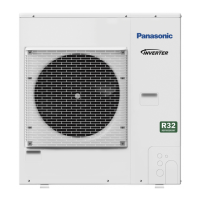
Panasonic U-140PZ2R5 Specifications

General IconGeneral
CategoryAir Conditioner
Energy Efficiency Ratio (EER)3.21
Coefficient of Performance (COP)3.61
RefrigerantR410A
Power Supply3 Phase, 400 V, 50 Hz

Related product manuals