EasyManua.ls Logo

Panasonic YT-30TSW - User Manual

Panasonic YT-30TSW
15 pages
Print Icon
To Next Page IconTo Next Page
Loading...
Thank you for your purchase of Panasonic welding power source.
Before operating this product, please read the instructions carefully and save this
manual for future use.First of all, please read “Safety precautions” or “Safety
manual”.
SPEC. No.YT-30TSW2HAF
Panasonic Welding Systems (Tangshan) Co., Ltd.
WTT013TC0PAA01
Model No.YT-30TSW
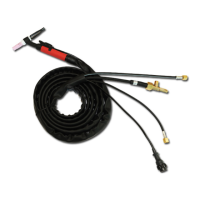
TIG Welding Torch
Operating Instructions
Question and Answer IconNeed help?

Do you have a question about the Panasonic YT-30TSW and is the answer not in the manual?

Summary

Panasonic TIG Welding Torch Operating Instructions

Model Information

Specifies the model number (YT-30TSW) of the TIG welding torch.

Product Feature Overview

Highlights the torch's compact and lightweight design for TIG welding.

Safety Warnings and Precautions

Hazard Symbols and Interpretation

Explains hazard symbols and their meanings for safe operation.

Manufacturer Disclaimer

Outlines limitations of liability for Panasonic Welding Systems.

General Safety Guidelines

Power Source Safety Rules

Essential safety instructions for operating the welding power source.

Electrical Safety Measures

Precautions to prevent electric shock during use and maintenance.

Environmental Safety Controls

Guidelines on ventilation and protective equipment for welding environments.

Fire and Explosion Prevention

Steps to mitigate risks of fire, explosion, or blowouts.

Specific Operational Safety

Personal Protection During Welding

Recommendations for protective gear for eyes, skin, and hearing.

Gas System Safety

Safe practices for handling gas cylinders and regulators.

Mechanical Hazard Awareness

Warnings regarding rotating parts and potential entanglement.

Welding Wire Handling Safety

Safe procedures for managing welding wire and its feed.

Electrical Insulation Maintenance

Preventing electrical fires due to insulation deterioration.

Using the Torch: Conditions and Procedures

Environmental Operating Conditions

Defines acceptable temperature and humidity ranges for torch operation.

Cooling Water System Requirements

Critical specifications for cooling water flow and pressure.

Cable Hose Handling Precautions

Instructions to avoid damaging the torch cable hose.

Welding and Part Exchange Safety

Cautions to follow during welding and when replacing torch parts.

Preparation and Setup

Connecting to Power Source

Proper procedures for connecting the torch to the welding power unit.

Electrode Type Selection

Guidance on choosing the correct electrode material for welding.

Electrode Diameter and Current Matching

Table correlating electrode diameter with welding current ranges.

Nozzle Selection Criteria

Factors to consider when selecting the appropriate nozzle size.

Torch Assembly and Operation Details

Collet and Collet Body Selection

How to choose collets and collet bodies based on electrode size.

Torch Joint Connection Integrity

Ensuring secure connections at the torch joint to prevent issues.

Torch Body Assembly Steps

Step-by-step instructions for assembling torch body components.

Shield Gas Post-Flow Importance

The necessity of post-flow gas to protect the tungsten electrode.

Securing the Torch Safely

Safety guidelines for fixing the torch during use.

Using TIG MATE Accessory

Guidance on integrating the TIG MATE auto feeder with the torch.

Parts Identification and Lists

Standard Torch Parts

Comprehensive list of standard parts with codes and descriptions.

Optional Torch Parts

Catalog of optional components and accessories available for the torch.

Detailed Component Information

Nozzles and Gas Lens Components

Specifics on various nozzles and gas lens types.

Collet Body Variations

Details on standard and gas lens collet bodies for different electrode diameters.

Additional Parts and Electrodes

Miscellaneous Parts and Electrode Types

Lists other components and electrode materials like Thori-Tun, Ceri-Tun, Lan-Tun.

Assembly Diagram

Torch Component Exploded View

Visual guide showing how all torch parts fit together.

Specifications and External View

Key Technical Specifications

Summary of performance data, ratings, and standards.

Torch External Dimensions

Diagram showing physical measurements and interface details.

Package Contents

Included Accessories List

Details the quantity and type of accessories provided with the torch.

Summary

Panasonic TIG Welding Torch Operating Instructions

Model Information

Specifies the model number (YT-30TSW) of the TIG welding torch.

Product Feature Overview

Highlights the torch's compact and lightweight design for TIG welding.

Safety Warnings and Precautions

Hazard Symbols and Interpretation

Explains hazard symbols and their meanings for safe operation.

Manufacturer Disclaimer

Outlines limitations of liability for Panasonic Welding Systems.

General Safety Guidelines

Power Source Safety Rules

Essential safety instructions for operating the welding power source.

Electrical Safety Measures

Precautions to prevent electric shock during use and maintenance.

Environmental Safety Controls

Guidelines on ventilation and protective equipment for welding environments.

Fire and Explosion Prevention

Steps to mitigate risks of fire, explosion, or blowouts.

Specific Operational Safety

Personal Protection During Welding

Recommendations for protective gear for eyes, skin, and hearing.

Gas System Safety

Safe practices for handling gas cylinders and regulators.

Mechanical Hazard Awareness

Warnings regarding rotating parts and potential entanglement.

Welding Wire Handling Safety

Safe procedures for managing welding wire and its feed.

Electrical Insulation Maintenance

Preventing electrical fires due to insulation deterioration.

Using the Torch: Conditions and Procedures

Environmental Operating Conditions

Defines acceptable temperature and humidity ranges for torch operation.

Cooling Water System Requirements

Critical specifications for cooling water flow and pressure.

Cable Hose Handling Precautions

Instructions to avoid damaging the torch cable hose.

Welding and Part Exchange Safety

Cautions to follow during welding and when replacing torch parts.

Preparation and Setup

Connecting to Power Source

Proper procedures for connecting the torch to the welding power unit.

Electrode Type Selection

Guidance on choosing the correct electrode material for welding.

Electrode Diameter and Current Matching

Table correlating electrode diameter with welding current ranges.

Nozzle Selection Criteria

Factors to consider when selecting the appropriate nozzle size.

Torch Assembly and Operation Details

Collet and Collet Body Selection

How to choose collets and collet bodies based on electrode size.

Torch Joint Connection Integrity

Ensuring secure connections at the torch joint to prevent issues.

Torch Body Assembly Steps

Step-by-step instructions for assembling torch body components.

Shield Gas Post-Flow Importance

The necessity of post-flow gas to protect the tungsten electrode.

Securing the Torch Safely

Safety guidelines for fixing the torch during use.

Using TIG MATE Accessory

Guidance on integrating the TIG MATE auto feeder with the torch.

Parts Identification and Lists

Standard Torch Parts

Comprehensive list of standard parts with codes and descriptions.

Optional Torch Parts

Catalog of optional components and accessories available for the torch.

Detailed Component Information

Nozzles and Gas Lens Components

Specifics on various nozzles and gas lens types.

Collet Body Variations

Details on standard and gas lens collet bodies for different electrode diameters.

Additional Parts and Electrodes

Miscellaneous Parts and Electrode Types

Lists other components and electrode materials like Thori-Tun, Ceri-Tun, Lan-Tun.

Assembly Diagram

Torch Component Exploded View

Visual guide showing how all torch parts fit together.

Specifications and External View

Key Technical Specifications

Summary of performance data, ratings, and standards.

Torch External Dimensions

Diagram showing physical measurements and interface details.

Package Contents

Included Accessories List

Details the quantity and type of accessories provided with the torch.

Overview

This document provides operating instructions for the Panasonic YT-30TSW TIG Welding Torch, a compact and light welding torch designed for TIG welding. The manual covers safety precautions, technical specifications, usage guidelines, and maintenance information.

Function Description:

The Panasonic YT-30TSW is a TIG welding torch used for various welding applications. It is designed to be compact and lightweight, making it suitable for different work environments. The torch facilitates both DC TIG welding and AC TIG welding, offering versatility for different material types and welding requirements. It operates with a water-cooling system to manage heat during operation, ensuring stable performance and extended torch life. The torch is designed for manual operation and requires a compatible adaptive welding power source, such as the YC-500WX4HGX.

Important Technical Specifications:

  • Model No.: YT-30TSW
  • SPEC. No.: YT-30TSW2HAF
  • Cable length: 4m
  • Weight (including cable): 1.8kg
  • Form of the torch body: Angle type
  • Rated welding current:
    • D.C.(E.N): 300A
    • A.C.: 260A (Includes 40% D.C. current)
  • Rated duty cycle: 100%
  • Applicable electrode dia.: φ1.0mm, φ1.6mm, φ2.4mm, φ3.2mm, φ4.0mm
  • Cooling system: Water cooling
  • Cooling water requirements:
    • Water pressure: 0.1~0.3MPa
    • Water flow: More than 0.7L/min (Less than 50°C)
  • Standard: EN IEC 60974-7:2019
  • Shielding gas: Argon (Ar)
  • Voltage rating: DC 113V, AC 80V
  • Striking voltage: AC 3000V
  • Stabilizing voltage: DC 300V
  • Switch Volt.: DC 24V
  • Guidance: Manual torch
  • Gas flow: 20L/min (gas press: 0.1 MPa)
  • Minimum cooling power: 1.5kw
  • Adaptive welding power source: YC-500WX4HGX

Usage Features:

The YT-30TSW torch is designed for ease of use and safety.

  • Environmental Conditions: It can be used in temperatures ranging from -10°C to +40°C. For transport and storage, the range is -25°C to +55°C, with humidity not exceeding 90% at 20°C. The torch should not be used in rain or similar wet conditions.
  • Cooling Water: For water-cooled torches, a minimum flow of 0.7 L/min is required. Water pressure should be 0.1-0.3 MPa for a 4m cable torch and 0.15-0.3 MPa for an 8m cable torch. Insufficient water flow can lead to torch burnout. It is crucial never to use a water-cooled torch for air cooling or a torch with water leaks, to prevent electrical shocks.
  • Cable Hose Handling: Avoid bending the cable hose forcefully, placing heavy materials on it, or bringing it into immediate contact with hot base metal, as this can cause burnout.
  • Electrode Selection: The manual provides detailed tables for selecting electrodes based on welding method (DC TIG or AC TIG), material (Thorium oxide, Cerium oxide, Lanthanum oxide, Pure tungsten), and diameter (0.5mm to 4.0mm), corresponding to specific welding current ranges. Ceri-Tun is recommended for good arc starting and long life, while Lan-Tun offers lower consumption and arc stability for DC TIG. Pure-Tun is used for AC TIG.
  • Nozzle Selection: A table guides the selection of nozzle diameter (Nozzle No. 4 to No. 7, corresponding to φ6.5mm to φ11.0mm) based on argon gas flow (3-12 L/min) and workability. G.L. (Gas lens) nozzles are highlighted for their ability to provide a well-shielded arc at low gas flux and allow for longer electrode extension, useful in narrow spaces and for protecting the nozzle.
  • Torch Assembly: The manual includes diagrams and instructions for assembling the torch components: nozzle, collet body, torch body, electrode, collet, and cap. It emphasizes tightening connections firmly to prevent heat generation, gas/water leaks, and burns.
  • Electrode Extension: The electrode extension should be maintained at 4-5mm. If the electrode end is inside the nozzle, the nozzle may be damaged by arc heat.
  • Post-flow of Shield Gas: It is important to maintain shield gas flow while the electrode is still red hot to prevent oxidation of the tungsten electrode.
  • Fixed Torch Use: When using the torch in a fixed position, ensure the fixing metal is insulated from the workpiece or insert an insulator of at least 5mm thickness between the fixing metal and the torch, with an insulation resistance greater than 100MΩ.
  • TIG MATE Compatibility: The torch can be used with the TIG MATE (Auto TIG feeder) accessory (CFU00003).

Maintenance Features:

  • Regular Checks: Periodic checks are essential to prevent insulation deterioration due to accumulated dust or dirt. Any damaged parts should be repaired or replaced before using the power source.
  • Part Replacement: For safety and optimal welding performance, any damaged parts should be replaced with new ones, specifically using "Panasonic" branded parts.
  • Electrode Grinding: When grinding electrodes, wear protective glasses and follow safety standards for grinding machines.
  • Connection Integrity: Ensure all connections at the joint sections of cables are tightened properly. Improper connections can lead to excessive heat and fire.
  • Insulation Deterioration Prevention: Keep sufficient distance from the welding power source during welding or grinding to prevent spatters or iron particles from entering the unit. If spatters or iron particles do enter, turn off power switches and blow them out. Replace damaged liners or cables to prevent gas leaks or dielectric degradation. Keep panels and bolts securely in place to prevent dust and dirt accumulation inside the power source.
  • Gas Regulator Maintenance: Do not attempt to disassemble or repair the gas regulator; such tasks require specialized knowledge.
  • Capacitor Discharge: Before installation or maintenance, turn off power at the power box and wait at least five minutes for capacitors to discharge. Verify no charged voltage is present before touching any parts.
  • Cable Condition: Do not use undersized, worn, damaged, or bare wired cables. Connect cables firmly and insulate connection parts.
  • Protective Gear: Always wear appropriate protective gear, including leather gloves, leg covers, leather aprons, long-sleeve shirts, safety glasses with light-blocking structures, and noise-proof equipment when welding or monitoring.
  • Work Area Safety: Prevent unauthorized personnel from entering the welding work area. Ensure proper ventilation or wear protective breathing gear, especially in confined spaces or when welding coated steel plates. Avoid welding near degreasing, cleaning, or spraying operations to prevent toxic gas generation. Keep combustible materials away from the work site and have a fire extinguisher ready. Do not weld sealed tanks or pipes containing gas.

Panasonic YT-30TSW Specifications

General IconGeneral
BrandPanasonic
ModelYT-30TSW
CategoryFlashlight
LanguageEnglish

Related product manuals