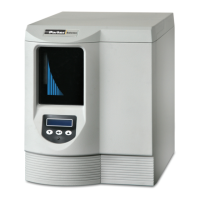
The Parker Balston H2PD-150 and H2PD-300 Hydrogen Generators are engineered systems designed to produce ultra-pure, dry hydrogen gas from deionized water and electricity. These generators utilize the principle of electrolytic dissociation of water and subsequent diffusion through a palladium membrane to generate hydrogen. The resulting hydrogen gas has a purity in excess of 99.99998%.
Function Description:
The core of the generator is the electrolytic cell, where water (H2O) is dissociated into hydrogen (H2) and oxygen (O2) through electrolysis: H2O → H2 + (1/2)O2. Electricity passes through deionized water, causing oxygen and other impurities to collect at the anode and be vented. Hydrogen ions collect at the palladium cathode and pass through the palladium tubes, driven by an applied electric potential. Inside these tubes, hydrogen recombines to form purified molecular hydrogen. The newly formed, ultra-pure hydrogen is then under pressure and ready for delivery in a controlled flow.
A key component is the palladium membrane, which consists of bundles of palladium tubes. Due to its small atomic size, only hydrogen and its isotopes can pass through this membrane, ensuring the ultra-pure quality of the produced hydrogen.
The generator features an electronic pressure control circuit that regulates the hydrogen pressure at the outlet. A pressure transducer monitors the hydrogen pressure between the cell and the outlet, and the control circuit adjusts the electrical current to the cell to maintain the desired set pressure. The outlet pressure is adjustable, allowing the generator to deliver hydrogen at pressures up to 60 psig (4.1 barg).
The H2PD-150 model has a hydrogen delivery capacity of 150 cc/min, while the H2PD-300 model delivers 300 cc/min. These generators are ideal for use with high sensitivity Flame Ionization Detectors (FIDs), Thermal Conductivity Detectors (TCDs), Trace Hydrocarbon Analyzers, and air pollution monitors. The ultra-pure hydrogen can also replace helium as a carrier gas in many GC applications.
Important Technical Specifications:
- Hydrogen Purity: 99.99999%
- Max Flow Rate (at 60 psig): 150 cc/min for H2PD-150, 300 cc/min for H2PD-300
- Discharge Pressure: 0 to 60 psig (0-4.1 barg), regulated
- Outlet Ports: 1/8" compression fittings
- Water Requirements: Deionized Water, 5 Megohm-cm or higher resistivity. Using tap water or deionized water with less than 5 Megohm-cm resistivity will void the warranty.
- Electrical Requirements: Available in 120 VAC and 230 VAC, 50/60 Hz models. Main supply line voltage must be within ±10% of nominal rated voltage.
- H2PD-150 (120 VAC): 3 Amps @ 120 VAC
- H2PD-150 (230 VAC): 2 Amps @ 230 VAC
- H2PD-300 (120 VAC): 5 Amps @ 120 VAC
- H2PD-300 (230 VAC): 3.15 Amps @ 230 VAC
- Dimensions: 22"h x 12"w x 12"d (56 cm x 30 cm x 30 cm)
- Shipping Weight: 58 lbs (26 kg)
- Ambient Temperature: 50°F/104°F (10°C/40°C)
- Ambient Relative Humidity: 80%
- Altitude: 2000 m
- Safety Certifications: Certified to IEC 1010 Standards (CSA 22.2 No.1010.1-92) and UL standards (UL 3101-1). 230 VAC models also carry the CE mark.
- Fuses:
- H2PD-150 (120 VAC): Type T, 3.15 Amp, P/N 13216
- H2PD-150 (230 VAC): Type T, 2 Amp, P/N 13192
- H2PD-300 (120 VAC): Type T, 5 Amp, P/N A03-0193
- H2PD-300 (230 VAC): Type T, 3.15 Amp, P/N 13216
Usage Features:
- Configurable Display: The front panel features an operational display that shows the system's status and allows users to select language and pressure units (PSI or BAR).
- Quick Start: A quick start summary is provided for rapid setup, though reading the full manual is recommended.
- Safety Features:
- Minimal hydrogen storage capacity (only 50 ml) to reduce explosion hazard.
- Hydrogen production control circuit.
- Electrolyte leak detector.
- Over-temperature sensor.
- Pressure sensor.
- Low water shut-off control.
- Audible alarms for various fault conditions (e.g., "Add Water," "Low Water," "High Pressure," "High Temperature," "Check Cell").
- The oxygen vent should not be blocked and should be kept clear of ignition sources (10 inches/25 cm).
- Hydrogen Output Valve: Controlled by a switch with "Auto," "Off," and "On" positions. "Auto" is for normal operation, "Off" for temporary shutdowns (maintaining internal pressure), and "On" for troubleshooting (not for normal operation).
- Warm-up Period: After power-on, the unit requires 2 to 4 hours to warm up, during which the cell heats up and begins producing high-purity hydrogen. Lines should be purged during this period.
- Continuous Operation: For optimal hydrogen output and cell longevity, continuous operation is recommended.
- Temporary Shutdown: For short periods, leaving the power switch "on" and moving the hydrogen output switch to "Off" minimizes water and energy consumption while maintaining internal pressure.
- Surge Suppressor: Recommended to protect the generator from sudden, transient fluctuations in electrical power. Specifications include a Joule Rating of 1000 or greater, Surge Amps of 84,000 or greater, and Max Noise Reduction of 80+ (db).
- Piping: Uses 1/8" compression fittings. Clean refrigeration grade copper or stainless steel tubing is recommended. Installation of a shutoff valve and pressure regulator at the process or instrument being supplied is strongly recommended.
Maintenance Features:
- Water Refill: The primary maintenance activity is refilling the deionized water bottle. The water level indicator on the front panel shows "Water full," "Add Water," and "Low Water" levels. An audible alarm sounds when water needs to be added ("Add Water") or when the level is critically low ("Low Water"), at which point the generator will shut down.
- Electrolyte Solution Change: The electrolyte solution may need to be changed due to generator performance issues or if the generator is being moved. This procedure requires specific steps to avoid damaging the hydrogen cell and voiding the warranty, including allowing the unit to cool for at least 4 hours (preferably overnight) before draining. Only Parker Balston Electrolyte Solution (P/N 920071) should be used.
- Fuse Replacement: The generator has fuses in both neutral and phase lines, located in the power receptacle. Both fuses should be checked if a fuse replacement is warranted. The generator must be turned off and disconnected from power before servicing fuses.
- Cleaning: The generator can be wiped clean with a dry cloth as needed. Water, aerosols, or other cleaning agents should not be used to avoid electrical hazards.
- Shelf Life: The product is shelf-life sensitive and should not be stored for more than 6 months prior to installation and operation.
- Long Term Shutdown/Product Shipment: For extended shutdowns or shipment, the system must be drained and plugged. Failure to drain the generator will damage the electrolytic cell and void the warranty.
- Troubleshooting: The manual provides a troubleshooting guide for common issues such as "No Power," "Add Water," "Low Water," "Low Output Pressure or Capacity," "No Hydrogen Delivered," "Moisture or Impurities in Output," "Electrolyte Seeping from Cell Flange," "High Temperature," "High Pressure," and "Check Cell." Technical Services support is available for assistance.

 Need help?
 General

 To Next Page