EasyManua.ls Logo

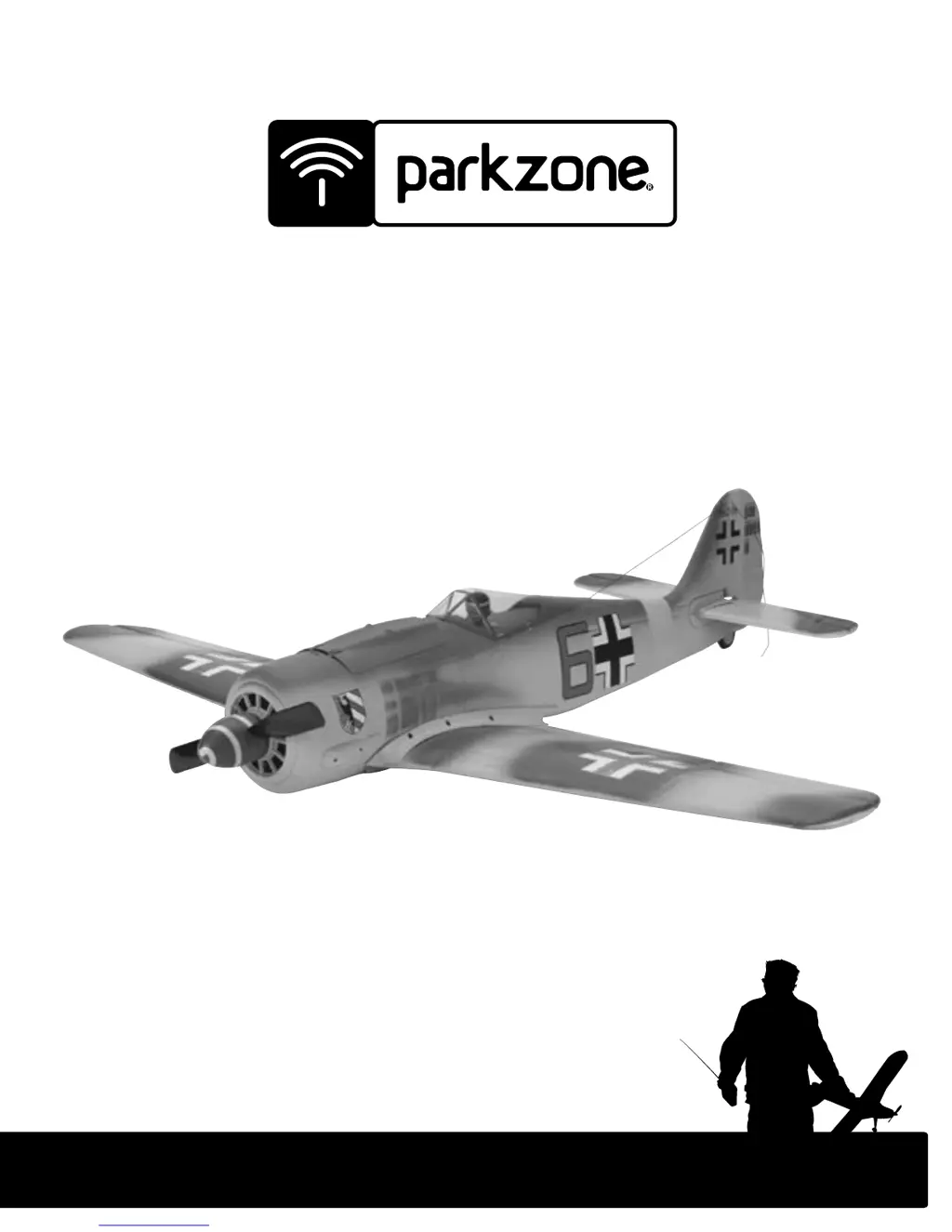
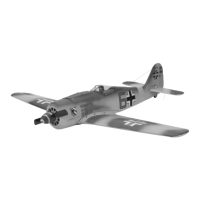
PARKZONE Focke-Wulf 190 RTF - User Manual

PARKZONE Focke-Wulf 190 RTF
18 pages
Print Icon
To Next Page IconTo Next Page
Loading...
Focke-Wulf 190 RTF
Instruction Manual
Charge-and-Fly
Park Flyer
Wingspan: 39.5 in (1000mm)
Length: 33.5 in (850mm)
Weight with Battery: 26 oz (730 g)
Motor: 480 Power with gear box
Speed Control: FET proportional ESC/receiver
FM Radio: 3 proportional channels
Battery: 9-cell 10.8V 1000mAh Ni-MH
Charger: Variable rate DC peak detect (1.8A)

Questions and Answers

  • N
    Nicole MendozaAug 13, 2025
    What to do if my PARKZONE Focke-Wulf 190 RTF Toy unit does not operate?
    • S
      Suzanne AdamsAug 13, 2025
      If your PARKZONE Toy unit isn't working, it could be due to several reasons. First, check the transmitter batteries to ensure they are correctly installed and not depleted; replace them with fresh "AA" batteries if needed. Another possibility is a lack of electrical connection—ensure all connectors are firmly pushed together until they click. Also, make sure the flight battery is fully charged. If the radio inside was damaged during a crash, consider replacing the fuselage or receiver.
  • J
    Joyce FisherAug 16, 2025
    Why my PARKZONE Focke-Wulf 190 RTF aircraft will not climb?
    • K
      Kimberly PierceAug 16, 2025
      If your PARKZONE Toy aircraft won't climb, the battery might not be fully charged. Make sure to fully charge it shortly before flying. Alternatively, the elevator trim may be incorrect; try adjusting it.
  • E
    Edward MarquezAug 20, 2025
    Why PARKZONE Focke-Wulf 190 RTF Toy aircraft keeps pitching up steeply?
    • M
      Matthew BrooksAug 21, 2025
      If your PARKZONE Toy aircraft keeps pitching up steeply, it could be due to strong or gusty winds. In this case, postpone flying until the wind calms down. It's also possible that the elevator trim is raised too much; try trimming the elevator down using the transmitter trim or threaded linkage.
  • K
    Kelly WrightAug 25, 2025
    Why my PARKZONE Toy aircraft keeps turning in one direction?
    • D
      David BarberAug 25, 2025
      If your PARKZONE Toy aircraft keeps turning in one direction, the aileron or aileron trim might not be adjusted correctly. Try adjusting the aileron and/or aileron trim. Also, check for damage to the fixed rudder (vertical stab) and ensure it is at a 90-degree angle from the elevator.
  • K
    Kelly WoodsAug 28, 2025
    Why does my PARKZONE Focke-Wulf 190 RTF aircraft keep pitching up steeply?
    • P
      perrykevinAug 28, 2025
      Your PARKZONE Toy aircraft might be pitching up steeply due to: 1. Gusty or strong wind conditions. It's best to wait for calmer weather to fly. 2. The elevator trim being set too high. Adjust the elevator trim down using the transmitter trim or threaded linkage.
  • V
    Vanessa PalmerSep 1, 2025
    What to do if my PARKZONE Toy aircraft will not climb?
    • G
      gomezisaacSep 1, 2025
      If your PARKZONE Toy aircraft isn't climbing, consider these possibilities: 1. The battery may not be fully charged. Ensure the battery is fully charged before flying. 2. The elevator trim might be incorrectly adjusted. Try adjusting the elevator trim.
  • D
    diana11Sep 4, 2025
    Why does my PARKZONE Focke-Wulf 190 RTF Toy aircraft keep turning in one direction?
    • B
      Brandon SandersSep 5, 2025
      If your PARKZONE Toy aircraft persistently turns in one direction, it could be due to: 1. Incorrect aileron or aileron trim settings. Adjust the aileron and/or aileron trim. 2. Damage to the fixed rudder (vertical stabilizer). Ensure the fixed rudder is at a 90-degree angle from the elevator.
  • M
    Mark RobersonSep 8, 2025
    What to do if PARKZONE Focke-Wulf 190 RTF Toy aircraft is difficult to control?
    • M
      Michael DaltonSep 8, 2025
      If your PARKZONE Toy aircraft is hard to control, it might be because the wing or tail is damaged. If this is the case, replace the damaged part.

Summary

Aircraft Setup and Initial Checks

Setting Up the Transmitter

Basic transmitter setup and battery installation.

Charging the Aircraft Battery

Instructions for charging the flight battery using the variable rate DC Peak charger.

Attaching the Wing and Stabilizer

Steps for assembling the aircraft's main components, including wing and horizontal stabilizer.

Center of Gravity Information

Guidance on finding and setting the correct Center of Gravity for safe flight.

Trim Adjustments and Control Tests

Setting elevator trim and performing essential pre-flight control surface checks.

Flight Operations and Guidance

Choosing a Flying Field and Conditions

Advice on selecting a suitable flying location and optimal weather conditions.

Range Test and First Flights

Performing a radio range check and recommendations for initial flights.

Flight Control Modes

Explanation of the two flight modes (A and B) for different pilot skill levels.

Hand Launching and Basic Flight

Instructions for safely hand launching the aircraft and maintaining initial flight.

Landing Procedures

Step-by-step guide on how to safely bring the aircraft in for a landing.

Technical Features and Support

Receiver;ESC and Jumper Settings

Details on the receiver/ESC unit and configurations via jumpers for battery and tail type.

Repairing Minor Damage

Methods for fixing common flight damage using tape or replacing parts.

Troubleshooting Common Issues

Solutions for problems like unit not operating, directional instability, or climbing issues.

Warranty and Assistance

Information on product warranty, obtaining help, and repair procedures.

PARKZONE Focke-Wulf 190 RTF Specifications

General IconGeneral
Approx. Flying Duration10-15 minutes
Recommended EnvironmentOutdoor
Skill LevelIntermediate
Motor480-size brushless outrunner
Battery11.1V 3S Li-Po
Radio System2.4 GHz
ChargerLiPo charger
Control FunctionsAilerons, Elevator, Rudder, Throttle
ReceiverCompatible with 2.4 GHz systems
Speed ControlElectronic Speed Control (ESC)
ServosFour sub-micro servos
Assembly RequiredSome assembly required

Related product manuals