EasyManua.ls Logo

Payne PY4G B Series - User Manual

Payne PY4G B Series
60 pages
Print Icon
To Next Page IconTo Next Page
Loading...
1
P Y 4 G -- -- B
Installation Instructions
14 SEER SINGLE---PACKAGED AIR CONDITIONER AND
GAS FURNACE SYSTEM WITH R ---410A REFRIGERANT
S I N G L E P H A S E 2 --- 5 N O M I N A L T O N S ( S I Z E S 2 4 --- 6 0 )
T H R E E P H A S E 3 --- 5 N O M I N A L T O N S ( S I Z E S 3 6 --- 6 0 )
IMPORTANT: Effective January 1, 2015, all split system and
packaged air conditioners must be installed pursuant to applicable
regional efficiency standards issued by the Department of Energy.
NOTE: Read the entire instruction manual before starting the
installation.
NOTE: Installer: Make sure the Owner’s Manual and Service
Instructions are left with the unit after installation.
TABLE OF CONTENTS
PAGE
SAFETY CONSIDERATIONS 1.........................
INTRODUCTION 2...................................
RECEIVING AND INSTALLATION 2--12.................
Check Equipmen t 2..................................
Identify Unit 2....................................
Inspect Shipment 2.................................
Provide Unit Support 2...............................
Roof Curb 2......................................
Slab Mount 2.....................................
Field Fabricate Ductwork 3............................
Provide Clearances 3.................................
Rig and Place Unit 3.................................
Inspection 3......................................
Rigging/Lifting of Unit 3............................
Connect Condensate Drain 8...........................
Install Flue Hood 8...................................
Install Gas Piping 9..................................
Install Duct Connections 10............................
Configuring Units for Downflow (Vertical)
Discharg e 10.....................................
Install Electrical Connections 11........................
High-- Voltage Connections 11........................
Special Procedures for 208--V Operation 11..............
Contro l Voltage Connections 11.......................
Standard Connection 12.............................
Heat Anticipator Setting 12..........................
Transformer Protection 12...........................
PRE-- START--UP 12...................................
START--UP 13--25.....................................
Check for Refrigerant Leaks 13.........................
Start--Up Heating & Make Adjustments 13................
Check Heating Control 13...........................
Check Gas Input 14................................
Adjust Gas Input 14................................
Check Burner Flame 15.............................
Normal Operation 23...............................
Airflow and Temperature Rise 23......................
Heating Sequence of Operation 23.....................
Limit Switches 23.................................
Rollout Switch 23.................................
Start--Up Cooling & Make Adjustments 23................
Checking Cooling Control Operation 23................
Checking & Adjusting Refrigerant Charge 24............
Indoor Airflow and Airflow Adjustments 24.............
Cooling Sequence of Operation 25.....................
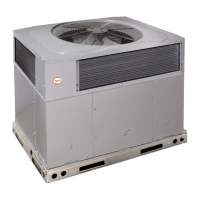
A09183
Fig. 1 -- Unit PY4G---- B
(Low NOx Model Available)
MAINTENANCE 52--55................................
Air Filter 52......................................
Indoor Blower and Motor 52.........................
Induced Draft (Combustion Air) Blower 53..............
Flue Gas Passageways 53............................
Limit Switch 53...................................
Burner Ignition 53.................................
Main Burners 53...................................
Removal of Gas Train 53............................
Outdoor Coil, Indoor Coil, & Condensate Drain Pan 53....
Outdoor Fan 54...................................
Electrical Controls and Wiring 54.....................
Refrigerant Circuit 55...............................
Gas Input 55......................................
Evaporator Airflow 55..............................
R--410A Items 55..................................
TROUBLESHOOTING 56..............................
START -- UP CHECKLIST 56............................
SAFETY CONSIDERATIONS
Improper installation, adjustment, alteration, service maintenance,
or use can cause explosion, fire, electrical shock, or other
conditions which may cause death, personal injury, or property
damage. Consult a qualified installer, service agency, or your
distributor or branch for information or assistance. The qualified
installer or agency must use factory--authorized kits or accessories
when modifying this product. Refer to the individual instructions
packaged with the kits or accessories when installing.
Follow all safety codes. Wear safety glasses, protective clothing,
and work gloves. Have a fire extinguisher available. Read these
instructions thoroughly and follow all warnings or cautions
included in literature and attached to the unit. consult local
Question and Answer IconNeed help?

Do you have a question about the Payne PY4G B Series and is the answer not in the manual?

Summary

SAFETY CONSIDERATIONS

WARNING: Electrical Shock Hazard

Warning about turning off power before servicing to prevent injury or death.

WARNING: Fire, Explosion, Electrical Shock and Carbon Monoxide Poisoning Hazard

Warning about hazards from improper installation, adjustment, or service.

CAUTION: Property Damage Hazard

Caution about potential property damage from improper procedures.

WARNING: Unit Falling Hazard

Warning about the hazard of units falling during rigging or lifting.

RECEIVING AND INSTALLATION

Check Equipment

Verify unit model and serial number against shipping papers.

Inspect Shipment

Check for shipping damage before removing packaging materials.

Provide Unit Support

Install unit support, considering hurricane tie-downs and roof curb requirements.

Roof Curb

Install accessory roof curb according to instructions, ensuring a water-tight seal.

Slab Mount

Place unit on a solid, level pad at least 2 inches (51 mm) above grade.

Field Fabricate Ductwork

Secure all ducts to roof curb or building structure; do not connect to unit.

Provide Clearances

Ensure adequate clearances for operation, ventilation, and combustion air.

Rig and Place Unit

Follow safe rigging and handling procedures for lifting and placing the unit.

Connect Condensate Drain

Connect condensate drain fitting, ensuring proper slope and trap installation.

Install Flue Hood

Install the flue hood assembly securely over the flue panel.

Install Gas Piping

Connect the gas supply line to the unit's gas valve, following codes and recommendations.

Install Duct Connections

Connect ductwork to unit flanges, ensuring airtight and watertight seals.

Configuring Units for Downflow (Vertical) Discharge

Prepare the unit for vertical discharge by removing horizontal covers and plastic knockouts.

Install Electrical Connections

Make all electrical connections according to codes, using copper conductors and proper wiring practices.

High-Voltage Connections

Connect high-voltage power leads to the unit's control box, ensuring proper grounding.

Control Voltage Connections

Use appropriate gauge wires for thermostat connections, ensuring proper insulation.

PRE-START-UP

Standard Connection

Route low-voltage leads from the thermostat into the unit's low-voltage splice box.

Heat Anticipator Setting

Adjust the room thermostat heat anticipator for proper heating performance.

Transformer Protection

Check for blown fuses on the indoor fan board or integrated gas controller.

START-UP

Check for Refrigerant Leaks

Inspect refrigerant system for leaks and repair them, then recharge the system.

Start-up Heating and Make Adjustments

Complete procedures for starting the heating section and making necessary adjustments.

Check Gas Input

Check gas input and manifold pressure, adjusting if necessary.

Adjust Gas Input

Adjust gas input by measuring flow at the meter or measuring manifold pressure.

Check Burner Flame

Observe burner flames for proper appearance and color during heating operation.

Start-up Cooling and Make Adjustments

Complete procedures for starting the cooling section and making necessary adjustments.

Checking and Adjusting Refrigerant Charge

Check and adjust refrigerant charge using system temperatures and pressures.

Indoor Airflow and Airflow Adjustments

Adjust indoor airflow to meet cooling capacity and heating temperature rise requirements.

MAINTENANCE

Air Filter

Inspect and replace or clean air filters regularly for optimal performance.

Indoor Blower and Motor

Clean the blower motor and wheel annually for efficiency and longevity.

Induced Draft (combustion air) Blower Assembly

Inspect and clean the induced-draft blower assembly for proper airflow.

Flue Gas Passageways

Inspect and clean flue collector box and heat exchanger areas.

Limit Switch

Locate and understand the function of the limit switch.

Burner Ignition

Understand the unit's direct spark ignition system and lockout features.

Main Burners

Inspect main burners for deterioration or blockage and adjust flames if needed.

Removal of Gas Train

Follow procedure to safely remove the gas train for servicing.

Outdoor Coil, Indoor Coil, and Condensate Drain Pan

Inspect and clean coils, drain pan, and condensate drain for optimal performance.

Outdoor Fan

Keep the condenser fan free from obstructions for proper cooling operation.

Electrical Controls and Wiring

Inspect and check electrical controls and wiring annually for tightness and condition.

Refrigerant Circuit

Annually inspect all refrigerant tubing connections for integrity.

Gas Input

Check gas input only if improper heating performance is suspected.

Evaporator Airflow

Check evaporator airflow if improper performance is suspected.

Pressure Switches

Understand the function of low and high-pressure switches.

Copeland Scroll Compressor (R-410 A Refrigerant)

Information on the compressor and its compatibility with R-410A.

TROUBLESHOOTING

Compressor and condenser fan will not start.

Diagnose and resolve issues when the compressor and fan fail to start.

Compressor will not start but condenser fan runs

Troubleshoot compressor startup issues while the condenser fan operates.

Three-phase scroll compressor makes excessive noise, and there may be a low pressure differential.

Address noise and pressure differential issues with 3-phase scroll compressors.

Compressor cycles (other than normally satisfying thermostat)

Diagnose frequent compressor cycling not related to thermostat settings.

Compressor operates continuously

Troubleshoot a compressor that runs continuously without stopping.

Excessive head pressure

Identify causes and remedies for excessive head pressure in the system.

Head pressure too low

Diagnose and correct low head pressure conditions.

Excessive suction pressure

Address issues leading to excessively high suction pressure.

Suction pressure too low

Troubleshoot and resolve low suction pressure problems.

Burners will not ignite

Troubleshoot why the furnace burners are not igniting.

Inadequate heating

Diagnose and resolve issues causing inadequate heating performance.

Poor flame characteristics

Identify and correct issues causing poor flame characteristics.

No Power or Hardware failure (LED OFF)

Troubleshoot situations where the unit has no power or a hardware failure is indicated.

Check fuse, low voltage circuit (LED 1 flash)

Address issues indicated by a flashing LED for fuse or low voltage circuit problems.

Limit switch faults (LED 2 flashes)

Troubleshoot limit switch faults indicated by LED flashes.

Flame sense fault (LED 3 flashes)

Diagnose and resolve flame sense faults indicated by LED flashes.

4 consecutive limit switch faults (LED 4 flashes)

Troubleshoot multiple limit switch faults indicated by LED flashes.

Ignition lockout fault (LED 5 flashes)

Address ignition lockout faults indicated by LED flashes.

Pressure Switch fault (LED 6 flashes)

Troubleshoot pressure switch faults indicated by LED flashes.

Rollout switch fault (LED 7 flashes)

Resolve rollout switch faults indicated by LED flashes.

Internal control fault (LED 8 flashes)

Diagnose internal control faults indicated by LED flashes.

Temporary 1 hr auto reset (LED 9 flashes)

Troubleshoot temporary auto reset conditions indicated by LED flashes.

START-UP CHECKLIST

Payne PY4G B Series Specifications

General IconGeneral
BrandPayne
ModelPY4G B Series
CategoryAir Conditioner
LanguageEnglish

Related product manuals