Caliper Detail
1. Brake Caliper Assembly
2.
Location of Inspection Grooves
3. Notches Line-Up (Time to
schedule inspection of Pads and
Rotors)
4. Brake Rotor
5. Brake Carrier Assembly
Regularly inspect caliper for Running
Clearance:
•
Stop the vehicle on level ground
and let the brakes cool down. Hot
brake calipers can burn skin on
contact.
• Chock the wheels.
• Temporarily release the parking
brakes.
•
Grab the caliper and move it. This
movement is Running Clearance.
• Proper Running Clearance is 0.08
inch (2 mm) of movement of the
brake caliper (approximately the
thickness of a nickel) in the
inboard/outboard direction.
• Have a qualified mechanic provide
further inspection if the caliper
does not move or appears to move
more than the specified clearance.
Operational Checks of Automatic
Slack Adjusters
• Measure brake chamber stroke
with the spring brake released and
the air pressure no less than 100
psi (690 kPa).
• Brake Chamber Stroke is the
difference between the applied and
the retracted position of the air
chamber pushrod.
• A correctly installed and functioning
auto slack adjuster will produce the
following strokes:
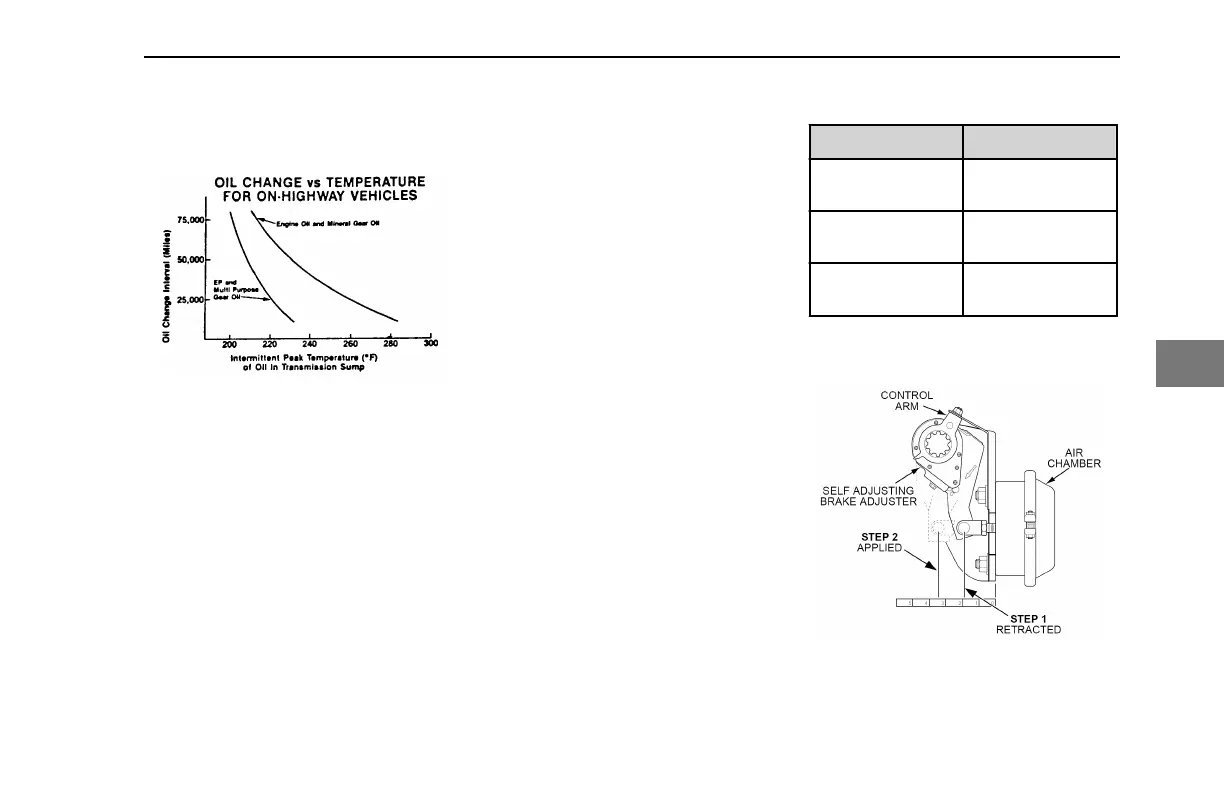
Chamber Type Stroke
36 (rear brakes) 1-1/2" - 2-1/4" (38 -
57 mm)
30 (rear brakes) 1-1/2" - 2" (38 - 51
mm)
16, 20 & 24 (front
brakes)
1" - 1-3/4" (25.4 -
44.4 mm)
Brake Chamber Stroke
MAINTENANCE - Brake System
Y53-6113-1A1 (11/20) 213
5



 To Next Page