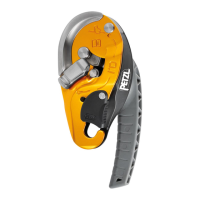
The Petzl I'D S is a self-braking descender and belay device, classified as Personal Protective Equipment (PPE). It is designed for rope access descent (EN 12841 type C rope adjuster), rescue evacuation (EN 341: 1997 type A rescue descender), and belaying.
Function Description:
The I'D S operates on a self-braking principle. When the rope becomes taut (due to suspension or a fall), the device pivots on the carabiner, and the cam pinches and brakes the rope. The brake hand assists in engaging the cam. For descent, the user controls the speed by varying their grip on the brake side of the rope and by gradually pulling on the handle. Releasing the handle stops the descent. In a panic situation, if the handle is pulled too far (position d), the device automatically brakes and locks the rope. To continue descent after a panic brake, the handle must first be moved upwards to position c. For work positioning, the handle is moved to position b, locking the device on the rope, allowing for hands-free operation. The device also features an anti-error catch, which can trap a rope installed backward, though it does not eliminate all possible errors. A horizontal movement button is available for smoother descents on slopes or with light loads, especially when the panic brake activates too easily. This button should not be used during vertical descents.
Important Technical Specifications:
- Nominal Load: 150 kg (for EN 12841 type C) and 30-150 kg (for EN 341 type A).
- Rope Diameter Compatibility: 10 to 11.5 mm (for EN 12841 type C, specifically EN 1891 type A semi-static kernmantel ropes).
- Maximum Descent Height (EN 341): 200 m.
- Weight: 533 g.
- Materials: Aluminum alloy (side plates), stainless steel (cam, anti-error catch), nylon (handle).
- Certifications: CE 0082, EN 12841: 2006 Type C, EN 341: 1997 Type A, EAC.
- NFPA Certification (I'D S D20 S model): Meets the auxiliary equipment requirements of NFPA 1983, Standard on Fire Service Life Safety Rope and Equipment for Emergency Services, 2012 Edition. MBS 14 kN, T (Technical Use), Belay Device, Descent control device type 3. Tested with STERLING 3/8" HTP static, P105 and Bluewater 7/16" Spec-Static rope, 540700.
Usage Features:
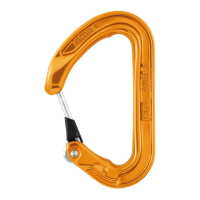
- Rope Installation: The device connects with a locking carabiner. The moving side plate opens, the handle moves to position C to open the cam, and the rope is inserted as indicated by the engraved diagrams. The moving side plate (safety gate) then closes onto the locked carabiner. It is crucial that the moving side plate is properly engaged on the cam axle and the carabiner.
- Friction Management: For both harness and anchor-based setups, additional friction can be added by redirecting the brake side of the rope through a carabiner.
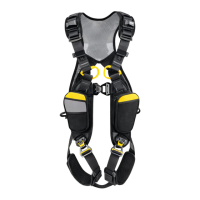
- Function Test: Before each use, a function test is mandatory. This involves pulling on the anchor side of the rope (for harness use) or load side (for anchor use) to ensure it locks. For harness use, with the rope taut and handle in position c, the user gradually puts weight on the device and then pulls the handle to allow the rope to slide, confirming proper installation. A backup safety system must always be used during this test.
- Descent Control: The handle allows for precise control of descent speed. Releasing the handle stops the descent.
- Work Positioning: The handle can be moved to position b to lock the device for hands-free work positioning.
- Rescue Evacuation: The I'D S can be used for lowering from an anchor point, with the brake side of the rope redirected through a carabiner. Braking is regulated by varying the grip on the brake side of the rope.
- Belaying: When belaying from an anchor (position e), the belayer holds the brake side of the rope with one hand and the second's rope with the other, taking in slack regularly. To stop a fall, the brake side of the rope is firmly gripped.
- Anti-Error Catch: This feature helps prevent accidents from incorrect rope installation, but it is not foolproof, especially in belaying mode if the rope is installed backward.
- Compatibility: The device must be used with compatible equipment that meets current standards (e.g., EN 362 locking carabiners).
- Rescue Plan: Users must have a rescue plan and the means to implement it quickly in case of difficulties.
- Anchor Point: The anchor point should preferably be above the user's position and meet EN 795 standards (minimum strength of 12 kN).
Maintenance Features:
- Periodic Inspection: Petzl recommends a detailed inspection by a competent person at least every 12 months, or more frequently depending on usage and local regulations. Results should be recorded on a PPE inspection form.
- Pre-Use Checks: Before each use, inspect for cracks, deformation, corrosion, and cam wear (discontinue use if the cam groove is worn to the indicator). Check the moving side plate for deformation or excessive play, and verify the proper operation of locking components (safety gate, locking screw, axle) and springs. Ensure the cam is fully mobile and the horizontal movement button springs back out.
- During Use Checks: Regularly monitor the product's condition and its connections to other system equipment. Ensure all components are correctly positioned and nothing interferes with the device's operation.
- Cleaning: Wash with clean water (max 30°C/86°F).
- Drying: Air dry (max 30°C/86°F).
- Storage/Transport: Store in a dry, cool place (between +10°C/50°F and +30°C/86°F), away from chemicals, sharp objects, and extreme temperatures.
- Lifetime: Unlimited, provided it passes inspections and is not retired due to damage or obsolescence.
- Retirement Criteria: Retire the product immediately if it has been subjected to a major fall or load, fails inspection, if there is any doubt about its reliability, if its full usage history is unknown, or if it becomes obsolete due to changes in legislation, standards, technique, or incompatibility with other equipment. Destroy retired products to prevent further use.
- Modifications/Repairs: Only authorized modifications or repairs (e.g., replacement parts) by Petzl facilities are permitted.
- Warranty: 3-year guarantee against material or manufacturing defects, excluding normal wear and tear, oxidation, modifications, incorrect storage, poor maintenance, negligence, or uses for which the product is not designed.

 Need help?
 General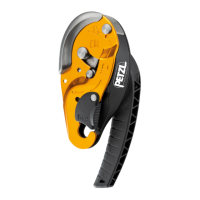

 To Next Page