Need help?
Do you have a question about the Petzl PIRANA and is the answer not in the manual?
The basic setting with no rope wrapped around the Pirana's tail fins.
Achieved by wrapping the rope around one tail fin for increased friction.
Achieved by wrapping the rope around both tail fins for maximum basic friction.
General guidelines for choosing Pirana friction settings based on conditions.
Tying off the device to free hands, starting from the '4' setting.
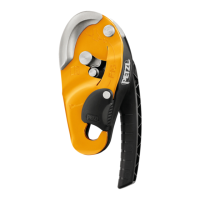
The Petzl Pirana is a rappel device specifically designed for canyoneering, based on the figure-eight design. It offers multiple friction settings, allowing users to easily adjust the friction for different rope types, canyoneer weights, and situations. The device is quick to attach to and detach from the rope. It performs well in Class-C canyoning environments, such as those with waterfalls, due to its tolerance for rope twists and debris. For rescue scenarios, the Pirana provides options for quick and easy lock-offs and can facilitate rappelling with two people.
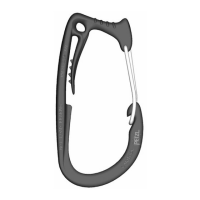
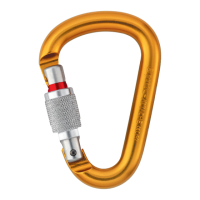
A key design feature of the Pirana is its snug attachment to a carabiner, which makes it difficult to lose during a floating disconnect. However, this also means that only specific carabiners are compatible, such as the Petzl Attache, Petzl William, and Rock Exotica Pirate carabiners. While it can be challenging to attach the Pirana to a carabiner initially, a little lubrication and persistence will help secure it.
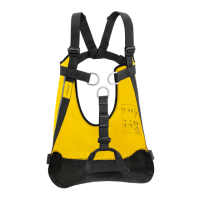
The Pirana is best used with a canyoneering harness that has a horizontal belay loop, which allows the device to lie flat. If used with a rock climbing harness that has a vertical belay loop, it is recommended to extend the Pirana and change its orientation by 90 degrees using a small locking carabiner or a 10mm Aluminum Rapid Link for better performance.
The device can be rigged for both left-handed and right-handed use by orienting it accordingly, ensuring the fins are in the optimal position for personal preference. While it's possible to rappel left-handed with a right-handed setup (and vice-versa) without re-rigging, the full functionality of the fins might not be available.
The most notable feature of the Pirana is its multiple friction options, referred to as the Zero, One, and Two settings, which are readily accessible. To rig the Pirana for rappelling, the user first steps over the rope so it is on their right-hand side when facing the anchor. Then, the Pirana is laid over the rope, and the rope is pulled up through the large hole, dropped into the carabiner, and locked. This initial setup is the "Zero" setting. Increased friction is achieved by wrapping the rope around one or both of the fins at the tail (bottom) of the Pirana.
The choice of friction setting depends on various factors, including rope diameter, canyoneer weight, and rappel length. For a single line, 8.3mm Canyon Fire Rope, the "Zero" setting is suitable for up to 90 pounds, "One" for 90 to 140 pounds, and "Two" for 140 to 180 pounds. For a single line, 9.2mm Canyoneero Rope or 8.0 Imlay Canyon Rope/BlueWater Canyon Pro, users should subtract 1/3 a setting or add 1/3 a setting, respectively. For double line rappels, the recommendation is to subtract 1 full setting. For long rappels (over 80 feet), adding 1/2 a setting is suggested. For brand new rope, adding 1/2 a setting is recommended, and for the first rappel of the day, adding 1/2 a setting. If the rope is tired, dark, cold, or extra-scared, adding 1/2 a setting is advised.
For heavier individuals, such as those weighing 150 pounds, the "Two" setting might be too slow at the end of a long rappel. For a 200-foot rappel with an 8.3mm rope, the "Two" setting might be appropriate for the middle/top, but a new BlueWater Canyon Pro 8mm might require adding another 1/3 setting and then removing it as the rappel progresses. Adjusting friction on the fly is possible if the user can get their weight off the rope, such as on a small ledge. This is useful when a rappel starts on a low-angle slab and then transitions over an edge, allowing for a lower setting on the slab and increased friction before the edge.
The Pirana also offers a "3" setting, which involves an additional wrap around an off-hand-leg-loop carabiner, or a Z-rig, for increased friction. This setting is more difficult to achieve while on rappel, requiring the user to move the rope from the "2" setting through a zone of lesser friction. This lesser friction zone can be dangerous, as the rope can pop off the mouth hook easily.
The "4" setting, also known as a "Soft Stop," provides significantly more friction and is more secure. While it offers too much friction for most normal uses, it is ideal for rappelling with two people or when loads are in the 300 to 400-pound range. In normal conditions, the "4" setting acts as a "Soft Stop," meaning no braking force is required to stay in place, but the rappeller must still hold onto the brake line and be attentive to prevent the rope from slipping off the hooks. This setting is often used when rigging meat anchors or with another full warp, where the user grasps a mass of rope with the brake hand.
For a "Hard Stop," where the device is tied off to free both hands, the process begins from the "4" setting. A bight of rope from the brake-hand side is poked through the carabiner. A half-twist is then made so the brake-hand strand goes underneath, and this loop is placed over the cleat formed by the two hooks, and pulled snug.
Maintenance features for the Pirana primarily involve monitoring its wear. As the Pirana wears, it tends to become "faster" (i.e., provides less friction). It is recommended to discard the device when the upper bar is worn approximately 1/3 of the way through. Each canyoneer must make their own decision regarding the exact point of discard.
Additional usage considerations include:
 General
| Material | Aluminum |
|---|---|
| Weight | 90 g |
| Type | Descender |
| Maximum rope diameter | 13 mm |
| Minimum rope diameter | 8.5 mm |
| Certification | CE |
| Rope compatibility | Single ropes |
| Certification(s) | CE EN 15151-2 |
| Standards | EN 15151-2 |


 To Next Page