2
PHILIPS MEDICAL SYSTEMS
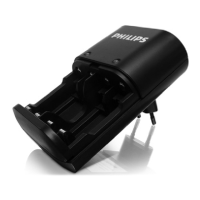
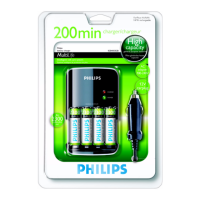
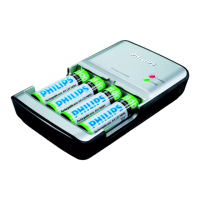
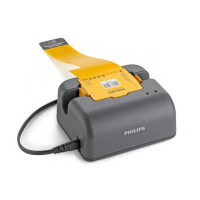
NOTE: The charger becomes warm during normal operation. This is not
a malfunction.
CAUTION: Do not use with unapproved accessories or non-
rechargeable batteries. • Do not allow metallic objects to contact the
metal contacts in the charger’s battery well. • Do not drop the charger
or apply a mechanical shock to it. • Do not bend the power cord forcibly
or place a heavy object on it. • Do not use the charger with a damaged
cord or if the charger has been dropped or damaged. • Do not place the
charger in locations that are extremely hot or cold, dusty or dirty, very
humid, or vibrating. • Do not subject the charger to direct heat or direct
sunlight. • Do not touch the battery contacts when the charger is
plugged in. • Do not immerse the charger. • Do not clean the charger
without disconnecting power cord. • Do not place the charger on or
next to heat-sensitive materials. • Do not cover the charger. • Do not
disassemble the charger. • Do not store the charger and batteries
outside the temperature ranges specified in the FR3 Instructions for
Administrators.
The charger requires no maintenance and contains no user-serviceable
parts. If needed, the charger enclosure may be cleaned with a cloth
dampened with water.
FCC Statement (acc. to FCC 15.105): This product has been tested and
found to comply with the limits for a Class B digital device, pursuant to part
15 of the FCC Rules. These limits are designed to provide reasonable
protection against harmful interference in a residential installation. This
equipment generates, uses, and can radiate radio frequency energy and, if
not installed and used in accordance with the instructions, may cause
harmful interference to radio communications. However, there is no
guarantee that interference will not occur in a particular installation. If this
equipment does cause harmful interference to radio or television reception,
which can be determined by turning the equipment off and on, the user is
encouraged to try to correct the interference by one or more of the
following measures:
• Reorient or relocate the receiving antenna.
• Increase the separation between the equipment and receiver.
• Connect the equipment into an outlet on a circuit different from that to
which the receiver is connected.
• Consult the dealer or an experienced radio/TV technician for help.




 To Next Page