39
English
Other Functions
Switching on/off
Switching to active mode
● Adjust the SOURCE control to select :
DISC 1....DISC 5 ™ FM TUNER ™
AM TUNER ™ TV/AV ™ AUX ™
DIG IN ™ DISC 1....
OR
Press DISC/MEDIA, TUNER, TV/AV
or AUX / DI on the remote.
Switching to Eco Power standby
mode
● Press STANDBY ON (B).
➜ ECO POWER button lights up.
➜ The display screen will go blank.
Switching to standby mode
(view clock)
● Press and hold STANDBY ON (B).
➜ The clock appears.
➜ While in standby mode, pressing
CLOCK•TIMER button will switch the
system to Eco Power standby mode.
Dimming system’s display
screen
● Press DIM to select desired brightness :
MODE 1, MODE 2, MODE 3 or
NORMAL.
Helpful Hint:
– Pressing DIM button in standby mode will
toggle between half and full brightness.
Recording to an external
device
1 Connect the external recording device to
LINE OUT or DIGITAL OUT.
(See page 15 “Connections – Optional”.)
2 Select the source to record from your
DVD system (DISC, TUNER, TV/AV or
AUX/DI) and start playback (if necessary.)
➜ You can only record from DISC if using
DIGITAL OUT to connect the external
recording device.
3 Start recording on the external recording
device.
Helpful Hints:
– All the sound control features are available
for selection.
– Refer to the owner’s manual of the
connected equipment for details.
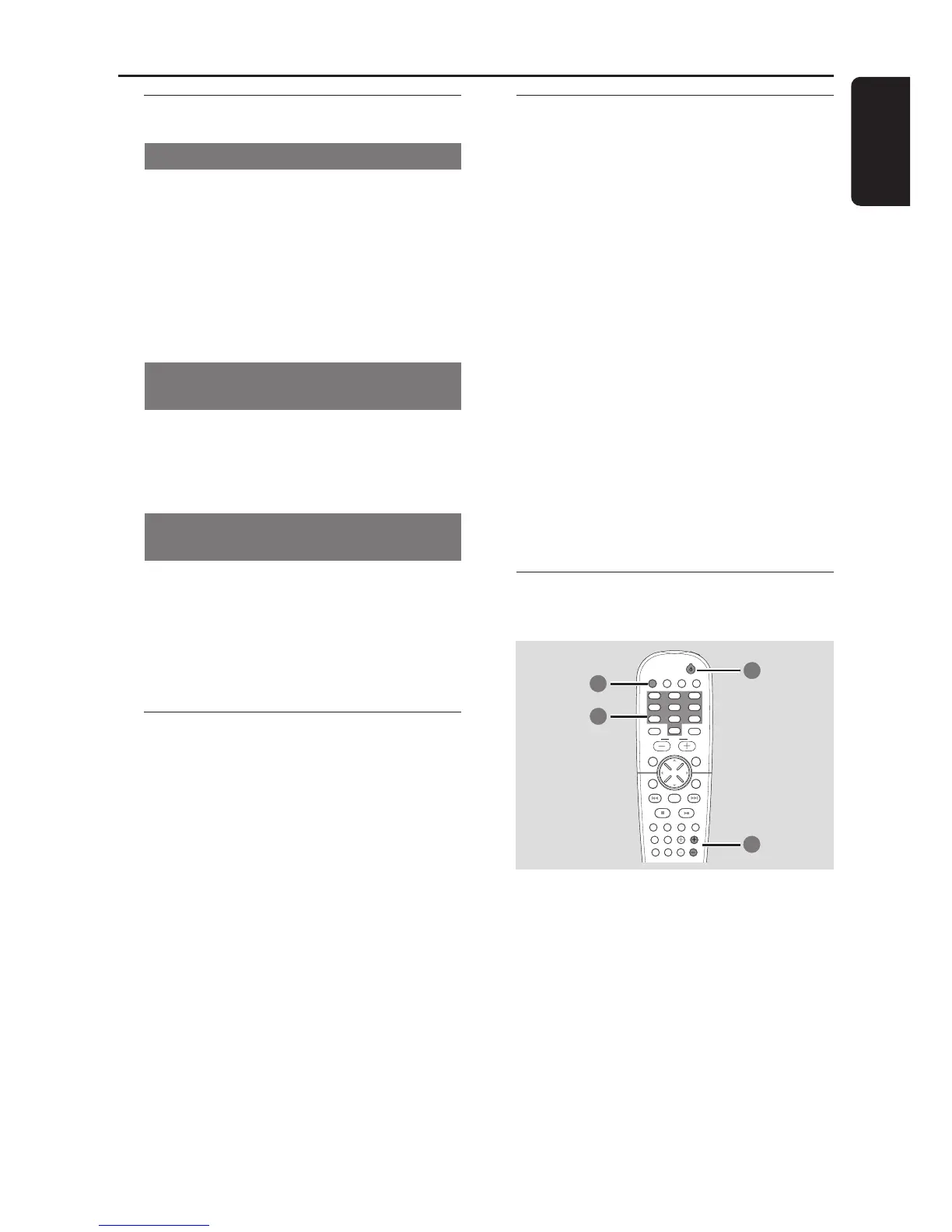
Using the remote to operate
your television


 To Next Page