EasyManua.ls Logo

Philips N4450 - Page 4

Philips N4450
22 pages
Print Icon
To Next Page IconTo Next Page
To Previous Page IconTo Previous Page
Loading...
INTRODUCTION
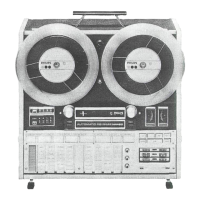
Your
new
Hi-Fi
Stereo
tape
recorder/amplifier
N
4450
has
been
designed
with
great
care
and
precision
to
ensure
that
it
meets
the
highest
standards
of
quality
and
versatility.
This
allows
the
recorder
to
be
used
for
recording
purposes
where
superior
fidelity
is
required.
The
built-in
powerful
Hi-Fi
stereo
amplifier
assures
a
perfect
reproduction
of
these
recordings
and
may
also
form
the
basis
of
a
complete
stereo
system.
In
addition
to
quality
N
4450
also
offers
versatility:
the:
reverse
system
(recording
and
playback
in
either
direction)
and
several
special
effects
such
as
multiplay,
echo,
reverbe-
ration
and
sound
mixing.
Moreover,
the
recorder
incorporates
an
electric
timer
which
permits
the
recorder
to
be
started
and
stopped
in
the
recording
and
the
playback
mode
at
preset
times.
These
and
many
other
possibilities
are
described
in
these
Operating
Instructions,
which
we
recommend
you
to
read
very
attentively.
Part
I
of
the
Operating
Instructions
explains
to
the
more
interested
reader
how
sound
is
recorded
on
magnetic
tape:
magnetic
registration
of
sound.
It
provides
a
better
insight
into
the
operation
of
the
recorder
and
it
also
contains
inter-
esting
details
which
might
open
up
new
application
possi-
bilities.
Part
II
contains
the
actual
Instructions
for
Use
and
describes
the
operating
procedure.
If
you
are
anxious
to
try
out
your
new
recorder,
it
will
suffice
to
read
this
part
only.
We
wish
you
many
hours
of
listening
pleasure
with
your
new
Hi-Fi
Stereo
tape
recorder/amplifier
N
4450.
INDEX
Page
PART
I
“What
you
should
know”
.
56-60
1.
Magnetic
soundrecording
.
. .
.
.
...
.
56
1.
From
sound
to
electrical
vibrations
.
56
2.
From
electrical
vibrations
to
magnetic
field
strength
alternations
.
.
a)
ch.
Ge)
Ar
aed
Lot
She
ges
2
OG.
3.
Magnetising
of
the
tape
ae)
os
-.
.
56
4..From
magnetic
recording
back
to
electrical
vibrations
.
.
-..
56
5.
From
electrical
vibrations
back
to
sound
.
56-57
2.
Some
more
tape
recording
theory
.
. .
. . .
57
1.
Erasing
.
.
.
Beh
he Se
a
ea
OT
2.
Four-track
system
fa
GB
Soe
a
ek
a
oT
De
OtCTeOs
2s
ak
“ies
te Be ye
ows
Se
we
4.
Multiplay
.
. .
ate
So
Race
GP
ae eo
DOF
5.
Echo
and
reverberation
|
fod
Bivens
oe om
22 ey
sO
3.
Technicalfeatures
. .
.
.
2...
....
58
1.
HiFiQualiy
.
2.
2.0.
2.
2...
58
2.
Automaticreverse
.
.
.
.......
=.
58
3.
Sixheads
.
. . .
ni
&
“esas
358
4.
Before
and
after
tape
monitoring
ne
oo
ae
258
9.
Cueing
2 3
8
Se
ee
ee ee
a
SB
6.
Threemotors.
.
..........
=.
~
«58
7.
26.5-cmreels
.
.
.
.
i
ae oe
el
de
358
8.
Tape
tension
comparators
.
oe
a
&
58
9.
Programme
indicator
with
pre-selector
Se
ews
358
BO
TG
MEr
ox
ok se
A
cai
es
a
he
ee
a
BY
ASB
11.
Tip-touchkeys
.
.
.
2...
.
1.)
(CSO
12.
Hi-Fiamplifier
.
2.
2.
2...
.
2...)
(59
13.
Splicingjig
. . .
2.
«2
2...
es.)
59
14.Remotecontrol.
.
.........
=.
59
15.
Continuous
tapereel
.
. .
2.
.
1.
1...)
(SY
16.
Slide‘synchroniser
.
.
.
2.
2
2...
ee)
OSD
17.
Telephone
coil
.
.
.
2.
2.
2...
1.)
SD
Controls
and
connection
sockets...
...
=.
60
PART
II
’What
you
must
know”
61-68
1.
Preparing
the
recorderforuse
.
...
.
..
..
61
1.
Carryinghandle
. .
......
2.2...
~
«61
2.
Connectiontothe
mains
.
........~
464i
3.
Openingand
removingthe
cover.
.
. .
..
=.
61
4.
Switchingonandoff
.........
=.
«6421
5.
Reel
selector
switch(1)
.
........
4642
6.
Threadingthe
tape
. .
.
.......
61
7.
Function
selector
(12)
.
:
Déle
62
8.
Speed
selector(13)
.
.
. .
.......~
62
9.
Track
selector(11)
.
.
2...
..
..
.
-)
62
10.
Automatic
stop
.
.
bon
at ee ge ee
Moe
162:
11.
Normal/Reverse
switch
(14).
an
od
fae*
@.
“62
12.
Programme
indicator
with
pre-
selector
@)
.
2.
62
13.
Tip-touch
keys(16...22).
.
.
. .
.
2.
62
14.
Cueing
buttons
(5).
.
.
beta
«
663
15.
Speed
control
for
fast
winding
a
5)
be
Sap
Seta,
OS
16.
Timer
(39).
Sei:
Aira
Uv,
See
2.
Connection
sockets
.
BGG
ae ay
wee
ce Oe
ta
es,
168
1.
Inputselector(9)
2.
2.
2. 2.
2...
ew.
6B
2.
Connection
oe
Re
Bom
&
we
ky
wy
e064
3.
Recording
.
2. 2. 2.
2.
2.
2
ee
we
4
1.
Using
microphones
.
woe
eee
we
64-65
2.
Recordinglevel
.
.
.
65
3.
Selector
for
before/after
tape
monitoring
(10)
.
.
65
4.
Monitoring
during
ee
Bri
Sd
nes
2%
65
5.
Recording
.
oe
toe
ee
ew
«65-66
6.
Erasing
without
recording
.
: -
.
.
66
4.
Playing
back
and
using
the
amplifier
section
-.
.
66
1.
The
amplifier.
.
.
.
SR
ow AY Be
iow,
-
$66
2.
Playing
back
a
tape
programme
of
Byer
Ut
cies
2
66
3.
Using
N
4450
as
an
Sa
:
-
1.
«+»
66-67
5.
Special
facilities
.
.
.
RE
AS
ue
he
tt.
Beat
“67.
1.
Mixingsounds.
.
.
.
....
..
~~)
67
2.
Multiplay
. . . .
ey
ge
ae
Ge
a
Pa
ee
67
3.
Echo
and
reverberation
.
bie
Or
ee
ty
ke
hes
OR
6.
Splicing
jig
eS
eR
a
ee
4
ee
22
69-68
7.
Remotecontrol
.
.
.
2.
2...
2.
2.
«68
8
Continuous
tapereel
.
2.
2. 2.
2. 2.
2
2...)
(68
9.
Slide
synchroniser
.
.
. . .
......
68
10.Maintenance.
. .
.
2...
2.
2...
.
(88
PART
III
General
information
.
.
.
>.
69-70
1.
Optional
accessories.
.
. . .
.
2...
. .
69
2.
Inputsandoutputs
.
. .
.
..
...
..
«69
3.
Technical
data
.
. . . .
2.
.
2...)
OO
“65

Related product manuals