EasyManua.ls Logo

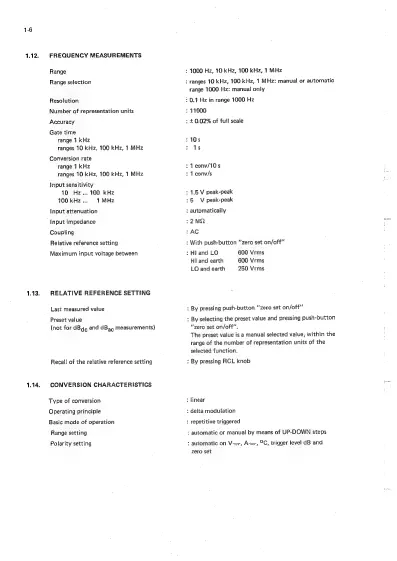
Philips PM2519 - 1.12. FREQUENCY MEASUREMENTS; 1.13. RELATIVE REFERENCE SETTING; 1.14. CONVERSION CHARACTERISTICS

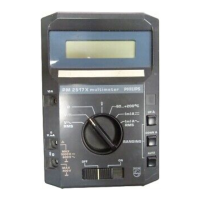
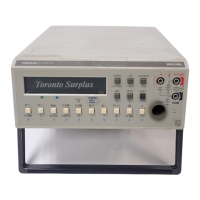
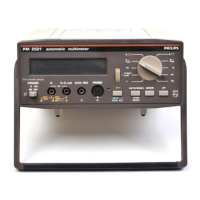
Philips PM2519
126 pages
Print Icon
To Next Page IconTo Next Page
To Previous Page IconTo Previous Page
Loading...
4.12.
1.13.
FREQUENCY
MEASUREMENTS
Range
Range
selection
Resolution
Number
of
representation
units
Accuracy
Gate
time
range
1
kHz
ranges
10
kHz,
100
kHz,
1
MHz
Conversion
rate
range
1
kHz
ranges
10
kHz,
100
kHz,
1
MHz
Input
sensitivity
10
Hz...
100
kHz
100
kHz...
1MHz
Input
attenuation
Input
impedance
Coupling
Relative
reference
setting
Maximum
input
voltage
between
RELATIVE
REFERENCE
SETTING
Last
measured
value
Preset
value
(not
for
dBg,
and
dBg,
measurements)
Recall
of
the
relative
reference
setting
CONVERSION
CHARACTERISTICS
Type
of
conversion
Operating
principle
Basic
mode
of
operation
Range
setting
Polarity
setting
:
1000
Hz,
10
kHz,
100
kHz,
1
MHz
:
ranges
10
kHz,
100
kHz,
1
MHz:
manual
or
automatic
range
1000
Hz:
manual
only
0.1
Hz
in
range
1000
Hz
+
11000
:
+
0.02%
of
full
scale
210s
1s
:
Tconv/10s
:
1
conv/s
:
1.5
V
peak-peak
:5
V
peak-peak
:
automatically
:2MQ2
:AC
:
With
push-button
"zero
set
on/off”
:
Hl
and
LO
600
Vrms
HI
and
earth
600
Vrms
LO
and
earth
250
Vrms
:
By
pressing
push-button
“zero
set
on/off”
:
By
selecting
the
preset
value
and
pressing
push-button
“zero
set
on/off”.
The
preset
value
is
a
manual
selected
value;
within
the
range
of
the
number
of
representation
units
of
the
selected
function.
:
By
pressing
RCL
knob
:
linear
:
delta
moduiation
:
repetitive
triggered
+
automatic
or
manual
by
means
of
UP-DOWN
steps
:
automatic
on
Vi,
Axx,
°C,
trigger
level
dB
and
zero
set

Related product manuals