
 Need help?
Do you have a question about the Philips Respironics CoughAssist T70 and is the answer not in the manual?
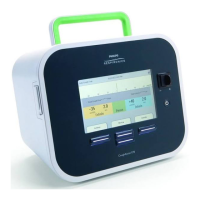
Buttons and screen for operating and navigating the device.
Connections for the breathing circuit and air inlet/outlet.
Ports for AC power, DC power, and battery.
Connectors for remote control, USB, and SpO2.
Steps for connecting and powering on the device.
Visual guide to connecting the breathing circuit components.
Initial considerations and patient comfort during therapy.
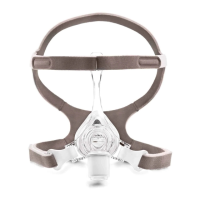
Recommendations for mask fit and patient positioning.
Describes device messages and user actions for troubleshooting.
Instructions for cleaning the external surface of the device.
Guidelines for washing the circuit and replacing the bacteria filter.
Procedures for cleaning and replacing the device's air filter.
Information on using the SD card for data recording and removal.
List of available accessories with their item numbers.
Details on setting up device parameters for different treatment presets.
The Philips Respironics CoughAssist T70 is a mechanical insufflation-exsufflation device designed to simulate a natural cough, aiding in the clearance of airway secretions. This device is particularly beneficial for individuals with weakened abilities to remove secretions, which can otherwise lead to respiratory infections. The CoughAssist T70 operates by gradually delivering a large volume of air to the lungs during inhalation (positive pressure), similar to a deep breath, and then rapidly reversing the airflow to facilitate the expulsion of secretions during exhalation (negative pressure). This process enhances cough effectiveness, helping to maintain clear airways and reduce the risk of respiratory complications.
A key feature of the CoughAssist T70 is its Cough-Trak triggering capability, which allows for synchronization of treatment with the user's own breathing patterns. This feature is available in Auto mode, where the device detects when the user is ready to inhale and then delivers the preset pressure. Treatment can be delivered manually, using a switch or an optional foot pedal, or automatically based on inspiratory effort or a set time. The device offers up to three prescription settings, which are determined by a clinician to best suit individual needs.
The CoughAssist T70 is designed for ease of use and includes several user-friendly features. The device has a display screen that shows settings and system status information, along with left, up/down, and right buttons for navigating menus and selecting options. A start/stop button turns the device on or off, initiating or ending therapy. The manual switch allows for direct control over the insufflation and exsufflation phases. The breathing circuit connection is where the circuit, consisting of a bacteria filter, circuit tubing, and an adapter for a mask, mouthpiece, or trach, is attached.
For optimal therapy, proper setup is crucial. The device can be powered by an AC power source, a DC power source, or a detachable battery. The filter and tubing are connected to the device, and the patient interface (mask, mouthpiece, or trach adapter) is positioned on the patient. When starting treatment, it is recommended to begin with lower pressures and inhale flow to ensure comfort, although higher pressures may be necessary for effectiveness. A cough cycle typically involves an inhale time, an exhale time, and a pause time. A sequence usually consists of four to six cycles, followed by a resting period of 20 to 30 seconds to allow for secretion removal. Users are advised to sit upright during treatment, if tolerated.
The patient interface plays a significant role in the effectiveness of the therapy. If using a mouthpiece, nose clips may be required. A well-fitting, soft-seal mask is essential to prevent air leakage. Some patients may need head support to maintain a good seal. Firm pressure may be necessary for the treatment to be effective. If a cuffed tracheostomy tube is in use, the cuff should be inflated during CoughAssist treatment. It is important to always follow the treatment plan prescribed by a physician.
The device also includes an information log that displays messages regarding system status, such as battery temperature, external battery issues, detachable battery status, internal fan failures, and SD card errors. These messages provide guidance on user actions to resolve potential issues.
Maintenance of the CoughAssist T70 is straightforward. The device's external surface should be cleaned regularly by unplugging it and wiping it with a cloth dampened with water and mild detergent, 70% Isopropyl alcohol, DisCide towelettes, or a 10% chlorine bleach solution. The device should be completely dry before reconnecting to power. Routine servicing of the device itself is not required.
The breathing circuit, interface, and bacteria filter require more frequent cleaning. After each use, the breathing hose and patient interface should be thoroughly washed with mild liquid detergent and water and allowed to dry completely. The bacteria filter cannot be washed and should be replaced when it becomes blocked with mucus or trapped moisture. The mask should be replaced if it becomes torn or if a good seal can no longer be maintained.
The air filter, located where outside air enters the device, should be cleaned at least once every two weeks and replaced every six months under normal usage. To clean the air filter, the airflow must be stopped, the device disconnected from the power source, and the filter removed. It should be examined for cleanliness and integrity, washed in warm water with mild detergent, rinsed thoroughly, and allowed to air dry completely. The filter should be replaced if it is torn or damaged, and only Philips Respironics filters should be used as replacements. After cleaning, the filter is reinstalled.
The CoughAssist T70 comes with an SD card for recording treatment information. Clinicians may use this card for evaluation. To remove the SD card, the user selects the "Safely Remove SD Card" option from the Main menu and then physically removes the card once prompted. Optional accessories for the device include a detachable battery, detachable battery charger, DC auto adapter, foot pedal, and a roll stand, enhancing the device's versatility and portability.
 General
| Device Type | Cough Assist Device |
|---|---|
| Model | CoughAssist T70 |
| Pause Time | 0 to 5 seconds |
| Trigger Sensitivity | Adjustable |
| Operating Modes | Automatic, Manual |
| Inspiratory Time | 0 to 5 seconds |
| Expiratory Time | 0 to 5 seconds |
| Weight | Approximately 5.5 kg |
| Power | AC 100-240V, 50/60 Hz |
| Battery | Rechargeable lithium-ion battery |
| Data Storage | Internal memory |
| Operating Conditions - Temperature | 10 to 40 °C |
| Operating Conditions - Humidity | 15% to 95% non-condensing |
| Alarms | Low pressure, High pressure |




 To Next Page
