Need help?
Do you have a question about the Pioneer SC-LX83 and is the answer not in the manual?
Schematic diagram for the DAC High assembly (AWX9711).
Schematic diagram for the DAC Low assembly (AWX9659).
Schematic diagram for the Digital Main assembly (part 2/10).
Schematic diagram for the Digital Main assembly (part 6/10).
Schematic diagram for the Icepower Amp assembly (part 1/5).
Schematic diagram for the Icepower Amp assembly (part 2/5).
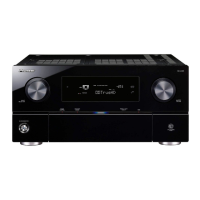
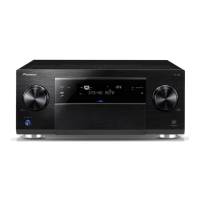
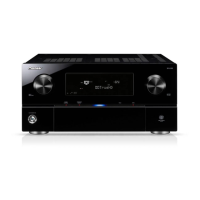
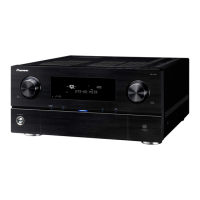
This document is a service manual for the Pioneer SC-LX83 and SC-LX73 Audio/Video Multi-Channel Receivers. It provides detailed information for technicians on the internal components, assembly, and maintenance of these devices.
The Pioneer SC-LX83 and SC-LX73 are advanced audio/video multi-channel receivers designed to deliver high-quality sound and video experiences. These receivers serve as the central hub for a home entertainment system, managing audio and video signals from various sources and distributing them to speakers and displays. Their primary function is to process and amplify audio signals for multi-channel speaker configurations, supporting immersive surround sound formats. Additionally, they handle video signal routing and processing, ensuring optimal picture quality for connected displays.
At its core, the receiver functions as an audio amplifier and a video switcher/processor. It accepts multiple audio and video inputs from sources such as Blu-ray players, gaming consoles, set-top boxes, and streaming devices. The internal circuitry then processes these signals, applying various audio decoding and video enhancement technologies.
For audio, the receiver decodes multi-channel audio formats, including advanced surround sound codecs, to create an immersive listening environment. It features multiple amplifier channels, each dedicated to driving a specific speaker in a surround sound setup (e.g., front left/right, center, surround left/right, and potentially height channels). The power requirements for these models, as indicated in the manual, are AC 220 V to 230 V/ 240 V, with a voltage selector for adaptability. This suggests a robust power supply designed to deliver clean and stable power to the amplification stages, crucial for high-fidelity audio reproduction. The presence of an "ICEPOWER AMP ASSY" (AWH7024, AWH7031, AWH7033) highlights the use of advanced Class D amplification technology, known for its efficiency and powerful output in a compact form factor.
The "DAC HIGH ASSY" (AWX9622, AWX9711) and "DAC LOW ASSY" (AWX9658, AWX9659) indicate sophisticated digital-to-analog conversion stages. These are critical for converting digital audio signals from sources into analog waveforms that can be amplified by the power amplifiers. The distinction between "high" and "low" DAC assemblies might suggest different levels of performance or dedicated DACs for specific audio channels or processing paths, contributing to overall audio clarity and detail.
On the video front, the receiver acts as a central switching unit, allowing users to connect multiple video sources and select which one is sent to the display. While the manual doesn't detail specific video processing capabilities, a multi-channel receiver of this caliber would typically support high-resolution video pass-through and potentially upscaling, ensuring compatibility with modern displays and content. The "DIGITAL MAIN ASSY" (AWX9620, AWX9627, AWX9628) likely houses the primary digital signal processing (DSP) chips responsible for both audio decoding and video signal management. This assembly would coordinate the various digital operations within the receiver, from input selection to output formatting.
The "INTERFACE ASSY" (AWX9605, AWX9701) is responsible for managing the communication between the user and the receiver, as well as external control systems. This includes handling signals from the remote control unit and potentially network connectivity for streaming or smart home integration. The "PRIMARY ASSY" (AWX9604, AWX9697) likely contains the core control logic and power management for the entire unit, overseeing the operation of all other assemblies.
The design of these receivers implies a user-friendly experience, typical of Pioneer's home entertainment products. While the service manual focuses on internal components, the presence of various assemblies hints at the features available to the end-user:
The service manual itself is a primary maintenance feature, providing technicians with the necessary information to diagnose and repair the device. Key aspects relevant to maintenance include:
In summary, the Pioneer SC-LX83 and SC-LX73 receivers are sophisticated audio/video hubs designed for high-performance home entertainment. Their internal architecture, as revealed in this service manual, emphasizes modularity, high-quality audio processing components, and robust power delivery, all supported by comprehensive documentation for effective maintenance and repair.
 General
| Channels | 7.1 |
|---|---|
| Amplification Type | Class D |
| HDMI Inputs | 6 |
| HDMI Outputs | 2 |
| HDMI Version | 1.4a |
| 3D Support | Yes |
| Audio Return Channel (ARC) | Yes |
| Audio Decoding | Dolby TrueHD, DTS-HD Master Audio |
| Network Connectivity | Ethernet |
| iPod/iPhone Compatibility | Yes (via USB) |
| AirPlay | No |
| USB Port | 1 (Front) |
| Wi-Fi | No |
| Bluetooth | No |
| Frequency Response | 5 Hz-100 kHz |
| Signal-to-Noise Ratio | 106 dB |
| THX Certified | THX Ultra2 Plus |
| Network Features | Internet Radio |
| Supported Audio Formats | MP3, WMA, AAC, FLAC, WAV |
| Input Sensitivity | 200mV |
| Power Output per Channel | 140 W (8 ohms, 20 Hz-20 kHz, THD 0.08%, 2ch Driven) |

 To Next Page