10 3
Plunge Cutting
WARNING: RISK OF PERSONAL INJURY OR DAMAGE TO WORKPIECE. It is not recommended
to plunge cut any material other than wood. To avoid loss of control, broken blades or
damage to the workpiece, always use extreme caution when making plunge cuts. Whenever
possible, drill a 3/8" or bigger pilot hole in the area to be cut and start cutting with the blade
in the pilot hole. This will avoid the need to plunge cut.
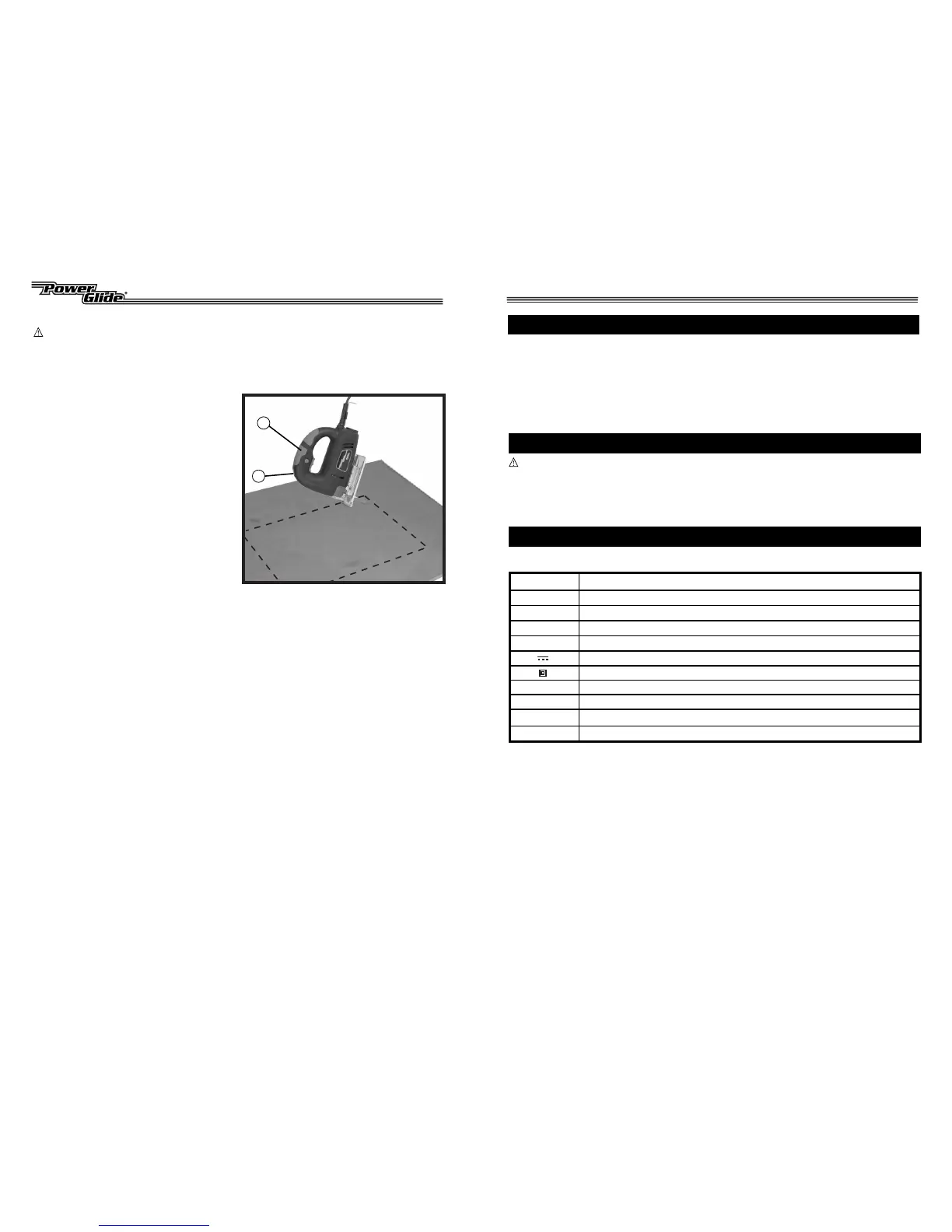
1. (SEE FIGURE 9) To plunge cut an inside
hole, clearly mark the cutting line on
the workpiece.
2. Set the bevel angle at 0º then lock the base
plate. Note: Use a protractor or square to
check the bevel angle between the blade
and the base. Make a test cut in a scrap
piece of material and measure the
bevel angle.
3. Adjust the variable speed control knob (2) to
the desired setting.
4. Hold the tool firmly by the grip (4) and tilt
the saw forward so it rests on the front
edge of the base plate and in a position so
the blade will not touch the workpiece when
the switch is turned on. Note: Make sure the
saw blade is within the perimeter of the
area to be cut.
5. Start the saw and allow it to reach full
speed. Slowly lower the tip of the blade
onto the workpiece while making sure the
front of the saw remains in contact with the
workpiece. Allow the blade to cut through
the wood.
6. Continue lowering the blade into the work-
piece until the saw base rests flat on
the workpiece.
7. Continue sawing toward the cutting line
and complete the cut as required.
Tips for Metal Cutting
Metals such as pipe, steel rods, sheet steel, aluminum, brass and copper can be cut with
your saw.
• To cut thin sheet material, “sandwich” the material between hardboard or plywood and
clamp the layers to limit vibration and material tearing.
• Always use a fine tooth metal cutting blade and run the saw at medium speeds when
cutting metal.
• Use cutting oil to keep blade cool, increase cutting action and prolong blade life.
• Do not force the saw blade. Let it cut at its own speed.
Figure 9
2
4
1. Hold power tool by insulated gripping surfaces when performing an operation where the
cutting tool may contact hidden wiring or its own cord. Contact with a "live"wire will make
exposed metal parts of the tool "live" and shock the operator.
2. Use clamps or another practical way to secure and support the workpiece to a stable
platform. Holding the work by hand or against your body leaves it unstable and may lead to
loss of control.
SPECIFIC SAFETY RULES
CALIFORNIA PROPOSITION 65
SYMBOLS
WARNING: RISK OF CHEMICAL EXPOSURE. Use of this tool can generate dust containing
chemicals known to the state of California to cause cancer, birth defects or other reproductive
harm. To reduce exposure to these chemicals, always use approved safety equipment, work
in a well-ventilated area and wear dusk mask that filters out microscopic particles.
Amperes
Volts
Watts
Alternating Current
Direct Current
Double Insulated Class II Tool
Hertz
Revolutions per Minute
No Load Speed
Strokes per Minute
Symbol Name
The following symbols are used for this tool:
A or Amp
V
W
~
Hz
.../min or RPM
N
SPM
o


 To Next Page