Need help?
Do you have a question about the PowerTec PT6600ES and is the answer not in the manual?
Safe practices for extension cords, grounding, and generator placement to prevent shock.
Guidelines on preventing fires from hot surfaces, fuel handling, and ventilation.
Preventing ignition from fuel spills and safe generator transportation methods.
Warnings about carbon monoxide, careless operation, and generator suspension.
Safe lifting techniques and rules for hazardous locations, confined spaces, and connections.
Detailed steps for starting the generator using the key ignition.
How to safely connect appliances to the generator's AC sockets.
Explains causes of tripping and provides steps for resetting the safety switch.
Table listing common problems, their causes, and suggested remedies.
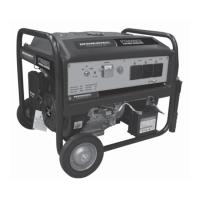
The POWERTEC PT6600ES Portable Generator is designed to provide reliable power for various applications, including home use, camping, emergency power, and periodic commercial use. It is capable of operating most power tools, appliances, and lighting, offering a versatile solution for your energy needs.
The PT6600ES Portable Generator functions by converting fuel into electrical energy, providing an AC output suitable for a range of devices. It features both key start and manual start options, ensuring flexibility in operation. The generator is equipped with a fuel tank, an engine oil system, and an air filter, all essential for its proper functioning. A low oil sensor is integrated to prevent engine damage by automatically stopping the motor if the oil level is too low or preventing it from starting. The generator also includes an AC safety switch designed to protect users from electric shock by cutting off power in case of overload or fault.
Before starting the generator, it is crucial to perform several preparatory steps. First, ensure the engine has oil, as the unit is shipped without it. The crankcase must be filled with the recommended SAE #30 4-stroke oil to the upper level line. The oil level should be checked each time the generator is used. Next, check the fuel level and add unleaded petrol from an approved container, taking care not to overfill the tank to allow for fuel expansion. The fuel cap should be secured tightly, and the fuel filter screen should be in place.
For key start operation, the battery must be connected. Secure the battery to its tray with the provided clamp and connect the red lead to the positive (+) terminal and the black lead to the negative (-) terminal, ensuring they are firmly tightened. Before starting, confirm that no electrical apparatus is connected to the generator. Turn the fuel valve to the 'on' position and move the choke lever towards the back of the generator (to the left) if the engine is cold. Then, turn the key start ignition clockwise to the 'START' position. Once the motor is operating, release the key to allow it to return to the 'ON' position, and push the choke lever back in to switch the choke 'off'. For manual starting, follow the same initial steps for fuel and choke, then turn the key start ignition to the 'ON' position and pull the recoil starter briskly until the engine engages.
After starting, allow the engine to run for a couple of minutes to warm up before connecting any apparatus. For AC current, ensure the AC safety switch is turned "OFF" before plugging power cords into the AC output sockets. Once connected, switch the AC safety switch to the "ON" position. Always ensure that the total load is within the generator's rated output and that electrical apparatus is turned off before plugging them in. The generator is designed to withstand short operations and loads up to its peak power, but sustained overloading can trip the safety switch and shorten the generator's service life. If the safety switch trips, unplug all electrical apparatus, let the switch cool down, and then reset it. Reduce the load before reconnecting appliances.
To stop the engine, first ensure no electrical apparatus is connected. Turn the key start ignition to the 'OFF' position, and then turn the fuel lever clockwise to the 'off' position.
Regular maintenance is vital for the generator's best performance and safe operation. Key maintenance tasks include:
The generator should be stored in a clean, dry area, away from inflammable liquids. If storing for more than 30 days, drain the fuel tank and fuel system by opening the small drain valve in the carburetor bowl. Never store the generator with fuel in the tank indoors or in poorly ventilated areas where fumes could reach an open flame or spark. Keep the generator clean and dry, avoiding excessive moisture, dust, or corrosive vapors. Clean with a damp soft cloth and mild detergent, but never use water pressure to clean the generator to prevent damage to internal parts. Use a vacuum to clean air inlet and outlet louvres, followed by a compressed air jet for internal cleanliness. Wear eye protection during cleaning.
 General
| Model | PT6600ES |
|---|---|
| Type | Portable Generator |
| Maximum Output | 6600 Watts |
| Rated Output | 5500 Watts |
| Engine Type | 4-Stroke OHV |
| Displacement | 389cc |
| Fuel Type | Gasoline |
| Fuel Tank Capacity | 6.6 Gallons |
| Frequency | 60 Hz |
| Voltage | 120/240V |
| Outlet | 4x 120V 20A, 1x 120/240V 30A |
| Wheel Kit | Yes |

 To Next Page