Warning & Safety Statement
Only trained and fully qualified technicians should
test, repair or adjust vehicle refrigeration
equipment. Even something as "simple" as
tightening a belt can put the uniformed individual at
serious personal risk.
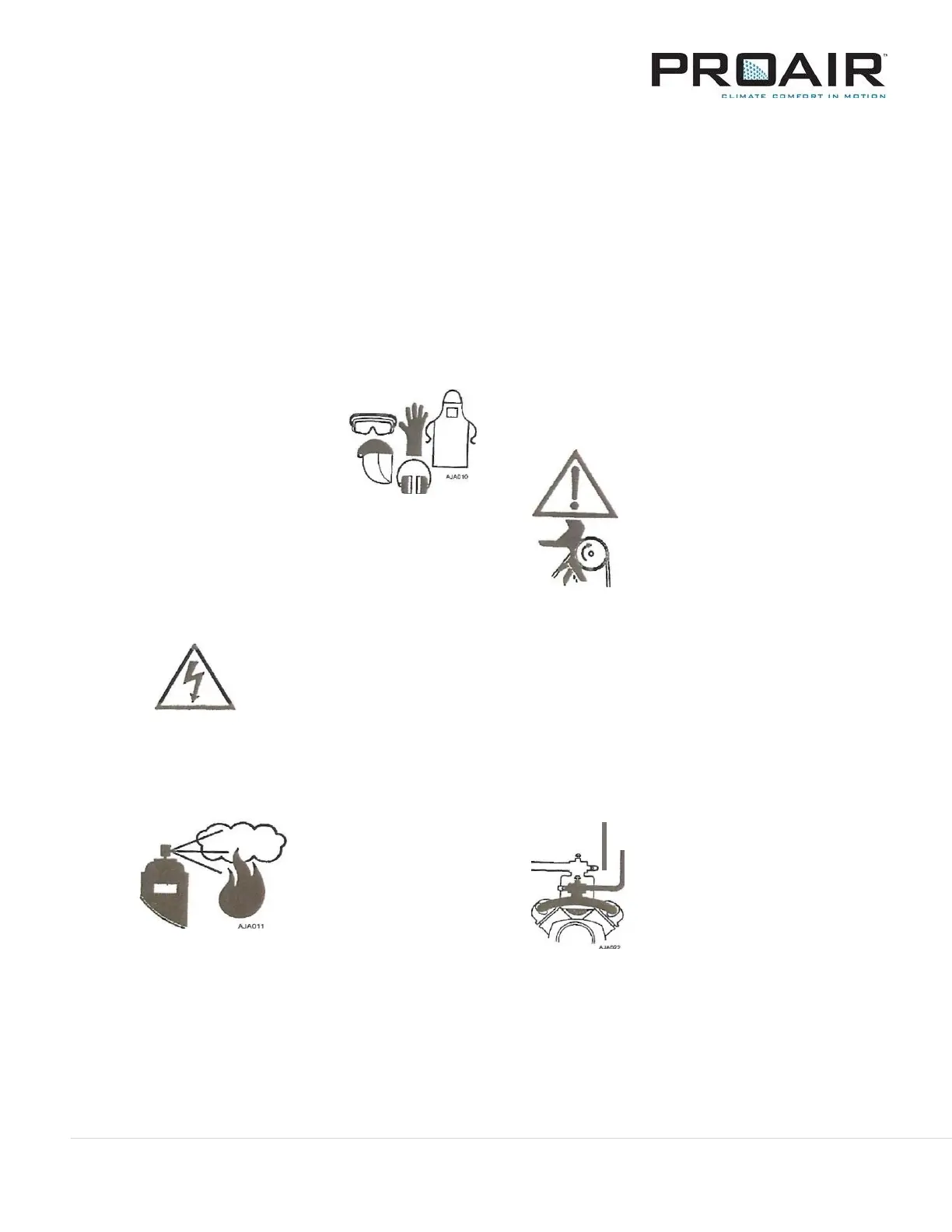
Personal Protective Gear
When working on and
around transport
refrigeration units, it's
important to wear
protective clothing. It's
important to protect
yourself from battery acid,
hot coolant, refrigerant s, refrigerant oils, flying dirt.
debris, and noise.
High Voltage
When working on all-electric units
you may be exposed to high
voltage. To work
safely on this
equipment, you MUST fully
understand and follow safe
electrical
work practices.
Toxic Gas
Frostbite
Liquid refrigerant in contact with your skin will
cause severe injury. Always wear eye protection
and protective clothing and use extreme care when
opening valves and removing caps, gauges,
refrigerant lines, etc.
May Start Automatically
All-Electric units
have an
auto-start
feature that
may
start the system
without warning.
Keep all service doors
closed and
guards in
place when
not
working on the
unit. Place the unit
'
ON/OFF switch in
the
OFF position and disconnect the negative
battery
cable before working on or near
components that
rotate during normal operation.
Refrigerants in the
presence of an open flame
produce toxic gases.
These gases are severe
respiratory irritants
capable of causing death.
Use caution when working
with refrigerant in a closed
or confined area with a limited air supply such as a
trailer, container or hold of a ship. Refrigerant
displaces air and can cause death due to suffocation.
Hot Surfaces
Ventilation
The compressor discharge
manifold, engine exhaust
system, and other unit
component s may be extremely
hot. These surfaces can cause
severe bums.
Soldering may produce harmful
gases. Make sure the area is well
ventilated when soldering.



 To Next Page