6
OPPERATION
OPERATION
1.
Situate the compressor as far away as possible from sandblasting area to minimize dust intake.
2. The air supply must be clean and free of moisture and oil.
3. Use a compressor that can supply enough air per specifications. Insufficient air pressure will
prevent the tool from operating correctly.
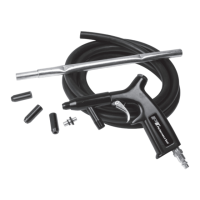
4. Always test the sandblaster on a hidden surface to make sure damage will not occur.
5. Always filter the abrasive material to remove any clumping or debris and prevent clogging.
6. Do not try to spray thick liquids or large grain sized abrasives.
7. Use the lowest effective pressure on soft surfaces to prevent pitting.
8. With the air hose and rubber hose connected, and wearing proper safety equipment, aim
sandblaster gun at surface and pull trigger.
9. Whenever the nozzle is removed, cleaned, or replaced use a brush to clean the threads and
replace the o-ring.
TYPE OF ABRASIVE (SIEVE/SIZE)
APPLICATION
Sand (20-40)
General purpose use. Removing light rust
and paint from metal, wood or other
surfaces; wood finishing; metal cleaning;
glass and stone etching; hole drilling in
glass, brick or cement block; light stone
cleaning; exterior automotive parts
cleaning and water deposit removal
Sand (50-100)
Used for a fine polish finish or antique
wood finish, brass and silver polishing,
automotive parts cleaning and polishing,
sheet metal surface polishing, and fine
glass etching
Aluminum oxide
Heavy rust removal and rough surface
paint removal
Corn cob meal Wood and glass cleaning (fine)
Walnut or pecan shells (ground) Wood and glass cleaning (coarse)
Wood and glass cleaning (coarse)
Removal of flash, burrs and paint from
metal or glass without abrading work
* Note: Abrasive media that has not been cleaned and screened could contain material that will clog the gun nozzle and
should be avoided


 To Next Page