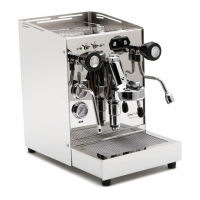
Vetrano
Chris’ Coffee Service, Inc.
- 5 -
Adjust your grind so that when you activate the pump, the flow of coffee coming out of the
portafilter spout looks like the tapered tail of a mouse and has approximately the thickness of
ballpoint pen filler.
Now, last but not least, when is it done? The coffee tells you when it is finished; simply observe
the color of the crema. When the crema changes from a reddish brown color to a lighter blond
color, it is done; stop brewing by pressing the lever all the way down. If you run the pump after the
color has begun to change to light blond, you will only dilute the coffee and extract undesirable
bitters.
If you really want to know what is happening, purchase a bottomless portafilter. You will get
instant feed back. There is also a link to an article in our FAQ section on how to use the
bottomless portafilter.
You have to admit that is a lot easier than using shot glasses and timers!
Tip: Get into the habit of disposing of the spent grounds immediately after brewing espresso.
After disposing of the grounds, return the portafilter to the group and lift the lever up for three to
five seconds to rinse away excess oils and loose grounds. By regularly following this procedure,
you will greatly reduce the tar-like buildup on the dispersion screen that occurs if you allow coffee
oils to dry and bake on the hot group.
How to Froth Milk for Cappuccinos and Lattes
First, let’s talk about some of the first things you need to learn in order to become ‘barista-like’ in your
techniques.
Milk – whole milk works best to steam, both in technique and in flavor! Lower fat milks contain mostly
water which will not foam well and will be almost tasteless when steamed. After all your hard work
you will be left with a less than desirable tasting beverage.
Milk – your whole milk needs to be as cold as possible to ensure the creamiest, sweetest, and best
tasting micro-foam. Once the milk has reached a temperature between 150-160 degrees, you must
stop the process. The longer amount of time you have with the cold milk gives you that extra time to
continue making the milk creamy and sweet tasting. Milk heated above 160 degrees will be burnt and
taste terrible.
Frothing Pitcher – keeping your stainless steel pitcher in the freezer is another tip which helps keep
the milk its’ coldest. The size of your pitcher is relative to the size and number of drinks you will be
preparing at the time. Of course our recommendation on pitcher choices would be our own “Pro
Barista Steaming Pitcher” which has become the pitcher of choice of the renowned baristas* who
helped train Chris’ Coffee Service in this frothing technique. These baristas felt the Pro Barista
Steaming Pitcher promoted a user friendly rolling of the milk which made it simple to create thick
micro-foam for pouring Latte Art.


 To Next Page
 Loading...