
 Need help?
Do you have a question about the Quietside QSCC-243 and is the answer not in the manual?
Guidance on proper installation procedures and safety checks before unit use.
Essential warnings and guidelines for safe and correct operation of the air conditioner.
Key safety advice, including flammable materials, water, and obstructions.
Guidance on contacting professionals for maintenance and handling abnormal situations.
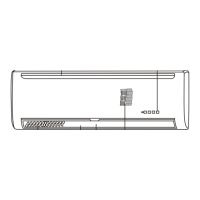
Identifies and describes the function of indoor and outdoor unit parts.
Explains how to open/close the unit access panel and use the emergency key.
Details the purpose and operation of each button on the remote control.
Describes the process of signal transmission between the remote and the air conditioner.
Guide for selecting modes like Auto, Cool, Dry, Heat, and Fan.
Instructions for adjusting airflow direction and setting timers.
Instructions for using Sleep mode for quieter operation and gradual temperature adjustment.
Explains heating principles and the defrosting process.
Procedures for maintenance before, during, and after the operating season.
Checks for when the air conditioner fails to start or operate.
Diagnosing and resolving problems with cooling or heating performance.
Situations requiring immediate shutdown and professional contractor intervention.
Reasons for restart delays and airflow variations during operation cycles.
Explanations for mist, cracking noise, remote signal issues, and moisture.
Key safety and technical considerations for electrical connections.
Schematics for connecting outdoor unit wiring for different models.
Specific advice for connecting the defrost sensor on heat pump models.
Guidance for HVAC contractors on manual usage and seeking technical assistance.
General safety warnings, including voltage checks, grounding, and unit condition.
List of components and materials that the installer must provide.
Factors for selecting location and requirements based on application type.
Overview of unit communication, sensors, and optional controls.
Instructions for unpacking units and selecting indoor unit mounting location.
Procedure for drilling wall penetrations for lines, wiring, and sensors.
Instructions for installing the mounting bracket and preparing line set connections.
Attaching the indoor unit and selecting the outdoor unit location.
Detailed instructions for connecting, insulating, and running refrigerant lines.
Procedure for achieving a deep vacuum to remove moisture from the system.
Instructions for connecting the main power supply, including breaker sizing.
Instructions for high-voltage control wiring between indoor and outdoor units.
Guidance on connecting and extending the condensate hose for proper drainage.
Details on additional refrigerant for line sets and standard operating parameters.
 General
| Cooling Capacity | 24000 BTU/h |
|---|---|
| Voltage | 208-230V |
| Power Supply | 1 Phase, 60 Hz |
| Refrigerant | R410A |
| Operating Temperature Range (Cooling) | 62°F |
| Dimensions (H x W x D) | 31.5" |


 To Next Page