Need help?
Do you have a question about the RAK WisBlock RAK19012 and is the answer not in the manual?
List of necessary hardware components for setup.
Required software for development and programming.
Instructions for physically attaching the RAK19012 module.
Details on connecting RAK19012 to compatible WisBlock Base boards.
Step-by-step guide for mounting the module onto a base board.
Instructions for safely removing the module from a base board.
Connecting and using Li-Ion/LiPo batteries for power.
Guidelines for connecting solar panels for battery recharging.
Accessing sample code for IoT device development.
Overview of the RAK19012 WisBlock USB LiPo Solar Power Slot Module.
Highlights of the module's capabilities and functionalities.
Overview of the module's technical attributes and parameters.
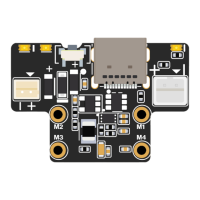
Details on the various connectors and interfaces on the module.
Information about the specific connectors for battery and solar input.
Explanation of the functions of the module's LEDs.
How to use the reset button to restart the module.
Detailed breakdown of the pinout for the WisConnector.
Voltage and operating limits to prevent damage.
Recommended parameters for compatible Li-Ion batteries.
Physical dimensions and measurements of the module.
Layout and recommendations for the WisConnector footprint.
Operational and storage temperature requirements for the module.
Detailed circuit diagrams of the RAK19012 module's sections.
The RAK19012 WisBlock USB LiPo Solar Power Slot Module is a versatile power board designed to integrate seamlessly with WisBlock Base boards that feature a power slot. This module serves as a central power management unit, providing essential functionalities for various IoT applications. Its primary function is to supply power to a WisBlock Core module and other connected WisBlock modules, while also offering capabilities for programming, debugging, and battery management.
At its core, the RAK19012 facilitates the power supply to the WisBlock Core via a USB-C connector, which also doubles as an interface for programming and debugging the firmware on the Core module. This dual-purpose connector simplifies the development process, allowing developers to power the device and upload code using a single connection. The module is compatible with LiPo rechargeable batteries, offering a portable and sustainable power solution. It includes an onboard battery charger chip that efficiently manages the charging process of the connected LiPo battery.
For enhanced power autonomy, the RAK19012 features a dedicated solar panel connector. This allows the module to recharge the LiPo battery using solar energy, making it ideal for remote or off-grid deployments where continuous power supply is crucial. The integration of solar charging capabilities extends the operational lifespan of the device without requiring manual battery replacements.
The RAK19012 also incorporates several user-friendly features to monitor and control the device's status. It includes LED indicators for charging status, providing visual feedback on whether the battery is currently charging or fully charged. Additionally, there are two user-configurable LEDs (one green and one blue) that can be controlled by the MCU module. These LEDs offer flexible options for indicating various operational states or custom alerts within an application. A reset button is also present, connected to the MCU module, allowing users to easily reset the MCU when needed.
In terms of usage, the RAK19012 is designed for straightforward integration. It mounts directly onto the power slot connector of a WisBlock Base board. The connection is secured using compatible screws, ensuring a stable and reliable physical link. This modular approach allows for easy assembly and disassembly of the WisBlock modules, facilitating maintenance and upgrades. When disassembling, users are guided by silkscreen markings on the module to identify the correct locations to apply force, preventing damage to the components.
The module supports a specific range of LiPo batteries, typically 3.7-4.2 V, and it is crucial to ensure that the battery wires match the polarity indicated on the RAK19012 board to prevent damage. Similarly, for solar panel connections, only 5 V solar panels are supported, and careful attention to polarity is required.
For software development, while no specific software is required to simply use the RAK19012 for power, controlling its user LEDs and monitoring battery voltage necessitates its attachment to a WisBlock Base and WisBlock Core. RAKwireless provides an Arduino BSP (Board Support Package) to add their Core boards to the Arduino IDE, simplifying the programming environment. Example codes are available in the WisBlock Example code repository, particularly in the "common" folder, which are compatible with various WisBlock Cores like RAK4631, RAK11200, and RAK11310. These examples demonstrate how to access the user LEDs using macrodefinitions (LED_GREEN/PIN_LED1 for green, LED_BLUE/PIN_LED2 for blue) and read battery voltage using WB_A0.
Maintenance features are inherent in the modular design of the WisBlock ecosystem. The ability to easily mount and dismount the RAK19012 from the baseboard, secured by screws, allows for convenient inspection, replacement, or upgrade of individual modules without affecting the entire system. This modularity also simplifies troubleshooting, as components can be isolated and tested more easily. The clear labeling of connectors for battery and solar panels, along with polarity indicators, aids in correct wiring and prevents common connection errors during setup or maintenance. The presence of LED indicators for charging status provides immediate visual feedback, assisting in diagnosing power-related issues. For connecting other modules to remaining WisBlock Base slots, the WisBlock Pin Mapper tool is available to check for potential conflicts, ensuring proper system configuration and preventing damage.
 General
| Sensor | Not applicable |
|---|---|
| Measurement | Not applicable |
| Operating Voltage | 3.3V |
| Operating Temperature | -40°C to +85°C |
| Interface | I2C |
| Communication Interfaces | I2C |

 To Next Page