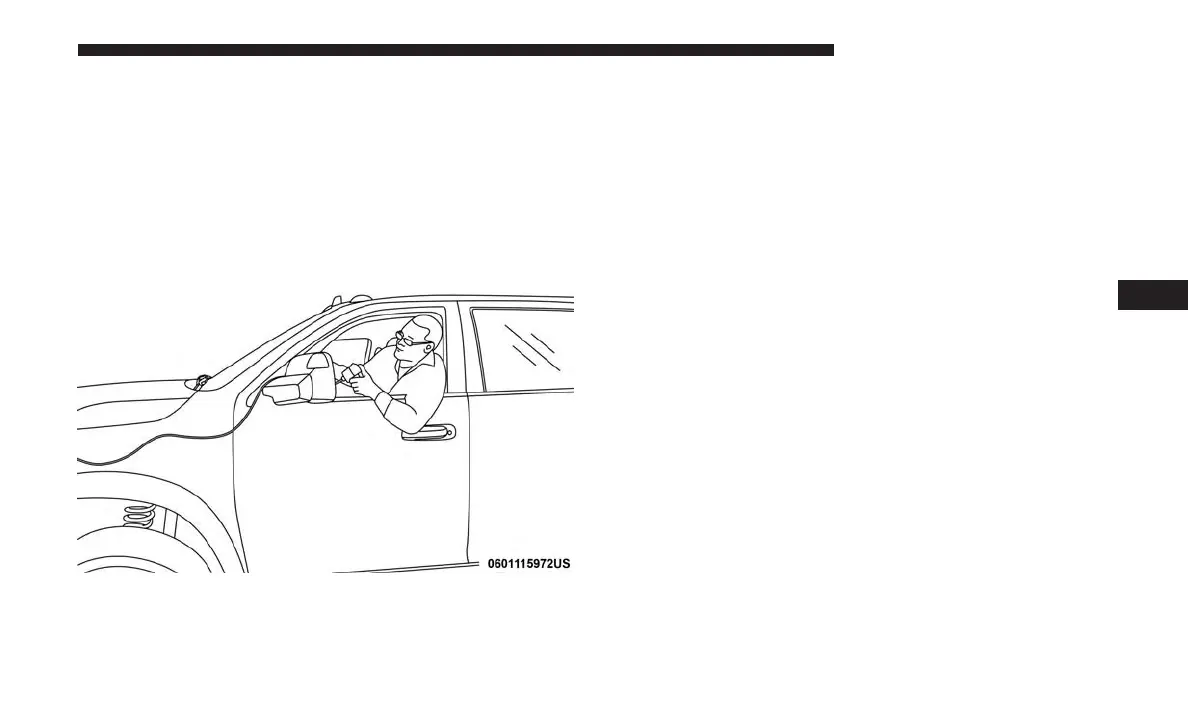
14. Begin winching. With the winching vehicles engine on
and light tension already on the wire rope, begin
winching slowly and steadily. Be sure that the wire
rope is winding evenly and tightly around the spooling
drum. For additional assistance, the winched vehicle
can be slowly driven while being pulled by the winch.
Continue pulling until the vehicle is on stable ground.
If you are able to drive the vehicle, the winching
operation is complete.
NOTE:
• Avoid overheating the winch motor. For extended
winching, stop at reasonable intervals to allow the
winch motor to cool down.
• What to look for under load:
The wire rope must
always spool onto the drum as indicated by the drum
rotation decal on the winch. As you power-in, make sure
the wire rope winds evenly and tightly on the drum. This
prevents the outer wire wraps from drawing into the
inner wraps, binding and damaging the wire rope. Avoid
shock loads by using the control switch intermittently to
take up wire rope slack. Shock loads can momentarily far
exceed the winch and wire rope ratings. During side pulls
the wire rope tends to stack up at one end of the drum.
This stack can become large enough to cause serious
damage to the winch. So, line up pulls as straight ahead
as possible and stop winching if the wire rope comes close
to the tie rods or mounting plate. To fix an uneven stack,
spool out that section of the rope and reposition it to the
opposite end of the drum, which will free up space for
continued winching.
15. Secure vehicle. Once recovery of the vehicle is com-
plete, be sure to secure the vehicle’s brakes and shift
the transmission to PARK. Release tension in the wire
rope.
Using The Remote Control
6
STARTING AND OPERATING 389














 To Next Page