The Rawlings Pro Line Two Wheel Pitching Machine is a sophisticated device designed for training in baseball and softball, capable of throwing various pitches with accuracy and consistency. Manufactured, sold, serviced, and supported by Spinball Sports LLC, this machine is intended for adult supervision only and emphasizes safety with requirements for batters to wear helmets and operators to stay behind protective screens.
Function Description:
The primary function of the pitching machine is to propel baseballs and softballs at various speeds and with different spins to simulate different types of pitches. It achieves this using two independently controlled wheels that grip and launch the ball. The machine's orientation can be adjusted horizontally, vertically, and with a twist angle to control pitch aim and curve. It can be used for both offensive batting practice and defensive drills.
Important Technical Specifications:
- Power Source: The machine operates on 120V AC. It can be powered by a standard household outlet or a portable gas generator with a recommended capacity of 800W minimum. For battery operation, a 12V battery with a 1000W minimum true sine wave inverter is required. The machine draws a maximum continuous load of 4 Amps (480 Watts).
- Wheel Speed Controls: Individual rotary knobs control the speed of each of the two wheels, labeled '1' and '2'. The speed displays are calibrated for baseballs, with actual softball pitch speeds being approximately 15% slower due to their heavier weight.
- Wheel Gap Adjustment: The gap between the wheels is crucial for pitch speed and accuracy. There are 11 possible locations for each motor and wheel assembly, allowing for precise adjustment based on ball size and compressibility. Softer, more compressible balls require a smaller gap.
- Ball Feeder Tubes: The machine includes two feeder tubes: a 3-inch tube for baseballs, tennis balls, or cricket balls, and a 4-inch tube for softballs.
- Aiming Adjustments: The machine features three angle adjustments: horizontal, vertical, and twist. The horizontal and vertical joints have geared "micro-adjust" knobs for fine-tuning aim. The twist angle joint has nine holes, allowing for 16 different spin/curve directions.
- Wheel Balancing: The wheels are balanced to a high degree of accuracy (10X more accurate than a typical car tire).
Usage Features:
- Assembly: The machine requires minimal assembly. Legs slide into sockets on the tripod base until spring-loaded buttons pop up. The ball feeder tube attaches with two thumb screws, positioned to clear the wheels by 1/4 - 1/2 inch. Transport wheels and an aiming handle are also installed with pre-installed screws.
- Ball Compatibility: It is designed for regulation sports balls or balls specifically designed for machine use. Consistency in ball type (real, dimpled, high/low seam, compressible/hard) is crucial for accuracy. Mixing ball types in one setup is not recommended.
- Pitch Variety: By adjusting the individual wheel speeds and the twist angle, the machine can throw various pitches, including fastballs (requiring backspin, meaning the bottom wheel must be faster than the top), knuckleballs (both wheels at the same speed), and curveballs (by setting one wheel faster than the other and adjusting the twist angle). A greater difference in wheel speeds creates more spin and curve.
- Speed Calculation: The speed of the ball is approximately the average of the two wheel speed settings. For example, wheel speeds of 90 and 60 mph will result in a 75 mph pitch.
- Aiming Handle: A ball-ended aiming handle screws into one of two tabs on the side of the frame for convenient aiming.
- Safety Precautions: Users must use a grounded (3-prong) outlet, and a GFCI outlet when outdoors. The machine should not be used in wet conditions. The operator should stay behind a protective screen.
- Stability: The machine should be held steady when loosening joints for adjustments, as it may move under its own weight. When used on hard, slick surfaces, it should be placed on a carpet scrap or non-slip mat to prevent movement from recoil.
Maintenance Features:
- Wheel Cleaning: The wheels can accumulate residue, especially from new plastic balls, which can make them slick and reduce grip. They should be cleaned with solvent cleaners such as MEK, acetone, or lacquer thinner, along with sandpaper.
- Storage: If stored outdoors, the machine must be covered to protect it from rain. Tarps or large trash bags can be used. It should not be left outside during storms to prevent damage from high winds. Do not store the machine with the urethane wheel tread compressed against the ground to prevent flat spots. Avoid storing in very hot, humid conditions, which can accelerate wheel tread aging.
- Wheel Wear: Wheels are wear items and are prorated for warranty purposes. Over time, as wheels wear, they may need to be moved closer together to compensate for reduced grip.
- Warranty: All components are covered for five years for non-commercial use (one year for commercial use), excluding normal wear and tear or misuse. Wheels are prorated. Spinball Sports LLC offers free re-balancing of wheels if needed, though shipping costs are not covered.
- Returns: Products can be returned within 30 days for a full refund minus a 15% restocking fee, provided there is no non-cosmetic damage.

 Need help?
 General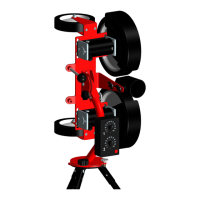

 To Next Page