EasyManua.ls Logo

Raychem TRACETEK TT5000-HS - User Manual

Raychem TRACETEK TT5000-HS
10 pages
Print Icon
To Next Page IconTo Next Page
Loading...
DESCRIPTION
These instructions explain the proper procedures for installing and testing
nVent RAYCHEM TraceTek TT500X-HS sensing cables. (TT500X-HS refers
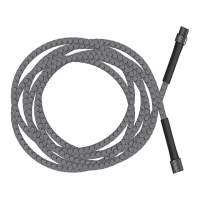
to either TT5000-HS or TT5001-HS). TT500X-HS sensing cables are primarily
intended for use in underground (fuel or solvent) pipeline applications. TT500X-
HS sensing cables ignore water but will detect and locate (fuel or solvent) spills
and leaks. (See the data sheet for specific performance characteristics.)
Important Notes
When used to monitor underground fuel pipelines, TT500X-HS sensing cables
are typically installed within slotted conduit that is routed alongside the main
pipeline. TT500X-HS sensing cable is designed for use within slotted PVC
conduit and is constructed with an outer layer of polyethylene fibers to provide
extra pulling strength and low friction during the installation process. The
sensor cable core is standard TT5000 (for fuel) or TT5001 (for solvent) with
well documented response times, numerous third party qualifications and years
of successful applications.
TT5000-HS sensing cable is identified by the all white color of the outer jacket.
TT5001-HS sensing cable is identified by a purple TRACER in the white
outer jacket.
GENERAL NOTES: DO’S AND DON’TS:
TOOLS REQUIRED
nVent RAYCHEM TraceTek
TT-PTB-1000
(part # 486437-000)
Portable Test Box, battery powered instrument
specifically designed for testing and trouble
shooting TraceTek systems
Ohmmeter
(>20 M ohm)
Can be used as an alternative and supplement to
the PTB 1000
nVent RAYCHEM TraceTek
TT-MAPPING CAP-MC
(part # P000000871)
Used to simulate leaks at connector points during
commissioning and mapping process
Extran Vent RAYCHEM
TraceTek TT-MLC-MC-BLK
(part # 133332-000)
Leader cable. Used with the ohmmeter to make
connections to the sensor cable for resistance
measurements
Extra TT-MET-MC
(part # 571293-000)
End termination. Used during installation or trouble
shooting to temporarily isolate a sub-section of
sensor cable for resistance measurements.
nVent RAYCHEM TraceTek
TT-Kellems-Grip-Large
(part # P000001291)
Large Kellems Grip used in cable pulling when rope
overbraid loop not available.
nVent RAYCHEM TraceTek
TT-ULTRA-TORCH
(part # 390067-000)
Flameless heating tool (Ultratorch 200) or suitable
heat gun with concentrator tip
REQUIRED MATERIALS
Conduit cleaning tool Used in proofing installed sections of conduit.
Conduit end caps Used to cover exposed conduit end to maintain
conduit cleanliness.
Heat shrink tubing
segments
Used as environmental seal over all mated male/
female (pin/socket) connections
OPTIONAL MATERIALS
nVent RAYCHEM TraceTek
TT-MBC-MC-TW
(part # P000001206)
Branch connector designed for rugged outdoor
applications used to connect and branch "T" lines
nVent RAYCHEM TraceTek
TT-MJC-XX-MC-BLK
Jumper cable is available in various pre-cut and
terminated lengths
nVent RAYCHEM TraceTek
TT5000–HUV–CK
MC–M/F
(part # P000001207)
Connector kit used during field connection of
TT500X-HS bulk cable
TraceTek Sensing Cable for Underground Leak Detection
Installation Instructions
TT5000-HS (for fuel leaks)TT5001-HS (for solvent leaks)
DO:
Store the cable in its original container in a clean, dry area until ready to install.
Schedule the sensor cable installation as late as possible in the construction
schedule to avoid risk of damage or contamination by other contractors or
construction tasks.
Remove cable from the pipe if any thread cutting, welding, soldering or similar pipe
fitting work will be performed.
DON’T:
Drag the cable through water, paint, solvents, oil or other contaminants.
Install damaged or contaminated sensing cable.
Exceed the maximum pulling force of 100 kg (220 lb).
Use the cable as a rope for lifting or securing any object.
Allow tools or heavy objects to fall on cable.
Exceed 3300 ft (1000 m) of individual sensor cable circuit length when using a SIM
alarm module.
• Testthecablewithfuel. • Usetiewraporwiretosecurethecable.
Question and Answer IconNeed help?

Do you have a question about the Raychem TRACETEK TT5000-HS and is the answer not in the manual?

Summary

Product Description and Notes

Description

Explains procedures for installing and testing TraceTek TT500X-HS sensing cables for underground leak detection.

Important Notes

Key usage considerations for TT500X-HS sensing cables, including conduit installation and cable identification.

General Dos and Donts

Recommended Actions (Dos)

Recommended actions for storing, scheduling, and handling the sensing cable during installation.

Prohibited Actions (Donts)

Prohibited actions to avoid damaging the sensing cable or compromising its integrity.

Installation: Conduit and Rope Preparation

Prepare Conduit and Pull Rope

Prepare the conduit and pull rope, verifying construction completion and proper installation.

Conduit Cleaning

Clean and check conduit clearance before installing cable to prevent damage.

Sizing Tool Pull

Pull the sizing tool through the conduit to verify clearance and prepare for cable pull.

Conduit End Preparation

Mark conduit ends for direction, coil excess rope, and cover conduit ends to maintain cleanliness.

Installation: Cable Attachment and Pulling

Plan Cable Pull Direction

Plan the cable pull by identifying cable ends, orientation, and conduit identification.

Attach and Secure Kellems Grip

Attach a Kellems grip to the sensing cable for pulling if the rope overbraid loop is not available.

Installation: Cable Pulling

Pulling the Cable

Detailed procedure for pulling the sensing cable, emphasizing care, slack, and communication.

Cable Extension Beyond Conduit

Extend the sensing cable at least 1-2 feet beyond the conduit riser for connectorization.

Sensing Cable Test Procedure

Initial Cable End Exposure

Expose the sealed end of the sensor cable, preparing it for testing or connectorization.

Bulk Cable Connectorization

Procedure for connectorizing bulk sensing cable after pulling into conduit.

Sensing Cable Test Procedure (Continued)

Rope Braid Preparation

Spread rope braid fibers to expose the sealed end of the sensor cable.

Cable Exposure and Securing

Pull sensor cable out and tape rope braid to prevent springing back.

System Completion

Install Additional Components

Install other TraceTek components like connectors, jumpers, and end terminations.

Test Sensing Circuit Integrity

Test the sensing circuit to confirm the cable is clean and intact.

Seal Connections with Heat Shrink

Install heat shrink tubing as an environmental seal over mated connectors.

Connect to Alarm Module

Connect the sensing circuit to the TraceTek alarm module and activate the system.

End of Work Day Procedures

End-of-Day Checks and Actions

Ensure no exposed connectors, test installed cable, and connect to alarm module if practical.

Next Day Start-up Checks

Check installed cable integrity and compare results with the previous day before proceeding.

Sensing Cable Testing Methods

Testing with Portable Test Box

Procedure for testing sensing cable using the nVent RAYCHEM TraceTek Portable Test Box.

Testing with Ohmmeter

Procedure for testing sensing cable using an ohmmeter and leader cable.

System Connections and Layout

Cable Types and Branching

TT500X-HS availability in bulk or factory-assembled lengths, and optional branch connector usage.

Terminations and Jumpers

Install end terminations and use jumper cables to connect sensing cable sections.

Leader Cable and Management

Install leader cable to alarm module and use fastening straps for cable management.

Initial Power-up and System Testing

Connect and Power Up System

Connect cable to alarm module, apply power, and check for 'Normal' indication on instruments.

Interpret System Indications

Understanding LED and display indications for Normal, Leak, Cable Break, and Service conditions.

Perform Leak Simulation

Performing leak tests using a mapping cap or by bending the sensor cable.

Create System Map

Create a System Map showing cable installation details, connections, and distance readings.

Troubleshooting Guide

Symptom-Based Troubleshooting

Diagnosing and correcting common issues like no power, leak alarms, service requests, and inaccurate locations.

Cable Integrity and Reset Issues

Information on TT500X-HS cable reset limitations and replacement procedures after exposure.

Leak Location Accuracy Problems

Addressing issues with inaccurate or unstable leak locations during tests or actual events.

Raychem TRACETEK TT5000-HS Specifications

General IconGeneral
BrandRaychem
ModelTRACETEK TT5000-HS
CategoryCables and connectors
LanguageEnglish

Related product manuals