Need help?
Do you have a question about the RC 60A ESC and is the answer not in the manual?
Procedure to set minimum and maximum throttle range for stable linear response.
Details on how to program the ESC via the transmitter using tone sequences.
Instructions for programming the ESC using a separate programming card.
Setting the battery type to ensure correct voltage protection and cell detection.
Configuring low voltage cutoff levels to protect the battery.
ESC's response to high temperatures, reducing power to prevent damage.
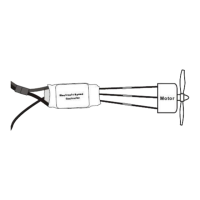
The RC Electric Parts' Electric Speed Controller (ESC) for Brushless Motors is a sophisticated device designed to meet the diverse needs of hobbyists in the realm of remote-controlled aircraft. At its core, the ESC serves as the brain for controlling brushless motors, translating commands from a transmitter into precise motor actions. Its primary function is to regulate the speed and direction of the motor, ensuring smooth and reliable operation for both fixed-wing airplanes and helicopters.
The ESC is built around a powerful, high-performance microcontroller processor, which is the key to its extensive programmability and feature set. This advanced processor allows the ESC to adapt to various operational demands and user preferences. One of its critical functions is to support high RPM motors, enabling users to achieve impressive speeds and performance from their models. Beyond simple speed control, the ESC is capable of maintaining a desired constant RPM, which is particularly beneficial for applications requiring stable power output, such as helicopter flight.
A core aspect of the ESC's design is its focus on reducing interference, ensuring that control signals remain clear and uninterrupted, which is vital for safe and responsive operation. The device also offers configurable starting speeds, allowing users to fine-tune how quickly their motors spool up, catering to different motor types and model requirements. The throttle response is engineered to be very quick, stable, and linear, providing a natural and predictable feel for the pilot.
For safety and longevity, the ESC incorporates several protection mechanisms. It features abnormal input voltage protection, safeguarding the unit from incorrect power inputs. Low voltage protection is also integrated, which can be configured to either reduce power or completely cut off the motor to prevent over-discharging of the battery, thereby extending battery life. Furthermore, the ESC includes a crucial safety feature that cuts power when a signal is lost, preventing runaway models. Overheat protection is another vital function, automatically reducing output power if the ESC's temperature exceeds a safe threshold, then restoring full power once the temperature drops. This prevents damage to the ESC and ensures continued operation, albeit at a reduced capacity, to allow for a safe landing.
The integrated SBEC (Switching Battery Eliminator Circuit) is a significant feature, providing high current efficiently with minimal heat loss. This circuit steps down the input battery voltage to power the receiver and other connected components, eliminating the need for a separate battery for the control system. This not only simplifies the wiring but also reduces the overall weight of the model.
The RC Electric Parts' ESC offers a highly customizable user experience through its programmable settings. These settings can be adjusted either via the transmitter during startup or more conveniently using a dedicated programming card, which is sold separately. This flexibility allows users to tailor the ESC's behavior to their specific model, flying style, and environmental conditions.
One of the first steps in using the ESC is the "Throttle Range Calibration." This procedure is essential when using the ESC for the first time or when switching transmitters. It sets the minimum and maximum throttle range, ensuring a stable and linear throttle response across the entire stick movement. This calibration process involves a simple sequence of moving the throttle stick to the top and bottom positions while powering on the ESC, guided by distinct beeps from the motor.
Normal startup involves plugging the ESC into the battery, after which the motor will emit a series of beeps to indicate the number of LiPo battery cells detected. This provides immediate feedback on the power input. The ESC also beeps to confirm the status of the brake setting (on or off), indicating its readiness for use.
The programmable parameters cover a wide range of operational aspects. Users can enable or disable the brake function, which determines whether the propeller stops immediately or spins freely when the throttle stick is moved to the neutral position. This is useful for different types of models and landing scenarios.
Battery type selection is crucial for proper low voltage protection. The ESC supports both LiPo/Li-ion and NiMH/NiCad battery types. For NiMH/NiCad batteries, the cutoff voltage is automatically set at 65% of the initial voltage, though this can be modified. For LiPo/Li-ion batteries, the ESC automatically detects the number of cells and bases the cutoff voltage on a per-cell setting (e.g., 2.8V, 3.0V, or 3.2V per cell), which can also be adjusted. The battery protection level can be set to low, medium, or high, corresponding to different voltage thresholds or percentages of initial voltage, allowing users to balance performance with battery longevity.
Timing is another adjustable parameter, with options for automatic, low (7-22 degrees), and high (22-30 degrees) settings. The automatic setting is generally suitable for most motors, but specific low timing is recommended for 2-pole inrunner motors, and high timing for 6 or more pole outrunner motors to optimize efficiency.
The motor start-up speed can be configured for "Very Smooth," "Smooth," or "Accelerated Startup." "Very Smooth" provides a 1.5-second linear throttle lag, ideal for geared motors or slow startups to prevent gearbox stripping. "Smooth" offers a 1-second lag, also suitable for geared motors or slower startups. "Accelerated Startup" provides zero throttle lag, recommended for direct drive motors and immediate response.
Helicopter modes (Off, Mode 1, Mode 2) introduce specific throttle response delays between zero-throttle and full throttle positions, catering to the unique flight characteristics of helicopters. Mode 1 delays by 5 seconds, and Mode 2 by 15 seconds. It's important to note that activating a Helicopter Mode will reset the "Brake" setting to "Off" and the "Protection Mode for Low Voltage" to "Reduce Power."
The motor rotation direction can be programmed, offering clockwise or counterclockwise options. While physical wire swapping can also reverse direction, programming provides a convenient alternative. Finally, the PWM frequency can be set to 8kHz or 16kHz. 8kHz is typically for 2-pole inrunner motors, while 16kHz is for motors with more than 2 poles, usually outrunners. Higher frequencies can provide more power but may increase electromagnetic interference (EMI).
While the manual primarily focuses on operational features, several aspects contribute to the maintenance and longevity of the ESC. The overheat protection, for instance, is a crucial maintenance feature as it prevents thermal damage to the ESC components by automatically reducing power. This proactive measure ensures the ESC operates within safe temperature limits, extending its lifespan.
The low voltage protection, with its "Reduce Power" and "Hard Cutoff" modes, also serves a maintenance function for the battery. By preventing over-discharging, it helps maintain the health and capacity of the battery pack, which in turn contributes to the overall reliability of the RC system. The "Reduce Power" mode is particularly beneficial as it allows the user to safely land the model before a complete power cutoff, preventing potential damage from uncontrolled descents.
The "Reset to factory default settings" option is a valuable maintenance tool. If a user encounters issues or wishes to start fresh with the ESC's configuration, this feature allows them to revert all settings to their original state, simplifying troubleshooting and re-configuration.
The manual also emphasizes several best practices that can be considered maintenance-related. These include ensuring all solder joints are insulated with heat shrink, which prevents short circuits and protects the wiring. The recommendation to install the ESC in places with good ventilation and heat dissipation is critical for preventing overheating, a common cause of electronic component failure.
Furthermore, the "Start-up Protection" mechanism, which cuts off the motor if it fails to start normally within two seconds, helps diagnose and prevent damage from issues like poor wiring connections, propeller obstructions, or blocked speed reduction gears. This early detection prevents the motor or ESC from being stressed under abnormal conditions.
The "Loss of Throttle Signal Protection" is another safety and maintenance feature. By gradually reducing output power and eventually cutting off the motor if throttle signals are lost for an extended period, it prevents uncontrolled operation and potential damage to the model or surrounding environment. This intelligent response allows for a window to regain control while also ensuring safety if control is permanently lost.
In summary, the RC Electric Parts' ESC is a highly functional and adaptable device, offering extensive control over brushless motors for RC hobbyists. Its rich set of programmable features, coupled with robust protection mechanisms, ensures both high performance and reliable operation, making it a valuable component for any RC aircraft enthusiast.
 General
| Brand | RC |
|---|---|
| Model | 60A ESC |
| Category | Controller |
| Language | English |


 To Next Page