141
Engine & Controls
To start the engine turn the ignition key clockwise to
the right “OPERATING” position and then to the spring
loaded “START” position. Hold the key in this position
as the engine will crank until it starts. Once the engine
starts release the key and it will seek the operating posi-
tion. To stop the engine, turn the key counterclockwise to
the “o” position and remove the key from the ignition.
TO PREVENT ELECTRICAL SYSTEM
DAMAGE, NEVER TURN “OFF”
THE BATTERY SWITCH
BEFORE IGNITION KEY IS REMOVED.
Ignition key switches normally feature the following
positions to identify key operating functions.
S= Stop
I= Operating Position (Ignition On)
II=Start Position (Spring Loaded)
Note that the key switch above is shown with the key in
the “ignition on” position.
Read and understand the blower information on this page
before attempting to start the engine. A blower switch is
used on all gasoline engines.
Before turning on the blower switch do a sni test by
opening the engine hatch. At the same time check fuel
tank components. When assured the bilge is clear of any
fumes turn on the blower switch for at least 4 minutes
before attempting to start the engine. is will vacate
any gasoline fumes that are in the engine room (bilge
or sump). Continue to run the powered blower system
below cruising speeds aer starting the engine.
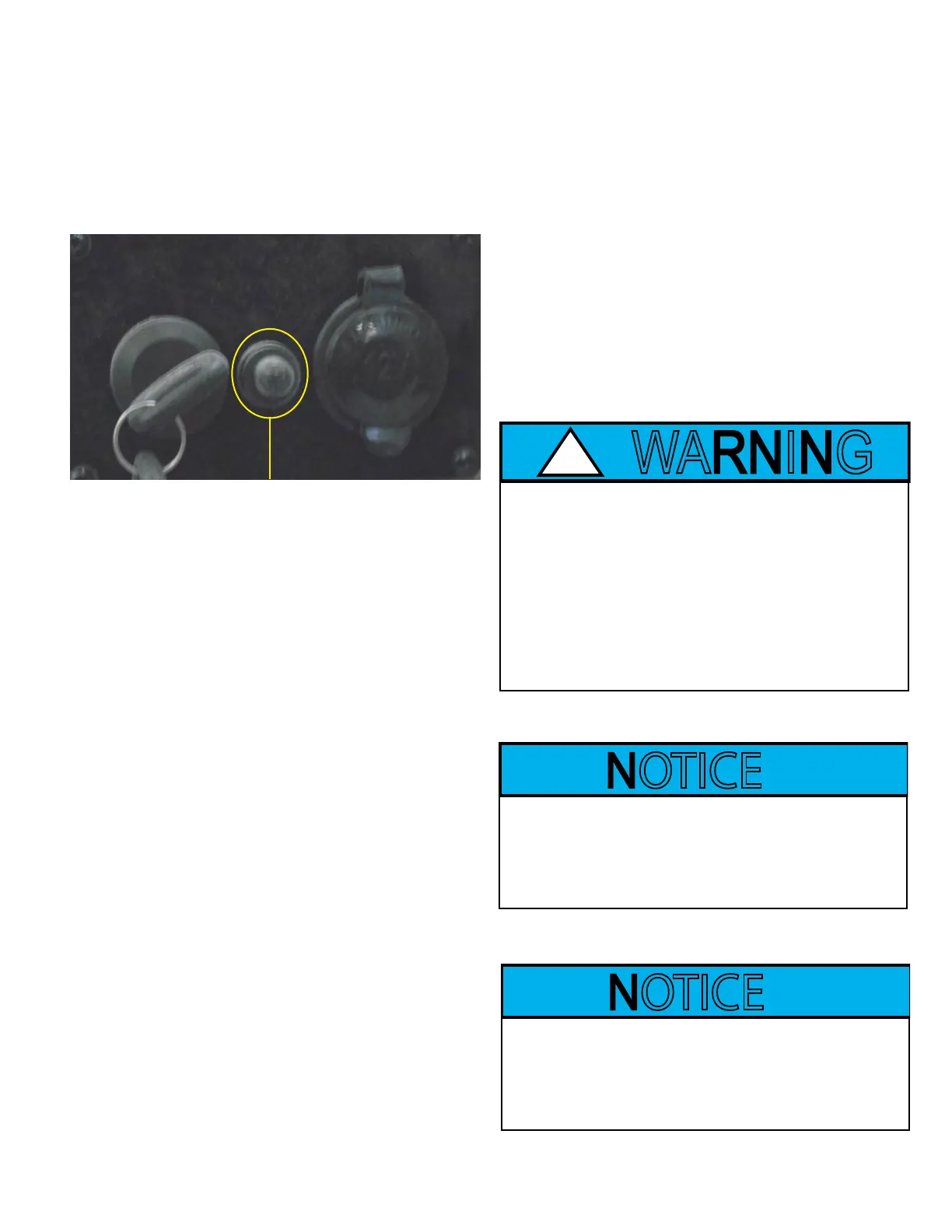
A 20 amp ignition system breaker protects the ignition
circuit (See above). Should a breaker “pop” nd the
cause of the malfunction before attempting to restart
the engine.
20 AMP BREAKER
STARTING ENGINEIGNITION SWITCH
S
I
II
ENGINES WITH KEY SWITCH PANEL
AVOID SERIOUS INJURY OR DEATH!
GAS VAPORS CAN EXPLODE!
BEFORE STARTING ENGINE
OPERATE BLOWER 4 MINUTES
AND CHECK ENGINE COMPARTMENT FOR
GASOLINE LEAKS OR VAPORS.
RUN BLOWER BELOW
CRUISING SPEED.
TO PREVENT A POSSIBLE DEAD
BATTERY, NEVER LEAVE THE
IGNITION SWITCH KEY IN THE “ON”
POSITION WITHOUT THE ENGINE RUNNING.



 To Next Page