49
Rules Of The Road
BRIDGE CLEARANCE
Be aware that your vessel requires a specied bridge
clearance height. This height is a measured estimate from
the waterline to the top of the highest equipment height.
The estimated height can change because of variances in
the loaded condition of the vessel and equipment variances.
Consult the bridge clearance specications located in
Chapter 12 (Technical Information section).
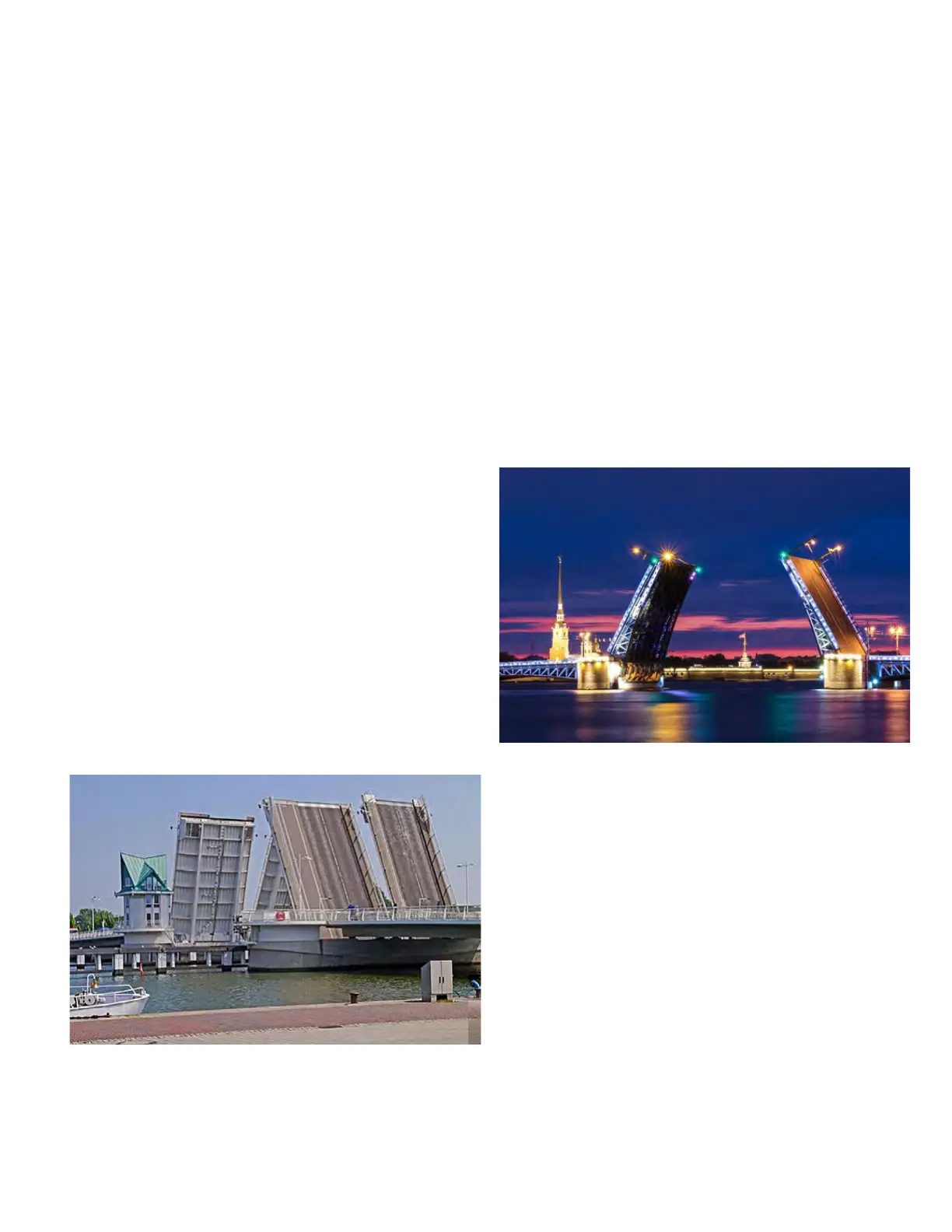
Some bridges are tendered. Know and use the proper
bridge signals when approaching these bridges (see
bridge signals in this chapter). You can also monitor and
communicate on channel 13 of a VHF radio for bridge
information in most domestic locals. Other bridges are
marked with a clearance measurement and you are on your
own. It is recommended that you have a look out posted
for additional visual assistance when entering a bridge zone.
After determining your vessel will clear the bridge proceed
with caution at a safe idle speed. Keep your eye on vessel
trafc at all times in order to react quickly. Keep both hands
on the helm since you may need to change course because
of current and wind conditions. Resume a safe speed once
clear of the bridge structure and acknowledgment of clear
visibility.
Just use common sense around any type of bridge structure!
BRIDGE LIGHTING
Bridge lighting is maintained by the Department of
Homeland Security. On the following pages are 2 typical
examples of night-time bridge lighting. As the skipper
approaches bascule and xed bridges light position (arc of
visibility) and color will indicate the safe channel through
the bridge. Notice green denotes the “safe” entry location
on single-span bridges and green or white on multiple-span
bridges designates the main channel. In addition, green
denotes the “up” position for single and double lift bridges.


 To Next Page