55
Systems
Currently, domestic
EPA compliant fuel
tanks vent fumes back
into the fuel tank
system. While the tank
is lled, air displaced
by the incoming fuel is
vented through the fuel
system charcoal canister.
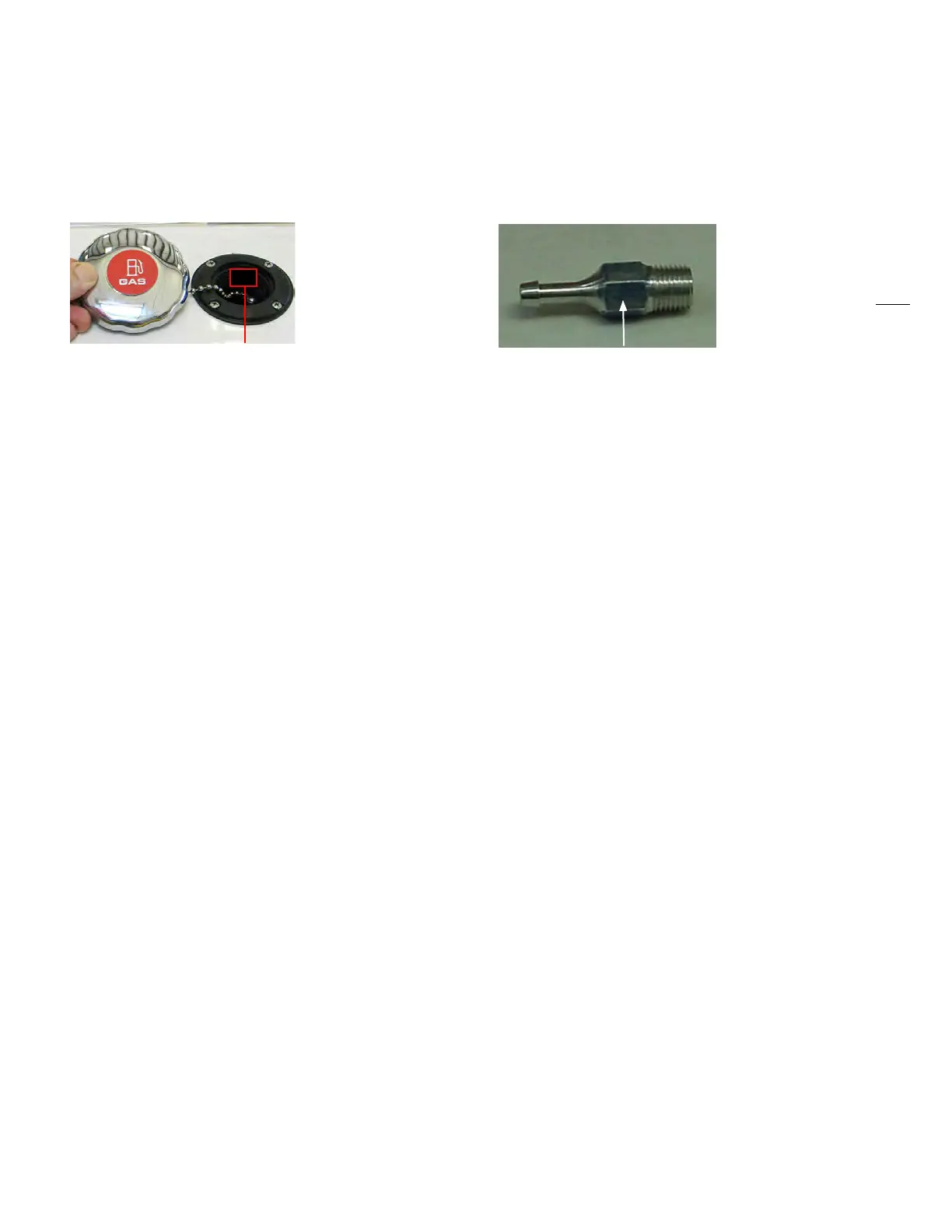
Your vessel uses a combo type (internal vented) fuel ll.
Both the fuel ll and vent occupy the same cavity under
a protective cover. If fuel overows through the vent the
design forces it back into the fuel ll hose and tank.
A seasoned skipper will hear a distinct sound as the
tank nears the “top out” or full mode and may see fuel
overowing back into the fuel hose through the vent.
DO NOT OVERFILL THE TANK.
This helps avoid any overboard spills which harm the
environment.
Note: On select vessels there is a key that ts into the fuel
ll cap. Use it to secure the tting from leaking fuel. Store
the key in a safe place so it can be easily found for fueling.
Check the vent ll screen periodically for debris.
FUEL VENT FITTING
COMBO FUEL FILL W/
INTERNAL VENT
The gasoline fuel tank feed
lines that run from the
fuel tank to the engine
fuel components each
use an anti-siphon valve.
The valve is threaded
into each fuel tank tting
at the feed line. The valve is pulled off its seat by fuel pump
pressure as the engine is cranking or running. There is a
ball and spring assembly inside the valve that is activated by
fuel pump impulses. It allows a one-way fuel roadway to the
engine fuel system. It prevents fuel from siphoning out of
the tank in the event of a fuel line rupture or disconnected
fuel feed hose. When the engine fuel components stop the
fuel from cycling the spring forces the ball against the valve
opening to stop fuel ow.
Note that vessels with generators will feature an anti-siphon
valve at the generator fuel feed location.
Never remove an anti-siphon valve as it is a fuel system
safety component. Also, never remove the ball and spring
from the valve assembly. The anti-siphon valve requires no
normal maintenance. Symptoms indicating possible valve
problems may be fuel starvation at intermediate or high
rpm or in extreme cases an engine that will not start.
Contact your Regal dealer for further information.
ANTI-SIPHON VALVE
INTERNAL BALL/SPRING


 To Next Page