Safety Instructions
Safety Regulations
The PlusWinch is a hand-driven cable winch,
fitted with a bracket for mounting to a Reid Lifting
Product/structure. The PlusWinch is only to be used
for the lifting of goods. The PlusWinch has a static
safety factor of 4.
The PlusWinch is not certified to be used as part of
a system for rescue purposes
Standing under a moving load is not permitted.
The PlusWinch is not suitable for:
Continuous use
Motorised drive
Explosive Atmospheres
Technical alterations and/or the attachment of
additional devices to the PlusWinch is only allowed
with the manufacturer’s written consent. Servicing,
mounting, possible repairs and the maintenance
of the PlusWinch are permitted only by specialized
persons who:
Have been appointed and authorised
Have been trained
Are familiar with the correct regulations
Always use original parts for repairs
PlusWinch
The PlusWinch is equipped with a load pressure
brake which holds the load at any required height
and ensures that it undergoes controlled lowering.
The load pressure brake must not be greased or
oiled. This destroys the brake function!
The stipulated hoisting capacity calculated on the
first cable layer, stated on the type identity sticker
must not be exceeded. The PlusWinch must at
least be mounted with the required mounting
materials from the technical detail tables on page
10. The PlusWinch must be inspected/tested by a
professional at least once a year.
Never touch moving parts during use.
Pre-use inspection:
Brake function.
Quality of the cable and hoisting parts
Carrier construction
Load
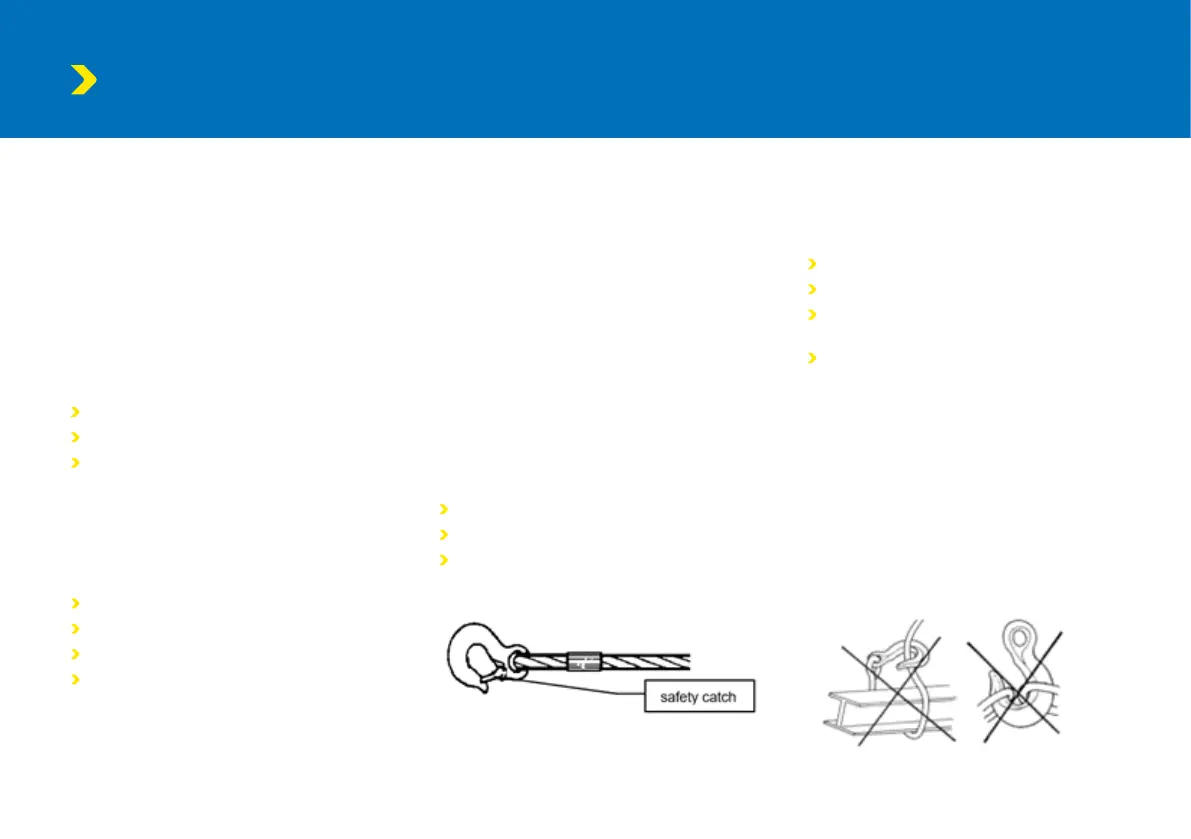
Pay attention to the following with respect to the
load:
Never leave the load unattended whilst elevated.
Do not allow the load to swing.
Never allow the load to fall suddenly from the
cable.
Ensure that the hoisting height remains in clear
view.



 To Next Page