
 Need help?
Do you have a question about the Retrospec Weekender and is the answer not in the manual?
Failure to follow warnings, precautions, and instructions may lead to serious injury or death.
Covers advice on skill level, professional guidance, paddling with others, avoiding shallow water, and staying hydrated.
Details on leashes, PFDs, whistles, weather checks, hypothermia, water familiarization, and slip hazards.
Warnings against storing the board in direct sunlight or excessive heat to prevent damage.
Details on inflating the board to the recommended pressure and checking for leaks.
Step-by-step instructions for installing fins on Tri-Fin, 5 Fin, and Single-Fin models.
Details the two-year warranty against manufacturer defects in workmanship and materials.
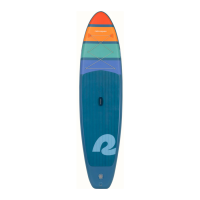
This document is the owner's manual for the Retrospec Weekender Inflatable Stand Up Paddle Board (iSUP). It provides comprehensive information on the board's use, care, and maintenance, aiming to ensure a safe and enjoyable experience for all users, regardless of their experience level.
The primary function of the Retrospec Weekender iSUP is to provide an accessible and enjoyable way to experience paddleboarding. It is an inflatable board, making it portable and easy to store when not in use. The manual emphasizes that the "outside is for everyone," reflecting the brand's commitment to making outdoor activities approachable for everyone.
Key usage features of the iSUP are detailed to guide users from setup to on-water activities. The inflation instructions are thorough, starting with preparing the board by finding a clean, flat surface and ensuring the valve stem is in the UP (closed) position. Assembling the pump involves screwing the hose and pressure gauge into the handle, followed by securing the hose to the board's air valve with a clockwise twist until it locks. Inflation begins by pumping air, with a note that the pressure gauge will only register after the board reaches 10psi and starts to take shape. The recommended pressure is 12-15psi, and users are advised to check the pressure before each use. A crucial warning is included against exceeding the recommended pressure, as this can permanently damage the board and void the warranty. The manual also cautions against using an unregulated air compressor. For valve leaks, the supplied air valve wrench from the repair kit can be used to tighten the valve clockwise.
Fin installation varies depending on the model. For Tri-Fin & 5 Fin Models, the central fin is slid into its mounting slot and locked with a pin. The smaller outer fins are then inserted into their side slots and locked. Users are advised that some force may be needed and to wiggle the fins to ensure they are securely attached. For Single-Fin Models, the thumb screw and square washer are removed from the fin. The washer is inserted into the fin box track and slid to the front, then the fin's base is inserted, aligning its small hole with the washer's hole. The thumb screw is then inserted and tightened firmly. Again, wiggling the fin is recommended to confirm secure attachment.
Leash attachment involves threading the leash string through the D-ring at the tail of the board, looping it back to create a loop, and then inserting the folded velcro closure of the leash through this loop. The leash cuff is then secured around the ankle, with the coiled part facing back. The manual stresses using the proper leash for the specific water conditions.
General use information covers paddle adjustment and holding technique. To adjust the paddle, one hand is raised as if asking a question, and the paddle handle should reach about the wrist when standing upright. Users can experiment with different heights for comfort. When holding the paddle, one hand goes on top of the handle, and the other on the shaft, about a push-up distance apart, ensuring the scoop side of the blade faces back. For a stable standing position, users should stand at the center of the board, feet shoulder-width apart, knees slightly bent, and eyes on the horizon. Paddling straight involves alternating sides, while turns require a more horizontal paddle position and wide, sweeping strokes. Instructions for getting back on the board from the water are also provided: position alongside the board, reach for the center grab handle, pull with arms and kick with legs to bring the stomach onto the deck, then swivel legs and hips to lay prone.
Safety warnings are a significant part of the manual, emphasizing the importance of responsible use. Users are advised not to exceed their physical ability or skill level and to avoid paddling in conditions beyond their experience. Learning from a professional, such as a local outfitter or certified instructor, is recommended. The manual strongly advises against paddling alone. Riding the board through shallow water is discouraged to prevent damage to fins or fin boxes, which is not covered by warranty. Staying hydrated and bringing snacks are also suggested.
The manual highlights the importance of wearing a leash, specifying different types for various environments (coiled ankle/knee leash for lakes/bays, straight leash for surfing, and waist leash with quick release for swift water). Wearing a US Coast Guard approved Personal Flotation Device (PFD) is mandatory outside of surfing, swimming, or bathing areas. Carrying a whistle is also required by federal law and useful for signaling other boaters. Using the paddleboard after sunset is prohibited by federal law, and a waterproof flashlight must be carried if caught in the water after dark. Checking the weather before heading out and avoiding severe weather conditions (lightning, thunder, strong winds) is crucial. The risk of hypothermia is explained, with advice to check water and air temperatures and dress appropriately, including wearing a wet or dry suit when necessary. Familiarizing oneself with the body of water, including hazardous areas, hours of operation, and local boating laws, is also emphasized. The deck material can become slippery when wet, so slip-resistant footwear is recommended. Informing others of paddling plans and supervising minors (who must wear a PFD) are also important. The manual strictly prohibits consuming alcohol or drugs while operating the board. Finally, paying attention to surroundings and avoiding paddling near dams, piers, pilings, rocks, or other hard objects is advised.
Maintenance features are crucial for the longevity of the iSUP. Proper care includes not storing the board (inflated or uninflated) in direct sunlight or excessive heat, such as inside a closed vehicle, as this can increase pressure beyond recommended PSI and cause irreversible damage. If temporary sun exposure is unavoidable, the inflated board should be placed in the shade or covered with a towel, and a small amount of air pressure released to allow for expansion from heat, then pumped back to full pressure before use. After each use, the board should be rinsed with fresh water, and the deck pad allowed to dry thoroughly before rolling or storing to prevent mildew.
Deflation and storage instructions are also detailed. Fin removal for Tri-Fin & 5 Fin Models involves laying the board with fins up on a clean, flat surface, pressing the tabs on the locking pins, and sliding the fins out. For Single-Fin Models, the thumb screw is unscrewed, the fin removed, and then the washer removed from the fin box track. Fins, washers, and thumb screws should be stored in the rucksack backpack. The leash should be removed, rinsed with fresh water, and air-dried. The 3-piece paddle should be detached, rinsed inside and out, and air-dried. Before deflating, the board should be cleaned of sand and debris with fresh water and allowed to dry completely. To deflate, the valve cap is removed (keeping the face away), the inflation valve stem is pressed lightly to release air, then pressed and turned to lock it in the open (DOWN) position for full deflation. To roll up the board, with the valve still open, start at the nose and roll towards the valve, folding 3 inches over as you go. Once rolled, the valve stem is turned to the UP (closed) position, the cap replaced, and the strap wrapped around the board and buckled. The rolled-up iSUP should then be stored in its rucksack backpack in a safe place, protected from extreme heat or cold.
The manual also includes a warranty section, stating that Retrospec warrants manufacturer defects for up to two years from the date of purchase. However, it explicitly lists conditions not covered by the warranty, such as damage from impact with objects, use outside the board's intended purpose, normal wear and tear, mishandling, incorrect prolonged storage (extreme temperatures, direct sunlight, damp conditions), rental or commercial use, improper fin installation, improper use of repair kit contents, and any modifications to the board.
 General
| Type | Inflatable Stand Up Paddle Board |
|---|---|
| Material | Military-Grade PVC |
| Length | 10 feet |
| Thickness | 6 inches |
| Weight Capacity | 250 lbs |
| Included Accessories | Adjustable Paddle, High-Pressure Pump, Removable Fins, Leash, Backpack Carry Bag, Repair Kit |
| Capacity | 1 person |
| Fins | 3 (2 fixed, 1 removable) |

 To Next Page