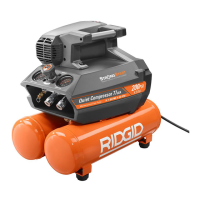
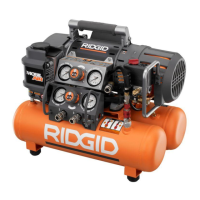
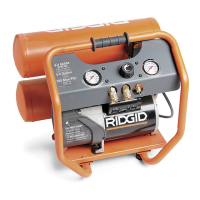
The RIDGID OF45150 is a twin stack portable air compressor designed for a variety of air system applications. This operator's manual provides essential information for safe operation, maintenance, and troubleshooting, emphasizing the importance of adhering to safety rules before initial use.
Function Description
The primary function of the RIDGID OF45150 air compressor is to generate and store compressed air for use with various air-powered tools and equipment. It features a twin stack design, which typically refers to two air tanks, providing a larger air storage capacity for sustained operation. The compressor is equipped with a motor that drives a pump to compress ambient air, which is then stored in the air receiver (tanks). A pressure switch controls the motor, turning it on when the tank pressure drops below a set cut-in pressure and off when it reaches the cut-off pressure.
Key components that facilitate its function include:
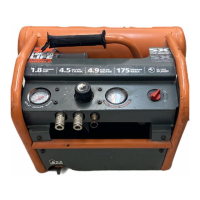
- Regulated Outlet Gauge: Displays the current line pressure being supplied to the air tool. This pressure is adjustable via the regulator knob.
- Tank Pressure Gauge: Indicates the pressure inside the air receiver tanks, showing how much compressed air is stored.
- Regulator Knob: Allows the user to control and adjust the air pressure delivered to the connected air tool or paint spray gun. Turning it clockwise increases pressure, while counterclockwise movement lowers it. Turning it fully counterclockwise shuts off the air flow.
- Air Filter: Prevents dirt and debris from entering the compressor pump, ensuring clean air compression and protecting internal components.
- ASME Safety Valve: A crucial safety device that automatically releases air if the tank pressure exceeds a preset maximum, preventing over-pressurization and potential bursting.
- Tank Drain Valve: Located underneath the air tanks, this valve allows for the manual draining of moisture that accumulates in the tanks.
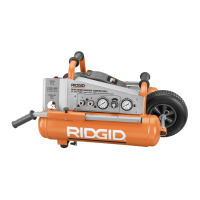
The compressor is designed for portability, making it suitable for use in various locations, provided it has access to a proper electrical power source. It is important to note that this compressor is not equipped to supply breathing quality air "as is" and would require additional in-line safety and alarm equipment for human consumption applications.
Usage Features
Operating the RIDGID OF45150 involves several steps and considerations to ensure safe and efficient performance. Before initial use, users must thoroughly read and understand the operator's manual, paying close attention to all safety rules and warning labels.
Installation and Setup:
- Unpacking and Inspection: After removing the compressor from its carton, it should be placed on a secure, stationary work surface and inspected for any damage incurred during shipping or handling. Any damage could lead to bursting or injury if the unit is operated.
- Component Check: All bolts, fittings, and other components should be checked and tightened. If any parts are missing, they must be obtained and installed correctly before operation.
- Ventilation: The compressor must be operated in a well-ventilated area to ensure proper cooling and prevent overheating.
- Electrical Connection: The unit should be plugged directly into a properly grounded 110-120 Volt, 60 Hz electrical outlet. The use of extension cords is strongly discouraged as it can lead to power loss and overheating. If the work area is beyond the reach of the power cord, additional air hose should be used instead of an extension cord. The tool is wired for a 15-amp branch circuit, and a 15-amp time-delay type fuse or circuit breaker is recommended.
- Grounding: Proper grounding is critical to prevent electrical shock. The compressor is equipped with a three-prong plug for this purpose. If the plug does not fit the outlet, a qualified electrician should install the proper outlet; the plug should not be modified.
Operation:
- Pressure Adjustment: The regulator knob allows users to set the desired line pressure for their air tools. It's crucial not to exceed the maximum pressure rating of the tool being used.
- Automatic Operation: The compressor's motor will automatically start when the tank pressure drops and stop when it reaches the cut-off pressure.
- Thermal Overload Protector: The unit is equipped with an automatic reset thermal overload protector that will shut off the motor if it overheats. If this happens frequently, users should check for low voltage, wrong gauge wire, a clogged air filter, lack of proper ventilation, or the use of an extension cord. The motor must be allowed to cool down before it can restart automatically.
Spraying Precautions:
When using the compressor for spraying applications, specific safety measures are vital:
- Ventilation: Spray in a well-ventilated area to prevent fume accumulation and reduce fire/health hazards.
- Ignition Sources: Do not spray flammable materials near open flames or ignition sources, including the compressor itself. Keep the compressor at least 20 feet away from the spraying area and explosive vapors.
- Personal Protection: Use a face mask/respirator when spraying paint, insecticides, or other flammable substances.
- Compressor Protection: Do not direct paint or sprayed material at the compressor to prevent overspray accumulation.
- Chemical Handling: Follow the instructions provided by chemical manufacturers when spraying or cleaning with solvents or toxic chemicals.
Maintenance Features
Regular maintenance is essential for the longevity and safe operation of the RIDGID OF45150 air compressor. The manual outlines a clear maintenance schedule and specific procedures.
Daily Maintenance:
- Drain Tank: After each day's use, the system should be depressurized, and the tank drain valve opened to remove accumulated moisture. This prevents tank corrosion and keeps moisture out of the compressed air system. If the unit will not be used for an extended period, the drain cock should be left open.
- Check Air Filter: Inspect the air filter for cleanliness. If it is dirty, it should be replaced. Never operate the compressor without an air filter or with a clogged one.
- Check Safety Valve: Pull the ring on the ASME safety valve by hand to ensure it operates freely and snaps back to its normal position. If air leaks after release or if the valve is stuck, it must be replaced.
- General Inspection: Check the compressor for any visible problems, including loose connections, and clean dust and dirt from the motor, tanks, air lines, and pump cooling fins.
Weekly Maintenance:
- Blow Dirt From Inside Motor: This helps maintain motor efficiency and prevents overheating.
Periodic Maintenance:
- Tank Inspection: The air tanks should be carefully inspected at least once a year for rust, pinholes, or cracks, especially near welds. Any detected imperfections that could compromise safety necessitate immediate replacement of the tank. Welding or drilling holes in the air tank is strictly prohibited as it weakens the tank and poses a rupture/explosion risk.
- Filter Replacement: The air filter element should be replaced when dirty. To do this, pull off the filter housing cover and replace the element or the entire filter if necessary.
- Lubrication: This is an oilless type compressor, meaning it requires no lubrication for its pump.
Troubleshooting:
The manual includes a troubleshooting chart to help users identify and resolve common issues such as the compressor not running, motor humming, fuses blowing, excessive moisture in discharge air, continuous running, vibrations, or low air output. It emphasizes that users should not attempt to run the compressor while troubleshooting and should disconnect power and depressurize the system before making any repairs. For complex issues or repairs involving internal components, it is recommended to contact an authorized service representative.
By following these detailed usage and maintenance guidelines, users can ensure the safe, reliable, and efficient operation of their RIDGID OF45150 twin stack portable air compressor.


 To Next Page
 General