Need help?
Do you have a question about the Rinnai Brivis DONSC10Z71 and is the answer not in the manual?
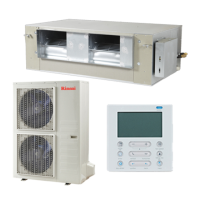
This document is an operation manual for the Brivis ICE Inverter Air Conditioner, a home comfort system designed for year-round use. The manual provides essential information for the safe and efficient operation, maintenance, and installation of the appliance. It emphasizes the importance of proper installation by an authorized person and adherence to manufacturer's instructions, as well as local regulations and building codes. The system uses R410A refrigerant and is designed for residential and light commercial applications, focusing on human comfort and environments influenced by natural exterior weather conditions.
The Brivis ICE Inverter Air Conditioner is designed to provide high-efficiency heating and cooling for indoor spaces. It automatically modulates the outdoor unit capacity in response to the demand of the conditioned space, ensuring rapid cool-down times and consistent temperature control. The system's operation is managed by an indoor Thermostat/Controller, allowing users to set their desired indoor temperature. It also removes humidity from the home during the cooling season, with a primary condensate drain and a secondary overflow drain to manage water. The system can be configured for zoned operation, allowing different areas of a home or space to be heated or cooled independently, optimizing comfort and energy use.
The air conditioner is controlled via an indoor Thermostat/Controller, which should be adjusted to maintain the desired indoor temperature, typically 20°C for cooling comfort. For optimal performance, the air conditioner should be used within specified temperature ranges: 19°C to 32°C for the room in cool mode, and -15°C to 50°C for the outdoor unit. Operating outside these ranges may activate safety protection features, affecting performance.
When operating in COOL mode, the system runs until the indoor temperature reaches the selected level. On very hot days, it may run for longer periods with shorter off cycles. Factors such as frequently opened doors, operating laundry appliances, excessive lighting, more people, or open window furnishings on the sunny side of the home can increase the system's workload.
For zoned systems, it is crucial to ensure the Return Air grille(s) are always part of the conditioned space. Doors to unconditioned areas should be closed to effectively isolate them. Zoning configurations must be set with zone controls before starting the system. Users should avoid shutting down more zones than the minimum specified by the installer, as this can lead to system shutdown. Similarly, attempting to heat or cool more zones than the maximum specified by the installer can prevent the system from maintaining design conditions. Continuous FAN operation can help minimize temperature differences and reduce "air pockets" that may create cool or warm spots.
The manual advises against letting the air conditioner run for extended periods with high humidity or open doors/windows, as this can lead to excessive operational loading and product failure. It also warns against covering the appliance, touching it with wet hands, or inserting objects into the air inlet or outlet. Heaters or other heating appliances should not be placed near the unit without sufficient ventilation.
Regular maintenance is crucial for the economic and dependable operation of the Brivis ICE Inverter Air Conditioner, as well as for maintaining warranty validity. The manual outlines several routine maintenance tasks:
Air Filter Cleaning: The air filters require inspection and cleaning at least every two weeks. Dirty air filters reduce efficiency, effectiveness, and air quality, and can cause condensation and dripping from the indoor unit. Reusable filters should be washed in cold to tepid water with mild detergent, rinsed, and thoroughly dried before being replaced. Disposable filters should be replaced with new ones of the same grade and dimensions.
Outdoor Unit Cleaning: The outdoor (condensing) unit requires periodic inspection to ensure no vegetation (plants, weeds, etc.) grows around it, blocking airflow. The cabinet should be kept clean, and recommended clearances maintained to ensure discharge air dissipates freely and does not recirculate. Any water buildup on or around the unit should be addressed. Any repairs, maintenance, or cleaning of the outdoor unit should be performed by an authorized dealer or licensed service provider.
General Maintenance (for prolonged non-use):
Maintenance (pre-season inspection):
The manual also provides a "Service Maintenance Schedule" that details specific items to be performed at prescribed intervals by qualified licensed technicians, which is a condition of the product warranty. This schedule covers electrical components, major components (like outdoor unit clearances, condensate trays, and refrigerant charge), controls (thermostats, zone controls), and system operation parameters (temperatures, pressures).
Users are cautioned to turn off the power before performing any maintenance to avoid electric shock. They should also be careful when handling parts due to potential sharp edges. Water, chemicals, benzene, paint thinners, polishing powder, or other solvents should not be used to clean the unit, as they can cause damage or discoloration. The metal parts of the air conditioner should not be touched when removing the air filter.
The manual advises against leaving flammable materials near the appliance. In case of excessive noise, smell, or smoke, the appliance should be turned OFF, the power supply isolated, and a service agent contacted. If the appliance has been submerged in water, it should not be operated, and a service agent must be contacted.
The document also addresses troubleshooting common issues, such as the unit not turning on, changing modes unexpectedly, making noises, emitting bad odors, or stopping operation, providing potential causes and solutions. For persistent problems or specific conditions (e.g., damaged power cord, burning smell, abnormal sounds, water leaks, thrown circuit breaker, flooding), users are instructed to turn off the unit immediately and contact Brivis, rather than attempting to fix it themselves.
 General
| Category | Inverter |
|---|---|
| Model | DONSC10Z71 |
| Brand | Rinnai Brivis |
| Type | Split System |
| Cooling Capacity | 10.0 kW |
| Heating Capacity | 11.0 kW |
| Energy Efficiency Ratio (EER) | 3.21 |
| Coefficient of Performance (COP) | 3.61 |
| Refrigerant | R32 |
| Operating Temperature (Heating) | -15°C to 24°C |
| Power Supply | 220-240V, 50Hz |
| Outdoor Unit Weight | 65 kg |
| Operating Temperature (Cooling) | -10°C to 46°C |


 To Next Page