EasyManua.ls Logo

Rinnai EX DT Series - User Manual

Rinnai EX DT Series
2 pages
Print Icon
To Next Page IconTo Next Page
Loading...
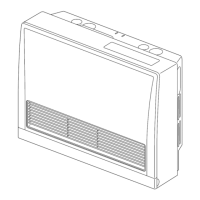
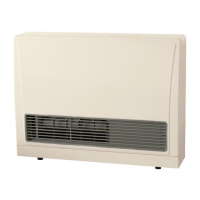
Models EX17DT (RHFE-436FTA)
EX22DT (RHFE-570FTA)
General
Description
Forced Combustion, Forced Convection,
Flued Gas Furnace
Application
Approved for manufactured home
(USA only), mobile home, or
residential installation convertible for
use with natural gas and liquefied
petroleum gases (propane) when
provision is made for the conversion
from one gas to the other.
Approved for commercial setting.
Approved for installation at altitudes
up to 10,200 ft. (3,109 m).
Supplied with
Purchase
Direct Vent Wall Furnace
Flue Manifold "A" Vent Kit
2
(FOT-151)
Back Spacer Set
Manual Gas Shut-off Valve
Full Size Wall Template Located on
Furnace Carton Box
Installation and Wall Mounting
Hardware
Installation and Operation Manual
Optional Items
Extension Kit
Extends the exhaust line and air
intake hose between the flue manifold
and furnace.
Remote Thermostat Installation Kit
Part # 204000045 for US
installations
Part # 204000048 for Canadian
installations
Gas Conversion Kit:
EX17DT (RHFE-436FTA):
Part # 203000007 for Converting to
Natural Gas
Part # 203000008 for Converting to
Propane
EX22DT (RHFE-570FTA) and
EX22DT-W (RHFE-570FTA-W):
Part # 203000009 for Converting to
Natural Gas
Part # 203000010 for Converting to
Propane
Location Clearance
Top and Bottom/
Ground
0 in. (0 mm)
Front (Panel) 40 in. (1 m)
1
Back (Including
Back Spacer)
0 in. (0 mm)
Sides (Left and
Right)
2 in. (50 mm)
1
Does not include flooring material or carpeting
less than 1.2 in. (30 mm) in height.
Clearances to access the
furnace during servicing are
10 in. (254 mm) from the
sides, 40 in. (1 m) from the
front, and the area shown
above the furnace in the
figure to the left.
Rinnai recommends 10 in.
(254 mm) clearance from
the top and on both sides
for servicing.
Service Clearances
Kit Name Kit No. Fits Walls
S Vent Kit FOT-150 3 - 4 1/2 in. (75 - 115 mm)
A Vent Kit FOT-151 4 1/2 - 9 1/2 in. (115 - 240 mm)
B Vent Kit FOT-152 9 1/2 - 15 3/4 in. (240 - 400 mm)
C Vent Kit FOT-153 15 3/4 - 23 5/8 in. (400 - 600 mm)
D Vent Kit FOT-154 23 5/8 - 31 1/2 in. (600 - 800 mm)
2
Additional flue manifolds are available for different wall
thicknesses (purchased separately). Vent Kit Ais included
with the furnace.
Top
Bottom
Side
Front
Back

clearance for
maintenance
inches
(mm)
9
(229)
6 (153)
3 (76)

Questions and Answers

  • A
    Amanda Marks PhDAug 19, 2025
    What to do if Rinnai Furnace cuts off without apparent reason?
    • K
      Kimberly AllenAug 19, 2025
      If your Rinnai Furnace cuts off without a clear reason, it might be due to dirty filters causing the heater to overheat. Check whether the filters are blocked.
  • P
    Paige MillerAug 21, 2025
    What to do if air filter blocked in Rinnai Furnace?
    • C
      Carla SchaeferAug 21, 2025
      Clean the air filter of your Rinnai Furnace.
  • A
    Adam BurtonAug 25, 2025
    How to troubleshoot a Rinnai Furnace that does not operate?
    • W
      wpowellAug 25, 2025
      If your Rinnai Furnace isn't operating, several factors could be the cause. First, ensure the heater is properly plugged in. Check your fuse box or breaker panel to see if any fuses have blown or breakers have tripped. Verify there isn't a power failure in your area. A blocked air filter or obstructed hot air outlet could also be the culprit, as could a blocked flue. Check these components to ensure proper function.
  • M
    Michael JacksonAug 26, 2025
    Why is my Rinnai Furnace not heating the room?
    • S
      Steven MooreAug 26, 2025
      If your Rinnai Furnace isn't heating the room adequately, several factors could be responsible. Begin by checking if the air filter is blocked, as this can impede airflow and reduce heating efficiency. Ensure that the thermostat is set to a sufficiently high temperature. Verify that the warm air outlet isn't blocked by any obstructions. Confirm that all doors and windows in the room are closed to prevent heat loss. Finally, consider whether the furnace was correctly sized for the space it's intended to heat.
  • W
    Willie PetersonAug 27, 2025
    Why warm air does not flow when the burner lights in Rinnai Furnace?
    • K
      Kayla SmithAug 27, 2025
      If warm air doesn't flow when the burner lights on your Rinnai Furnace, note that the fan starts automatically after a short delay.
  • J
    jennifer86Aug 29, 2025
    Why convection fan continues to run after turning OFF Rinnai Furnace?
    • R
      richardcantuAug 30, 2025
      If the convection fan in your Rinnai Furnace continues to run after you turn it off, this is normal. It's designed to remove residual heat from the heat exchanger and will stop when the heater cools down.
  • J
    Joshua EspinozaSep 1, 2025
    Why does my Rinnai Furnace produce smoke on first use?
    • K
      Kristi AndersonSep 1, 2025
      If your Rinnai Furnace produces smoke or strange smells during the first trial light up after installation, this is typically due to grease, oil, or dust on the heat exchanger. This issue should resolve itself after a short period of operation.
  • F
    ffosterSep 2, 2025
    Why is steam discharged from the flue terminal of my Rinnai Furnace?
    • C
      Cynthia GilmoreSep 3, 2025
      If you notice steam being discharged from the flue terminal of your Rinnai Furnace, especially on cold days, this is normal behavior for high-efficiency appliances. It's simply water vapor being released.
  • A
    Allen LongSep 4, 2025
    Why Rinnai Furnace makes clicking noises at ignition?
    • R
      Ronald HartmanSep 5, 2025
      Sharp clicking noises at ignition or when the Rinnai Furnace cuts down on the thermostat are simply expansion noise from the heat exchanger.
  • K
    kennethramirezSep 7, 2025
    Why Rinnai Furnace makes a rumbling noise?
    • C
      charlesbrownSep 7, 2025
      The low, rumbling noise you hear when the thermostat operates in your Rinnai Furnace is the sound of the solenoid gas valves opening and closing.

Overview

The Rinnai EX17DT and EX22DT are direct vent wall furnaces designed for efficient heating in various settings. These models, also known as RHFE-436FTA and RHFE-570FTA respectively, are forced combustion, forced convection, and flued gas furnaces, ensuring a consistent and comfortable heat output.

Function Description

The primary function of these Rinnai wall furnaces is to provide space heating. They operate by drawing in combustion air from outside through a direct vent system, burning either natural gas or liquefied petroleum (LP) gas, and then expelling combustion byproducts back outside. This direct vent design ensures that no combustion air is drawn from inside the living space, contributing to improved indoor air quality and safety. The forced convection mechanism uses a fan to circulate heated air throughout the room, ensuring even heat distribution.

The furnaces are equipped with an electronic thermostat that allows users to set desired temperatures within a range of 60-80°F (16-26°C), adjustable in 2°F (1°C) increments. This precise temperature control helps maintain comfort and optimize energy usage. Ignition is handled by an electronic spark ignition system, providing reliable startup. The burners are made of stainless steel (Bunsen type), known for their durability and efficient combustion.

Usage Features

The Rinnai EX17DT and EX22DT furnaces offer versatile usage options. They are approved for installation in manufactured homes (USA only), mobile homes, and residential settings. A key feature is their convertibility between natural gas and LP gas, provided the necessary conversion provisions are made. This flexibility makes them suitable for a wide range of fuel availability. They are also approved for commercial settings, expanding their application beyond residential use. Furthermore, these furnaces can be installed at altitudes up to 10,200 ft. (3,109 m), making them suitable for high-altitude environments where other heating systems might struggle.

For installation, the furnaces come with a flue manifold "A" Vent Kit (FOT-151) and a full-size wall template located on the furnace carton box, simplifying the setup process. Installation and wall mounting hardware, along with an installation and operation manual, are also included to guide users through the setup.

Several optional items enhance the functionality and adaptability of these furnaces. An Extension Kit is available to extend the exhaust line and air intake hose between the flue manifold and the furnace, offering more flexibility in vent placement. Remote Thermostat Installation Kits (Part # 204000045 for US and # 204000048 for Canadian installations) allow for convenient temperature control from a different location in the room. Gas Conversion Kits are also available for both models to switch between natural gas and propane, providing further fuel flexibility. Different vent kits (S, A, B, C, D) are offered to accommodate various wall thicknesses, ranging from 3 inches (75 mm) to 31 1/2 inches (800 mm), ensuring a proper and secure installation regardless of the wall structure.

The furnaces include a humidifier tray with a capacity of 2.1 pints (1,000 cc), which can help add moisture to the air, improving comfort, especially in dry climates. A manual gas shut-off valve is also provided for safety and convenience during maintenance or emergencies.

Maintenance Features

Ease of maintenance is considered in the design of the Rinnai EX17DT and EX22DT. The flue system requires proper termination to atmosphere using only certified components to maintain warranty validity and safe operation. The installation and operation manual provides detailed instructions for proper use and care.

For servicing, specific clearances to combustibles and for maintenance access are recommended. A minimum clearance of 10 inches (254 mm) from the sides and top, and 40 inches (1 m) from the front, is advised to allow technicians sufficient space to work on the furnace. The design also includes a back spacer set, which helps maintain the necessary clearance from the wall. These clearances ensure that components are accessible for inspection, cleaning, and repair, contributing to the longevity and efficient operation of the unit. The direct vent design also means that the combustion chamber is sealed from the living space, reducing the accumulation of dust and debris inside the critical components, which in turn can simplify routine cleaning.

Rinnai EX DT Series Specifications

General IconGeneral
ModelEX DT Series
BrandRinnai
CategoryWall Furnaces
Fuel TypeNatural Gas or Propane (LP)
Heat OutputVaries by model. Refer to specific model's documentation for exact output.
VentingDirect Vent
Safety FeaturesOverheat Protection
ThermostatBuilt-in Thermostat

Related product manuals