25
1
2
3
4
5
6
7
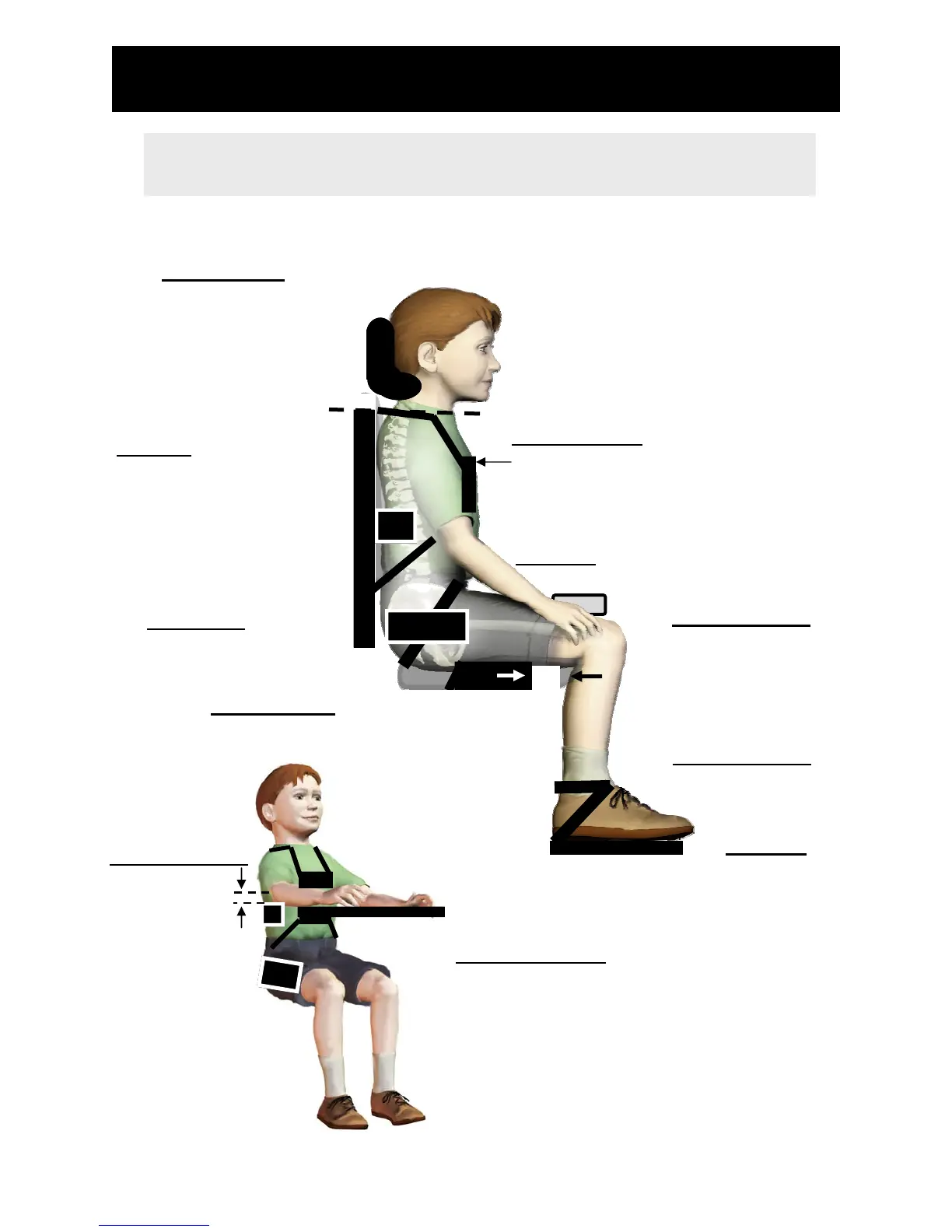
1-2”
Chest harness must
leave room for
breathing properly
This is intended for use as a general guide. Many children require
special solutions not illustrated here.
Seat Cushion should provide firm support under the pelvis
and thighs to encourage a neutral pelvic position.
Seat Cushion depth adjustment
Seat Belt
1“— 3”
Top of seat back cush-
ion and chest harness
straps even with top of
shoulders
The trunk supports help
maintain an erect upper
body. A 1-3” space
between Trunk supports
and arm pits helps pre-
vent the child from hang-
ing on the them.
1-2” space between
front of seat and back
of knees
Seat Belt should be firmly tight-
ened to help position the pelvis
back in the seat in a neutral
position.
The feet should rest firmly on
the footbed to provide support
for lower extremities
Head Rest should provide enough
support to enable the child to bal-
ance, laterally as well as fore and
aft, without preventing the child’s
ability to shift position to engage in
functional activities.
The seat back cushion should provide
enough support to maintain proper
alignment while not impeding the
ability for the child to be actively en-
gaged with his or her environment.
Head Support
Seat Back
Cushion
Chest Harness
Foot Bed
6
Trunk Supports
Therapeutic Tray
The therapeutic tray provides upper body support as well as a
platform to use for work, play or eating.
8
Hip Guides
9
Abductor Block
1
Ankle Supports
Basic Measuring Guide



 To Next Page