 Need help?
Do you have a question about the Rockford Fosgate DSR1 and is the answer not in the manual?
Details the "14_6channel_Out_1.rfts" setup file for common Harley installs.
Explains DSR1 input sources and output channel configurations.
Covers basic and advanced EQ options for sound customization.
Guidance for newer Harley GTS radios requiring a different setup file.
Wiring instructions for factory Harley radios, including remote connections.
Guidance for connecting the DSR1 remote turn-on with aftermarket radios.
Sorting input/output harnesses and making power connections safely.
Connecting audio signal input to the DSR1 and output to amplifiers.
How the DSR1's remote output wire controls amplifier turn-on.
Addresses common turn-on pop issues and solutions.
Details using the PAC Audio TR4 to delay amplifier turn-on.
Explanation of files compensating for factory radio frequency response.
Guidance on setting amplifier gains, with DSR1 trim levels.
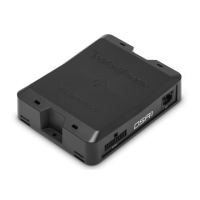
This document describes the Rockford Fosgate DSR1, a digital signal processor (DSP) primarily designed for use with Harley-Davidson motorcycles, though it can be adapted for other applications. The DSR1 is pre-programmed to simplify installation and optimize audio performance, especially when integrating aftermarket audio components with a factory radio.
The core function of the DSR1 is to process audio signals from a factory or aftermarket radio, correcting for inherent frequency response issues and providing clean, optimized signals to aftermarket amplifiers. It acts as a bridge, allowing users to upgrade their audio system without replacing the head unit, while still achieving high-fidelity sound. The DSR1 is particularly useful for Harley-Davidson bikes from 2014 onwards, addressing specific audio characteristics of their infotainment systems.
The DSR1 comes pre-programmed for 2014-2018 Harley-Davidson Infotainment radios with only the front channels enabled. This means for many users, it's a plug-and-play solution requiring minimal setup. For 2019 and newer Harley-Davidson GTS radios, a specific setup file needs to be downloaded and loaded onto the DSR1 using the Perfect Tune app. If no factory radio is used, the EQ can be reset to flat within the DSR1 app, allowing for custom adjustments.
The device is designed to be user-friendly, with the latest firmware already installed, eliminating the need for computer connection for updates. The pre-loaded setup file, "14_6channel_Out_1.rfts," configures the DSR1 for a typical 2-channel input (front only) from a factory radio, with 6 output channels (front, rear, sub) activated. This configuration is common for most users.
The DSR1 features both "Basic Tune" and "Advanced Tune" equalization sections within its app. For most users, it's recommended to stick to the 7-band "Basic Tune" EQ for adjustments, as the "Advanced Tune" is pre-set and intended for experienced users. Altering advanced settings without proper understanding can lead to undesirable audio results. The setup wizard in the DSR1 app should generally be avoided unless specific input/output changes are required, as opening it can inadvertently erase the pre-programmed settings.
A critical aspect of DSR1 usage, particularly with factory radios, involves the remote turn-on connections. The DSR1's blue/white wire serves as a delayed remote output for amplifiers, preventing the "turn-on pop" often experienced with factory Harley radios due to their long boot times. It is crucial to connect the DSR1's blue/white wire to the amplifier's remote input and never connect the radio's blue/white wire directly to the DSR1's blue/white wire, as this can damage the DSR1 and the radio. For aftermarket radios, the radio's amplifier remote turn-on wire (usually blue or blue with white stripe) should connect to the DSR1's solid blue wire (remote in).
The DSR1 has 8 RCA outputs, though many installations will only require a subset of these. The outputs are clearly labeled (Front, Rear, Subwoofer) and are full range with a 31-point Anti-EQ applied for factory Harley Infotainment radios. While all 8 channels are configurable, it's recommended to use the designated outputs (e.g., front for front speakers) for easier tracking within the DSR1 app.
Crossovers are built into the DSR1, but it is generally recommended to use the crossovers built into the amplifiers instead, unless the installer is highly familiar with complex DSP crossover settings. All speakers in a motorcycle audio system should have high-pass crossovers properly turned on and set.
The DSR1 also includes trim levels for each channel and a master volume control, intended for advanced users. For optimal gain staging, it's recommended to turn all DSR1 trim levels all the way up and set amplifier gains directly on the amplifiers themselves.
While the document doesn't explicitly detail "maintenance features" in the traditional sense (like cleaning or part replacement), it emphasizes proper installation and configuration as key to the device's longevity and performance.
In essence, the DSR1's "maintenance" largely revolves around correct initial setup, understanding its operational nuances, and utilizing the provided resources (app, website articles) to ensure optimal and trouble-free audio performance.
 General
| Type | Digital Signal Processor |
|---|---|
| Channels | 8 |
| Outputs | 8-channel RCA |
| Frequency Response | 20 Hz - 20 kHz |
| Bluetooth | Yes |
| Output Voltage | 4V RMS |
| THD | 0.01% |
| Inputs | Toslink optical |
| Crossover Slopes | 6/12/18/24 dB/octave |
| Equalizer | 31-band |
| Input Sensitivity | 4V |

 To Next Page