2
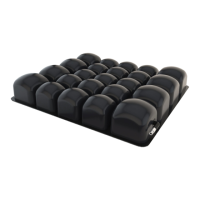
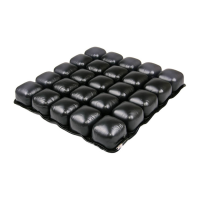
INTENDED USE: The MOSAIC cushion is designed to aid in the prevention of tissue
breakdown*. The cover protects the cushion. While a cover is not required, a ROHO
cover is included with every MOSAIC cushion to prevent the cushion cells from pro-
truding beyond the wheelchair seat and aid in slide board transfers. Because the
bottom of the cover is made of non-skid material, the cushion is more secure in
the chair.
If you are using a wheelchair with a sling seat, ROHO, Inc. recommends the use of
the ROHO Contour Base, the ROHO Solid Seat Insert, or a drop seat in conjunction
with your MOSAIC cushion.
CONTRA INDICATIONS: There are no known contra indications if the cushion is used
properly and as indicated.
CLINICIAN CONSULTATION: ROHO, Inc. recommends that a clinician (such as a doc-
tor or therapist experienced in seating and positioning) be consulted to determine if
the MOSAIC cushion is appropriate for the user’s particular seating needs.
• The cushion is made of a flame retardant PVC film (Does not contain DEHP). The
valve is nickel plated brass.
• The standard cover (UCFR) top and sides are 100% FR polyester and the bottom
is 100% polyester reinforced PVC.
• The Cover for Incontinence (IC) top and sides are 100% knitted nylon fabric with
a polyurethane transfer coating and the bottom is non-skid vinyl-coated polyester.
Note: Preference for cover should be stated at the time of ordering.
Cushion Width Length Cell Height Weight
MOSAIC1616C/ 16 in. 16 in. 2.7 in. .7 lbs.
MOSAIC1616IC (41 cm) (41 cm) (7 cm) (.3 kg.)
MOSAIC1816C/ 18 in. 16 in. 2.7 in. .9 lbs.
MOSAIC1816IC (46 cm) (41 cm) (7 cm) (.4 kg.)
MOSAIC1818C/ 18 in. 18 in. 2.7 in. .9 lbs.
MOSAIC1818IC (46 cm) (46 cm) (7 cm) (.4 kg)
NOTE: All measurements are approximate and may vary depending on level of
inflation.
* The MOSAIC cushion can be considered for individuals who require an environment to
assist in the prevention and/or healing of up to Stage II (as defined by NPUAP & EPUAP)
pressure ulcers (decubitus), who require support, have partial or full sensation in the
seated area, have fair to good seated balance, and who may be at risk due to one or more
of the following risk factors: illness or disability, immobility, incontinence, poor overall
health, shear and friction, or an already existing skin defect.


 To Next Page