Need help?
Do you have a question about the ROHO MID PROFILE and is the answer not in the manual?
Details critical warnings regarding cushion use with other products and as a flotation device.
Provides cautions on using non-ROHO parts, inflation methods, and material care.
Steps to take if the cushion is losing air, including checking connections and for holes.
Guidance for issues with the inflation/deflation valve or quick disconnect.
Checks for proper inflation, centering, sizing, and individual adjustment time.
Advice on ensuring the non-skid bottom faces correctly and using fasteners.
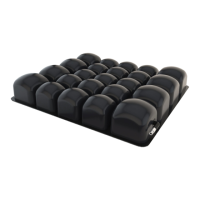
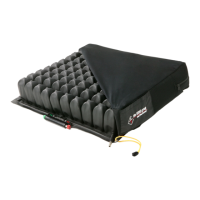
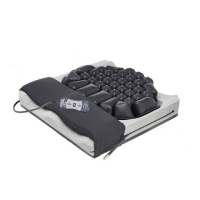
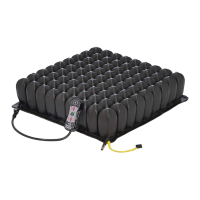
The ROHO Single Compartment Cushion with Sensor Ready Technology is an adjustable, air-filled, cellular-design wheelchair support surface designed to provide skin/soft tissue protection and facilitate wound healing. It utilizes DRY FLOATATION technology to conform to an individual's seated shape. The cushion is compatible with Smart Check by ROHO, a cushion feedback system that helps determine and maintain the individual's inflation level.
The core function of the ROHO Single Compartment Cushion is to distribute pressure evenly across the seated surface, thereby reducing the risk of skin/soft tissue breakdown and creating an optimal environment for wound healing. The cushion achieves this through its adjustable air-filled cellular design, which allows it to adapt precisely to the user's body contours. The Sensor Ready Technology integrated into the cushion enables it to connect with the Smart Check device, providing real-time feedback on the inflation level. This ensures that the cushion is neither under-inflated nor over-inflated, both of which can compromise its effectiveness and increase the risk of injury. The cushion is intended to be part of an overall care regimen, with recommendations for its use typically made by a clinician experienced in seating, positioning, and mobility. This ensures proper sizing and assessment of whether a solid seat platform is needed, especially when used on a sling-seat wheelchair.
The cushion is designed for ease of use and optimal user experience. To prepare the cushion for use, it should be placed in the wheelchair with the air cells facing up and the non-skid surface of the cover facing down. Inflation is performed using the ROHO Hand Pump. The rubber nozzle of the hand pump slides over the inflation valve, which is then pinched to open. The cushion is inflated until it bulges. After inflation, the nozzle is pinched again to close the valve, and the hand pump is removed.
For proper adjustment, the individual should sit in the chair in their usual position, with the cushion centered beneath them. To determine the correct inflation level, the user or caregiver slides a hand between the cushion and the individual, lifting the leg slightly to feel for the lowest bony prominence. Air is then released by opening the valve until the fingertips are barely able to move, indicating a ½" - 1" (1.5 cm - 2.5 cm) distance between the individual and the seating surface. This ensures that the individual sinks into the cushion while floating above the cushion base, providing optimal pressure relief. The inflation level should be checked frequently, at least once a day, to maintain therapeutic effectiveness. The cushion cover features hook and loop fasteners to help secure it to the seating surface, preventing unwanted movement.
The cushion comes with two cover options: a Standard Cover and a Heavy Duty Cover. The Standard Cover has a two-way stretch top, spacer fabric sides, a zipper located in the back, and a non-skid bottom with hook and loop fasteners. The Heavy Duty Cover features a two-way stretch, fluid-resistant top and sides, a zipper located in the front, and a non-skid bottom with hook and loop fasteners. Both covers are designed to protect the cushion components and aid in slide board transfers by keeping the air cells together. When attaching the cover, the cushion should be turned upside down, with the non-skid material facing up and the zipped opening facing the user. For the Standard Cover, the back of the cushion faces the zipper, and the inflation valve, quick disconnect, and Yellow Rope are pulled through corner openings. For the Heavy Duty Cover, the front of the cushion (with the inflation valve and quick disconnect) faces the zipper, and these components, along with the Yellow Rope, are tucked inside the cover. The zipper is then closed completely, and the cushion is turned over so the air cells face up. The cushion should lie flat inside the cover with all cells covered.
Maintaining the ROHO Single Compartment Cushion involves regular cleaning and disinfection, as well as periodic inspection for damage. The cover and cushion require separate cleaning and disinfecting procedures.
For the cover, it is recommended to remove any hook fastener pieces from the bottom before cleaning. The cover can be machine washed in cold water (30°C) with mild detergent on a gentle cycle, or wiped clean with neutral detergent and warm water. It should be tumble dried low. For disinfection, the cover can be hand washed in cold water (30°C) using a solution of 1 part household liquid bleach per 9 parts water, keeping the product wet for 10 minutes, then thoroughly rinsing and tumble drying low. Alternatively, it can be machine washed in hot water (60°C). Safety guidelines on the bleach container should always be followed.
For the cushion itself, the inflation valve(s) must be closed before cleaning. Water or cleaning solutions should not be allowed to enter the cushion. The cushion should not be machine washed, sanitized, or machine dried. Abrasives, caustic detergents, petroleum- or organic solvent-based cleaning products, oil-based lotions, lanolin, phenolic-based disinfectants, ozone gas, and ultraviolet light cleaning methods should be avoided as they can damage the cushion material. To clean the cushion, the cover is removed, and the inflation valve is closed. The cushion is then hand washed using mild liquid hand soap, hand dishwashing liquid, laundry detergent, or a multipurpose detergent, following product label instructions. All cushion surfaces should be gently scrubbed with a soft plastic bristle brush, sponge, or cloth. After scrubbing, the cushion should be rinsed with clean water and air-dried, avoiding direct sunlight. For disinfection, the cleaning instructions are repeated, but using a solution of 1 part household liquid bleach per 9 parts water, keeping the product wet for 10 minutes, followed by thorough rinsing with clean water and air drying. Most germicidal disinfectants are safe if used according to the manufacturer's dilution directions.
Regular inspection of the cover for damage is crucial, and it should be replaced if necessary. The quick disconnect, inflation valve, and hoses should also be inspected for damage. If the cushion is not holding air, the inflation valve should be confirmed to be completely closed. Small holes can be repaired using the provided repair kit. For larger holes, leaks, or damage to the valve, quick disconnect, or hoses, the user should contact Customer Care. The cushion should also be checked for proper orientation within the cover and wheelchair, using the directional labels on the cushion and cover. If the cushion slides on the wheelchair, the non-skid bottom of the cover should be facing down, and the hook and loop fasteners should be used to secure it.
In cases where sterilization is required by institutional protocol, it should only be performed after cleaning and disinfecting. The inflation valve should be opened, and the lowest possible sterilizing temperature, not exceeding 60°C (158°F), should be used for the shortest possible time. Autoclaving is not recommended as high temperatures accelerate aging and can damage the product assembly. The product is not packaged in a sterile condition and is not intended or required to be sterilized prior to use.
 General
| Product Type | Wheelchair Cushion |
|---|---|
| Profile | Mid Profile |
| Dimensions | Varies by size |
| Air Cells | Yes |
| Technology | DRY FLOATATION |
| Valve Type | Inflation valve |
| Sizes Available | Multiple sizes (typically 16x16, 16x18, 18x18 inches) |
| Intended Use | Pressure redistribution and skin protection for wheelchair users |

 To Next Page