Need help?
Do you have a question about the Rokonet ORBIT-PRO RP-296 and is the answer not in the manual?
Overview of the ORBIT-PRO security system and its purpose.
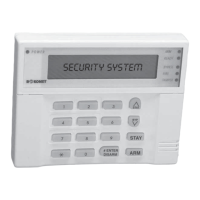
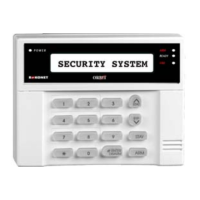
Describes the LED and LCD keypads used for system interaction.
Defines essential terms like Zone, 24-Hour Zone, Central Stations, Chimes, and Trouble Reporting.
Covers Utility Outputs, Key-switches, and general system arming concepts.
Explains Full Arming, Home Arming, Quick Arming, Code Arming, and Entry/Exit Delays.
Covers Follow me, Scheduling, Partitions, and System Expansion.
Overview of visual indicators on the keypad, including LEDs.
Detailed explanation of the POWER LED states and their meanings.
Explains the status and meaning of the ARM LED.
Explains the status and meaning of the READY LED.
Explains the status and meaning of FIRE, BYPASS, TAMPER, and ZONE LEDs.
Details the functions of various keys on the keypad.
Explains emergency keys, keyswitches, and hidden display mode.
Explains user codes and the different authority levels for system access.
Step-by-step guide to setting or changing user access codes.
Instructions for deleting user codes from the system.
Detailed steps for arming the system in different modes (e.g., Away, Stay).
Explains zone bypassing and provides step-by-step instructions.
How to view zones that are not ready to be armed.
Procedures for disarming the system and silencing alarms.
How to disarm the system and send a silent duress alarm using a special code.
Overview of partitioned systems and their capabilities.
Instructions for arming multiple partitions simultaneously.
Instructions for disarming multiple partitions simultaneously.
Explains the various keypad and siren sounds for different system events.
Functions related to bypassing, resetting, and recalling zones.
Functions for controlling external devices and system activities.
Functions for managing 'Follow Me' phone numbers and remote messages.
Functions to view system status, alarms, and event logs.
Functions for keypad testing, battery testing, and service info.
Controls for enabling/disabling local keypad sounders and partition chimes.
Functions for deleting event logs and performing walk tests.
Manages user codes and system time/date settings.
Function to restore the system to normal mode using an anti-code.
Identifies and explains troubles related to low battery, AC power loss, and bell circuit failure.
Identifies troubles with auxiliary power, false codes, phone lines, bus faults, and clock.
Details troubles related to power supply modules (battery, AC loss, bell, auxiliary).
Identifies trouble with day zones during disarmed periods.
Information on how to correct and restore system troubles to normal operation.
Warnings and compliance information regarding FCC regulations for the device.
 General
| Microwave Frequency | 10.525 GHz |
|---|---|
| Technology | Dual Technology: PIR and Microwave |
| Detection Range | 12m (40ft) |
| Detection Angle | 90° |
| Storage Temperature | -20°C to +60°C |
| Humidity | 95% RH Non-Condensing |
| Communication | Wireless |

 To Next Page