RotorWay International
Exec 162F Construction Manual
Section 1
Page 5
Rev. 1 1/01
8. WORKING WITH PLASTIC FILLER (Bondo)
Before plastic body filler is applied to any surface, the surface must be sanded lightly and cleaned with acetone. Cream
hardener is added to activate the filler. Mix only a small amount that can be used within 3-4 minutes. Knead the tube of
cream hardener thoroughly before using. Dispense the desired amount of filler on a clean flat non-porous surface such as
metal or plastic. Use 1/4 teaspoon hardener to 4 tablespoons (2-1/2 oz.) filler or 2-1/2 grams hardener for 100 grams filler.
Mix with firm pressure using a back and forth wiping motion. Mix with a plastic spreader or putty knife to a uniform color at
room temperature. Apply thin to the surface, avoid using too much at a time. It is easy to mix another batch and apply more
material but the sanding process is time consuming. The surface should be dry and tack-free within 20-25 minutes. The
fastest method of finishing is to cut the Bondo off with a “cheese grater” file as soon as it becomes firm. Finish to final
configuration by hand sanding.
9. PAINTING AND FINISHING
We recommend that you talk to a local aircraft painter or paint supplier to find out what preparation and materials give best
results in your climate. For instance, in some areas near the ocean, zinc chromate primer is required to protect the
aluminum from salt air. If you do not have much experience spraying paint, you may prefer to have a paint shop do the
work for you. Our general recommendations are as follows:
Body, tail boom and main rotor blades: primer as required, 2 part Polyurethane paint.
Airframe and landing gear: sandblast with fine grit sand, 2 part epoxy paint.
10. PLATING AND ANODIZING
Contact RotorWay for recommendation of items that you want to plate or anodize. For example, a high stress item cannot
be plated. Have the plating done ONLY by a company qualified to plate aircraft parts.
11. DZUS FASTENERS AND NUT PLATES
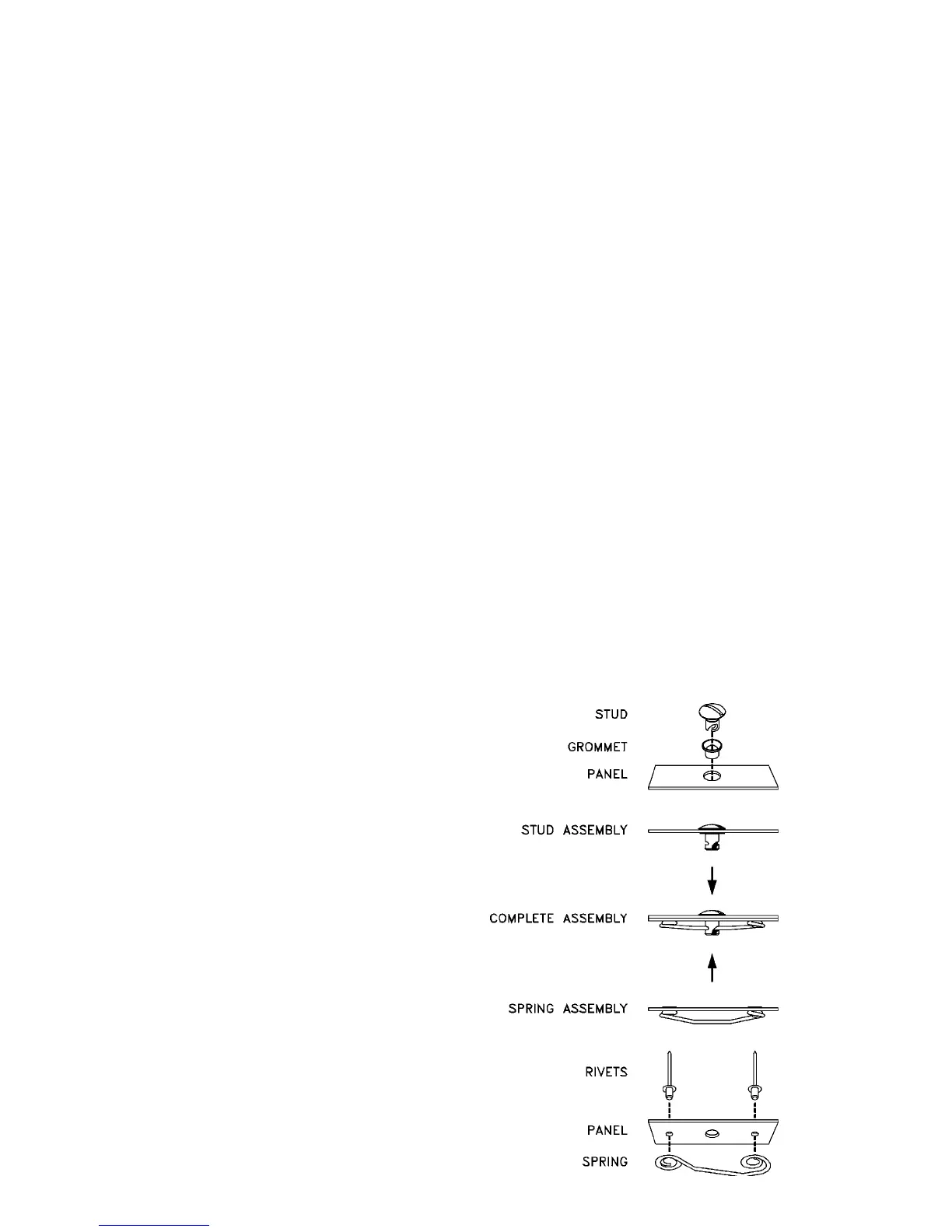
Dzus fasteners, commonly called “Dzus buttons”, are
composed of a stud, grommet and spring. The studs and
springs are made of steel, cadmium plated to prevent
corrosion. The grommet is made from aluminum alloy and
holds the stud in place on the panel. The Dzus fastener
locks with only 1/4 turn clockwise, and unlocks
counterclockwise.



 To Next Page
 Loading...