expansion tank until coolant, free from air
bubbles, flows from the bleed screw. Tighten
the bleed screw and continue filling until the
coolant level reaches the expansion tank
“MAX” level line.
17 Start the engine, run it for approximately
two minutes, then switch off.
18 Slowly unscrew the pressure cap one
complete turn, wait until all the pressure
escapes, then remove the cap. Check that the
coolant just covers the pipe outlet on the
seam of the tank, top up if necessary, then
refit the cap.
19 After refilling, always check carefully all
components of the system (but especially any
unions disturbed during draining and flushing)
for signs of coolant leaks. Fresh antifreeze has
a searching action, which will rapidly expose
any weak points in the system.
20 Note: If, after draining and refilling the
system, symptoms of overheating are found
which did not occur previously, then the fault
is almost certainly due to trapped air at some
point in the system, causing an air-lock and
restricting the flow of coolant; usually, the air
is trapped because the system was refilled too
quickly. In some cases, air-locks can be
released by tapping or squeezing the various
hoses. If the problem persists, stop the engine
and allow it to cool down completely, before
unscrewing the expansion tank filler cap or
disconnecting hoses to bleed out the trapped
air.
Antifreeze mixture
21 The cooling system should be filled with a
water/ethylene glycol-based antifreeze
solution, of a strength which will prevent
freezing down to at least -25ºC, or lower if the
local climate requires it. Antifreeze also
protects against corrosion, and increases the
coolant boiling point.
22 Before adding antifreeze, the cooling
system should be completely drained,
preferably flushed, and all hoses checked for
condition and security. As noted earlier, fresh
antifreeze will rapidly find any weaknesses in
the system.
23 After filling with antifreeze, a label should
be attached to the expansion tank, stating the
type and concentration of antifreeze used,
and the date installed. Any subsequent
topping-up should be made with the same
type and concentration of antifreeze.
24 The exact mixture of antifreeze-to-water
which you should use depends on the relative
weather conditions. On all V6 engines, and
4-cylinder engines equipped with air
conditioning, the mixture should contain
approximately 50% antifreeze. On 4-cylinder
engines without air conditioning, approxi-
mately a 33% antifreeze mixture is
recommended. Antifreeze concentrations
greater than 55% for V6 engines or 60% for
4-cylinder engines are not recommended as
the efficiency of the cooling system may be
impaired. Consult the mixture ratio chart on
the antifreeze container before adding
coolant. Hydrometers are available at most
automotive accessory shops to test the
coolant. Use antifreeze which meets the
vehicle manufacturer’s specifications.
1•26 Every 24 000 miles
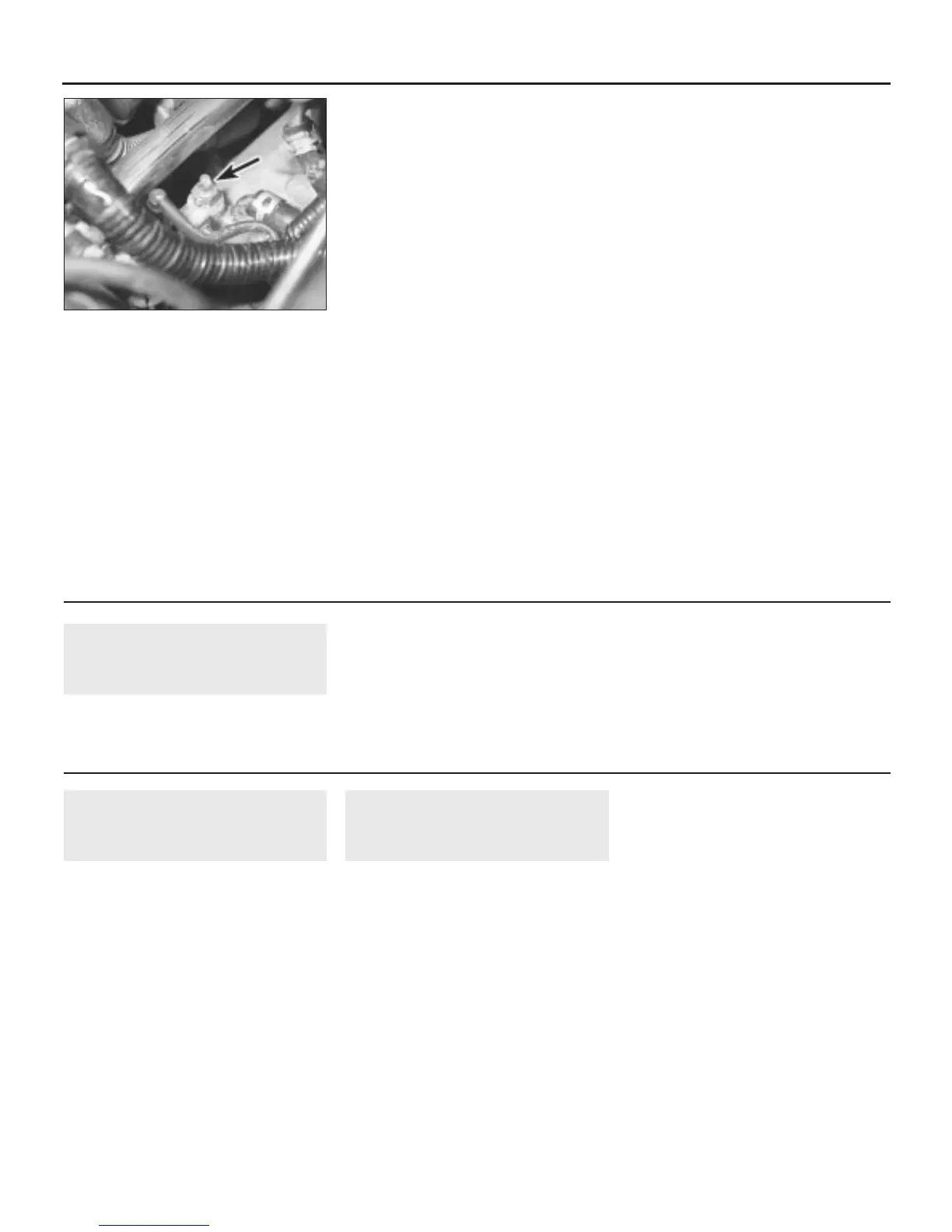
38.15b . . . and on V6 engines (arrowed)
1380 Rover 800 Series Remake
Every 48 000 miles
39 Timing belt renewal
4
1 As mentioned in Section 32, the
manufacturers have increased the service
interval for checking the timing belt condition
and tension on certain engines, and also the
renewal interval. On certain engines the
renewal interval is every 48 000 miles but,
according to the manufacturer’s, the timing
belt on 1990 model year onward V6 engines
should last for 96 000 miles. Prudent
owners may wish to reduce this interval
considerably.
2 Refer to Chapter 2, Part A, or Part B as
applicable for renewal procedures
40 Braking system hydraulic
fluid seal check and renewal
3
Refer to the relevant overhaul procedures in
Chapter 9, for the brake calipers and master
cylinder.
41 Emissions control
equipment check
5
1 Details of the emissions control system
components are given in Chapter 4 Part E,
and checking procedures for the positive
crankcase ventilation system is given in
Section 33 of this Chapter.
2 Checking and testing of the other emissions
control systems should be entrusted to a
Rover dealer.
Every 60 000 miles or 5 years, whichever occurs first


 To Next Page
 Loading...