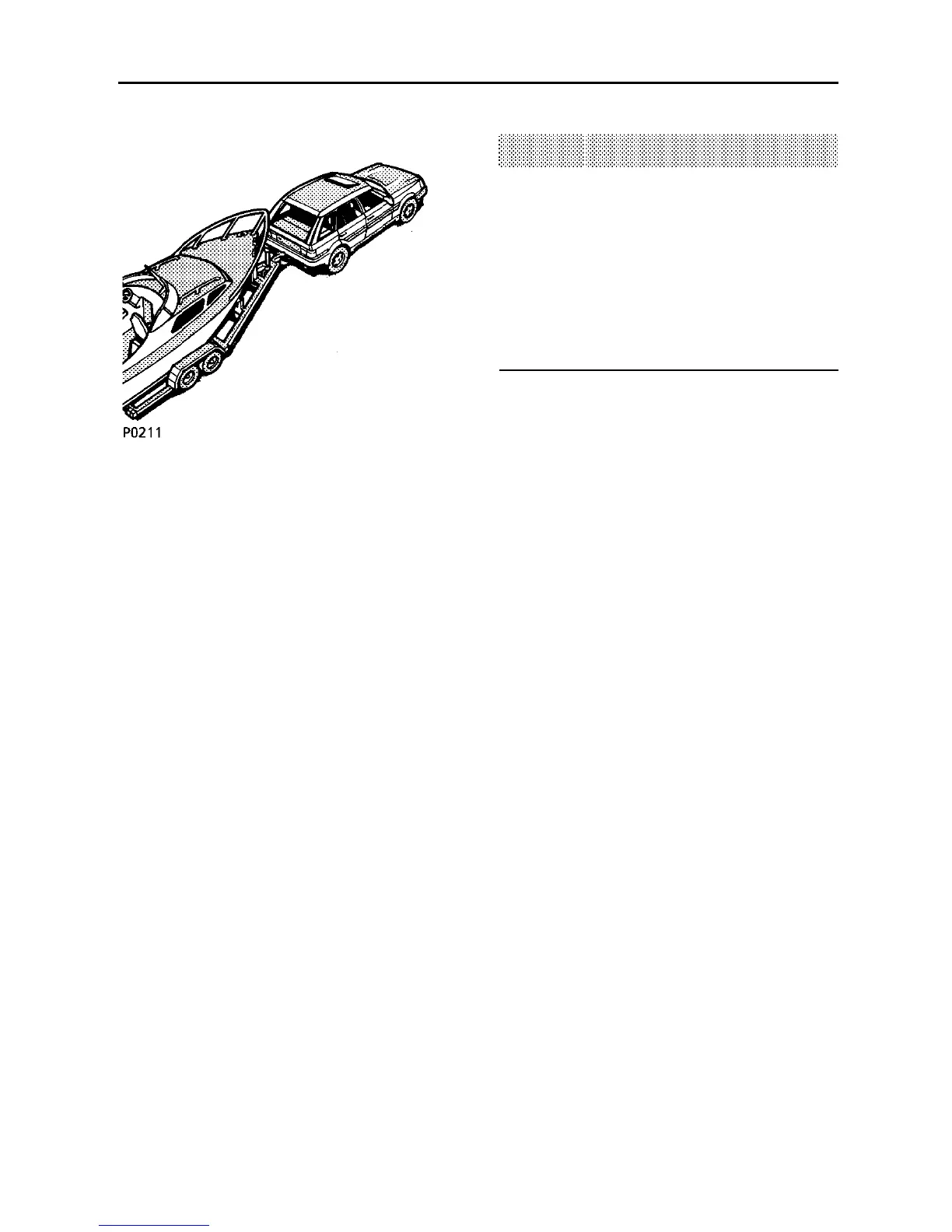
Towing & load carrying
116
TOWING WITH YOUR VEHICLE
The torque ranges of Land Rover engines
allow maximum-weight loads to be pulled
smoothly from standstill, and reduce gear
changing on hills or rough terrain. The
suspension is designed to cope with a heavy
trailer load without upsetting the balance or
feel of the vehicle.
Towing weights are listed in ’General data’.
Trailer hitch
Range Rovers are equipped with a trailer hitch
receiver as standard equipment. When
selecting a drawbar, do not exceed a drop in
height of
1
/
2
inch (12 mm) or a rise in height
of 4
3
/
4
inches (120 mm) from the centre of the
drawbar to the centre of the ball, nor exceed a
hitch length of 10
1
/
2
inches (266 mm).
An equalizing or other form of weight
distributing hitch should not be used with a
Range Rover.
WARNING
Ensure that the gross vehicle weight and
maximum rear axle weight are not
exceeded.
When preparing your vehicle for towing,
always pay careful attention to the trailer
manufacturer’s recommendations and the
following guidelines.
• Set the electronic air suspension to
’INHIBIT’, select STANDARD ride height
and maintain that setting whilst towing.
• Ensure that the vehicle and trailer tyre
pressures are as recommended by the
trailer manufacturer.
• Check the operation of trailer brakes and
lights.
• For maximum stability, ensure that loads
are properly positioned and secured to
eliminate shifting during transit. Trailer
loads should be positioned so that most of
the weight is placed as low as possible
and close to/over the trailer axle(s).
• After loading the trailer check that the
weight on the hitch point (this is called the
draw-bar loading weight, or tongue
weight), is in accordance with the
manufacturer’s recommendations.
• Trailers should never be towed when the
tongue/draw bar rises up on its own
when disconnected from the tow vehicle.


 To Next Page