Engine compartment
137
Spark plug removal
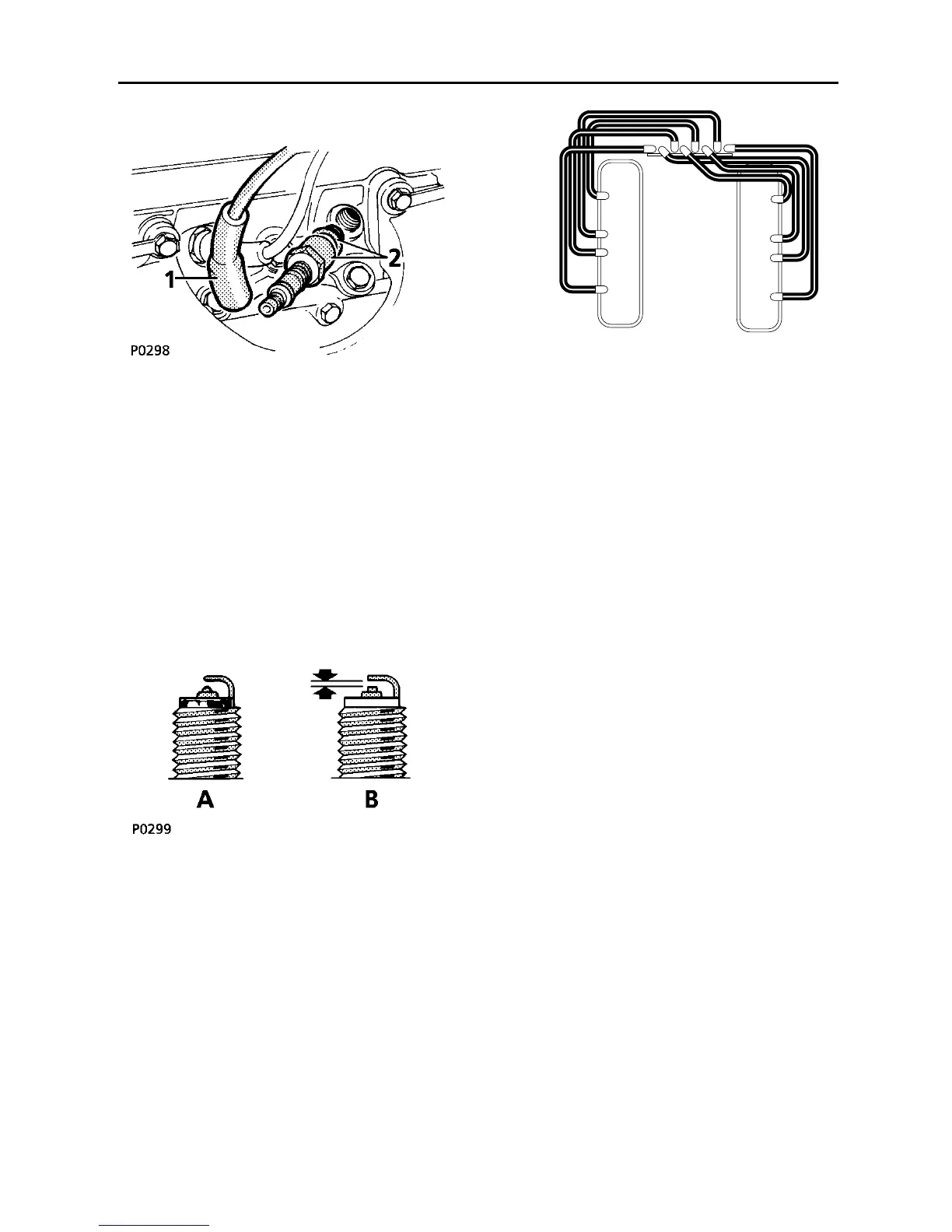
Remove the plug leads (1), ensuring that you
hold the rubber shroud and NOT the H.T.
leads (this prevents damage occuring to the
connectors during removal).
Ensure that the recesses around the plugs are
free from debris (to avoid foreign matter
accidentally entering the cylinder head), and
use a suitable spark plug wrench to remove
the plugs and washers (2).
Cleaning and adjusting
Check or replace the spark plugs as
applicable. If the plugs are in good condition
but require adjusting, use a wire-brush to
clean the threads and the electrode sparking
surfaces (A). Then adjust the electrode gap to
the recommended clearance (B) as shown in
’General data’.
8
6
4
2
1
3
5
7
P0417
Refitting the plugs
When refitting, take care not to cross-thread
the spark plugs otherwise costly damage to
the cylinder head will result.
Only fit spark plugs of a type recommended
by the vehicle manufacturer. These are
specified in ’General data’ and must be
tightened to a torque of 14 to 16 lbf.ft (19 to
21,7 Nm). Note that incorrect grades of plug
may lead to engine failure and serious
damage.
Refitting the high tension leads
To ensure the correct firing order (1, 8, 4, 3,
6, 5, 7, 2), the high tension leads must be
replaced in the correct relationship to each
other (as illustrated). Failure to maintain the
correct plug lead connections will result in a
misfire and possible damage to the catalytic
converter.
When pushing the leads on to the plugs,
ensure that the shrouds are firmly seated on
the plugs.



 To Next Page