Wheel changing
155
Changing a wheel
Before raising the vehicle, ensure that all the
precautions listed at the beginning of this
section have been observed.
Also, ensure that the wheel chocks are
correctly positioned (as described previously)
and that the air suspension system is ’locked’
at Standard or High ride height.
WARNING
To prevent any accidental change in the ride
height or automatic levelling of the
suspension, the air suspension system must
remain inhibited during the WHOLE wheel
changing process - to achieve this, ALWAYS
remove the key from the starter switch and
ensure that the tailgate remains open and
the hazard lights are operating throughout.
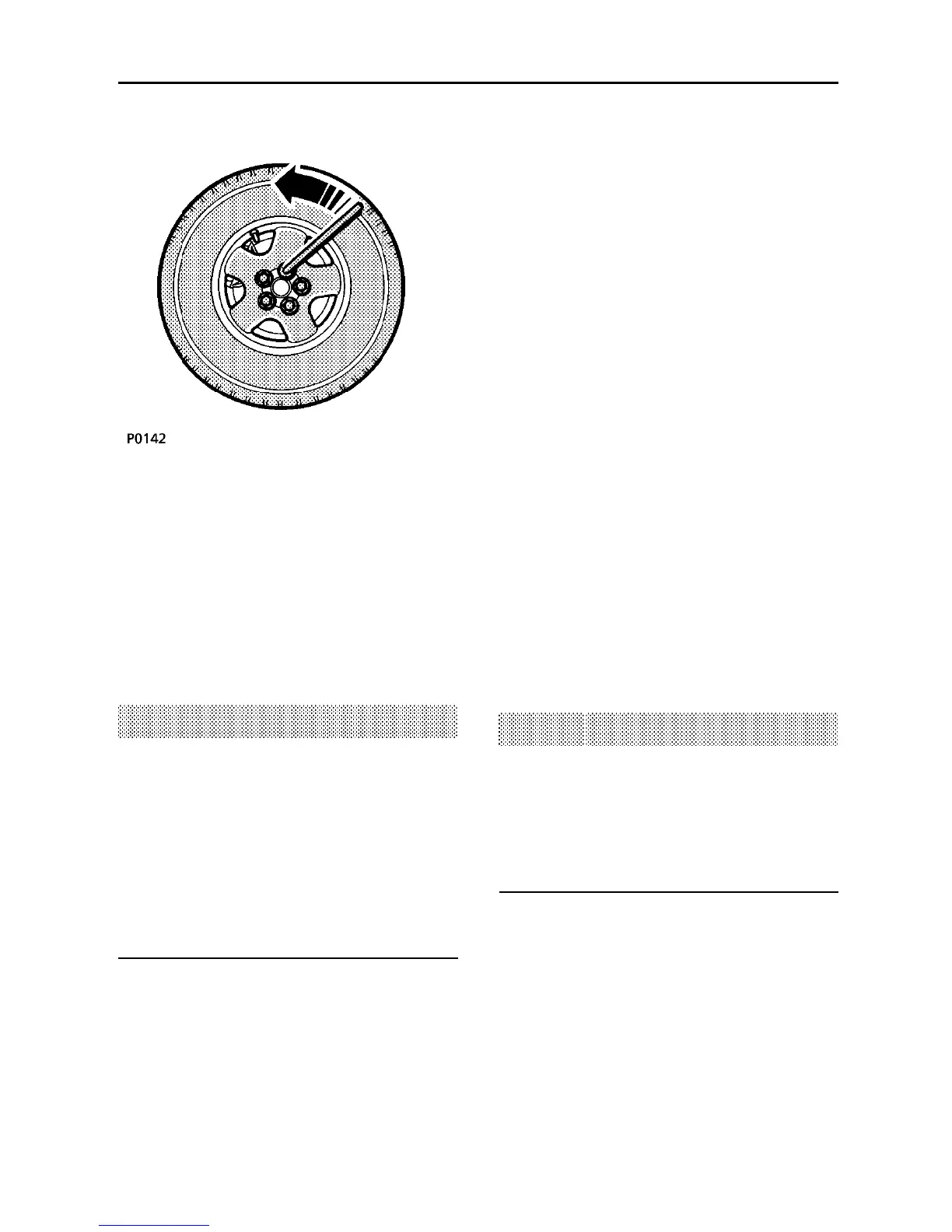
• Use the wheel brace to slacken the wheel
nuts half a turn anti-clockwise.
• Raise the vehicle until the tyre is clear of
the ground and remove the wheel nuts
and wheel (DO NOT damage the surface of
alloy wheels by placing them face down on
the road).
• Use an approved anti-seize compound to
treat the wheel-mounting spigot to
minimise the tendency for adhesion
between the wheel and the spigot. Ensure
that no oil or compound comes into
contact with the brake components. If, due
to an emergency situation, this treatment
is not practicable; refit the spare wheel for
the time being, but remove and treat the
wheel at the earliest opportunity.
• Fit the spare wheel and tighten the wheel
nuts, ensuring they are firmly seated. DO
NOT fully tighten whilst the tyre is clear of
the ground.
WARNING
When fitting a wheel, ensure that the mating
faces of the hub and wheel are clean and
free from rust - an accumulation of dirt or
rust could cause the wheel nuts to become
loose and result in an accident.



 To Next Page