Wheel changing
156
• Lower the vehicle and remove the jack and
wheel chocks.
• Tighten the wheel nuts in an alternating
pattern (every other nut) until all are fully
tightened. DO NOT OVERTIGHTEN by
using foot pressure or extension bars on
the wheel brace. At the earliest opportunity
check the wheel nut torque (see ’General
data’ section).
• REMEMBER to change to ’H’ (high range)
before driving.
• Finally, check the tyre pressure (see
’General data’ section).
Care of the jack
Examine the jack occasionally; clean and
grease the moving parts, particularly the ram,
to prevent corrosion.
To avoid contamination, the jack should
always be stowed in its fully closed position.
Wheel centre cap
After fitting the spare wheel, it will be
necessary to remove the centre cap from the
replaced road wheel, in order to stow the
wheel in the spare wheel compartment.
Using a suitable blunt instrument (the handle
of a large screwdriver, for example) apply light
pressure to the rear of the cap. Use hand
pressure only to replace the cap.
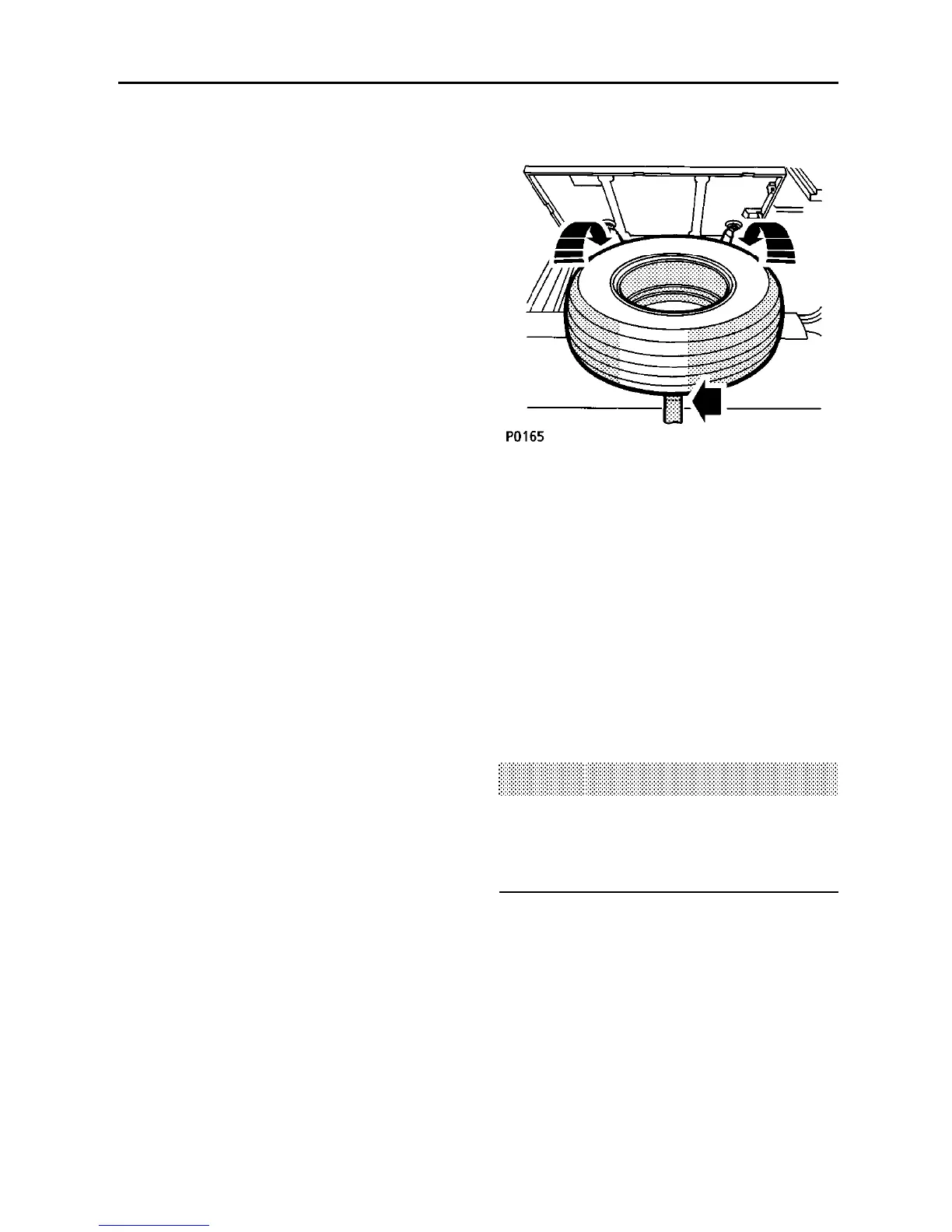
Replacing the spare wheel
Preferably clean and dry the wheel before
stowing it in the vehicle.
Lay the webbing flat across the lower tailgate
and place the wheel face down with the rear
edge of the tyre in line with the mark on the
webbing.
Grasp the webbing loop, raise the wheel from
the tailgate, and lower into position, then fit
and tighten the wheel securing nut.
WARNING
After wheel changing always secure tools,
chocks, jack and spare wheel in their correct
storage positions.



 To Next Page