Off-road driving
204
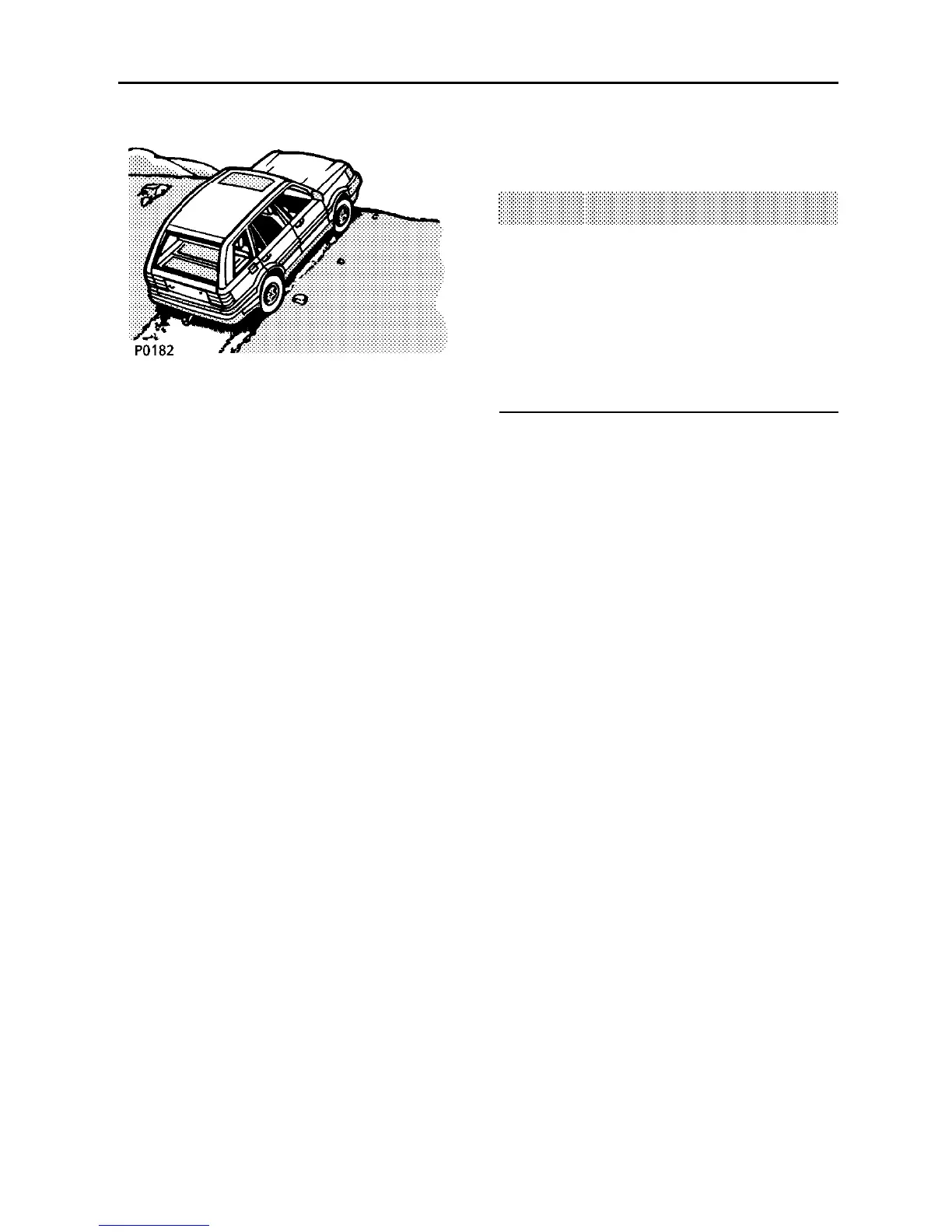
CROSSING A RIDGE
Approach at right angles so that both front
wheels cross the ridge together; an angled
approach could cause traction to be lost
through diagonally opposite wheels lifting
from the ground at the same time.
CROSSING A DITCH
Cross ditches at an angle so that three wheels
always maintain contact with the ground (if
approached head on, both front wheels will
drop into the ditch together, possibly resulting
in the chassis and front bumper being trapped
on opposite sides of the ditch).
WADING
WARNING
The maximum advisable wading depth is 20
in. (0,5 metre).
Severe electrical damage may occur if the
vehicle remains stationary for any length of
time when the water level is above the door
sills.
Before wading, ensure the electronic air
suspension is set in either ’Standard’ or ’High’
ride height.
If the water is likely to exceed 20 in. (0.5
metre) while the vehicle is moving, the
following precautions MUST be observed:
• Fix a plastic sheet in front of the radiator
grille to prevent water from soaking the
engine and mud from blocking the
radiator.
• Ensure that the silt bed below the water is
free of obstacles, and firm enough to
support the vehicle’s weight and provide
sufficient traction.
• Select ’High’ ride height.
• Ensure that the engine air intake is above
the water level.
• Select a low gear and maintain sufficient
throttle to prevent the engine from stalling.
This is particularly important if the exhaust
pipe is under water.
• Drive slowly into the water and accelerate
to a speed which causes a bow wave to
form; then maintain that speed.
At all times, keep all the doors fully closed.


 To Next Page