
 Need help?
Do you have a question about the Russell Hobbs Kettle and is the answer not in the manual?
Essential safety rules for operating the kettle, including handling hot surfaces and liquids.
Information on using the touch-sensitive controls and the kettle's power-saving sleep mode.
Instructions for preparing the kettle before its first use to remove manufacturing residue.
Proper placement of the stand and kettle, and filling instructions to avoid hazards.
Steps for switching on, selecting desired temperatures, and understanding the heating element.
How to manually switch off the kettle and general advice for pouring and handling.
Recommended water temperatures and brewing times for various teas and coffees.
Consequences of operating the kettle with too little water and reset procedures.
Guidelines for cleaning the kettle, its parts, and ensuring proper upkeep.
Step-by-step guide on how to remove and clean the kettle's water filter.
Instructions for correctly inserting the water filter back into the kettle.
Importance, frequency, and methods for descaling the kettle to maintain performance.
Details on proper earthing, plug replacement, and electrical safety precautions.
Explanation of the wheelie bin symbol and its meaning for product disposal.
Information on obtaining service, warranty, and contacting customer support.
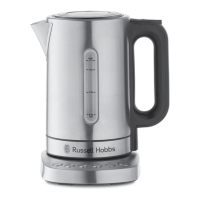
This document provides instructions for the Russell Hobbs kettle, a household appliance designed for heating water.
The Russell Hobbs kettle is primarily used for boiling water, but it also features variable temperature settings, allowing users to heat water to specific temperatures suitable for different types of tea and coffee. The kettle operates by heating water via an internal element, and its design includes a stand that connects to a power source.
Positioning: To set up the kettle, place the stand on a stable, level surface. Ensure the power cable is routed so it doesn't overhang, preventing it from being caught or tripped over. Any excess cable can be wound beneath the stand for tidiness and safety.
Filling: Before filling, remove the kettle from its stand. Press the lid release button to open the lid. Fill the kettle with at least two cups of water, but do not exceed the maximum fill level, as overfilling can cause boiling water to spit out. Once filled, close the lid and press down to lock it securely. It's crucial to ensure the lid is fully closed, otherwise, the kettle may not switch off automatically when the water boils. Be cautious of steam escaping from the lid during operation.
Switching On: Plug the stand into a wall socket. Place the kettle onto the stand, taking care not to spill any water. The control buttons will flash twice, then glow steadily, indicating the kettle is ready for use.
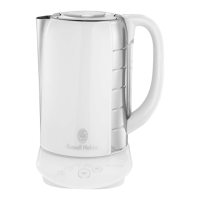
Variable Temperature: The kettle offers a range of preset temperatures to cater to various beverages. To select a desired temperature, simply touch the corresponding button. Available temperatures include 100°C (boil), 95°C (for coffee), 90°C, 80°C, 70°C, and 60°C. Once a temperature is selected, the button will flash, and the kettle will begin heating the water.
Pulsing Element: During the heating process, especially when aiming for a specific temperature, the element may pulse on and off. This is a normal function as the kettle works to accurately control the water temperature. Once the set temperature is reached, the selected button will stop flashing and glow steadily. After five minutes of inactivity, the light will go out, and the kettle will enter sleep mode to conserve electricity.
Changing Temperature: If you need to change the temperature after selection, simply touch the correct button for the new desired temperature. The button will flash while the water heats or cools to the new setting. Once the new temperature is reached, the button will stop flashing and glow steadily. Note that reducing the temperature can take a significant amount of time; for quicker results, it may be preferable to discard the hot water and refill with cold water.
Switching Off: To manually switch off the kettle, touch the glowing button again. The lights will go out, and the kettle will enter sleep mode. To further save electricity, unplug the stand from the wall socket when not in use.
General Usage Tips: Always remove the kettle from its stand before pouring. Pour slowly and avoid over-tilting the kettle to prevent splashing. Do not tilt the kettle backward, as water could get onto the control area. If this happens, allow the kettle to dry for at least 12 hours in a warm place before using it again.
Using with Insufficient Water: Operating the kettle with insufficient water (less than two cups) will shorten the life of the heating element. The kettle is equipped with a boil-dry cut-out feature that will switch it off if it runs dry. If this occurs, remove the kettle from its stand and place it on a work surface to cool down completely before refilling. Do not refill the kettle until it is cold, as it may spit boiling water.
Optimum Temperatures for Teas and Coffees: The manual provides a table with recommended water temperatures and brewing times for various teas and coffees:
Care and Maintenance: Before cleaning or storing the kettle, unplug the stand and allow the kettle to cool down completely. Clean the exterior surfaces with a damp cloth. Ensure all connectors and sockets remain dry. Never immerse the kettle or stand in any liquid. Avoid using harsh or abrasive cleaning agents or solvents, as these can damage the appliance.
Water Filter: The kettle includes a water filter designed to prevent scale particles from entering your drink. Scale can make water appear cloudy or greasy. Regularly check the filter for deposits. If deposits are visible, clean the filter to maintain optimal kettle performance and prevent scale from affecting your drinks.
Cleaning the Filter: Before cleaning, ensure your hands are free from soap or anything that might leave a taint. Unplug the kettle and let it cool down. Open the lid. Use the tab on the filter to pull it out of its guides, then lift it out of the kettle. Rinse the filter under running tap water while brushing it with a soft brush. After cleaning the filter, rinse the kettle itself to remove any scale particles that may have fallen inside.
Replacing the Filter: Once clean, slide the filter back down into its guides and close the lid securely.
Descaling Regularly: Limescale, which can appear white, colored, or even rusty-looking, can build up on the kettle's walls and floor. This can cause the kettle to overheat, reduce the lifespan of the heating element, and may cause the safety cut-out to operate prematurely, switching the kettle off before the water boils. Descale the kettle regularly, at least monthly, to keep it in good working order. Use a descaler specifically suitable for plastic products. Follow the descaler's instructions carefully. After descaling, rinse the kettle several times, then fill, boil, and discard the water to ensure no residues are left. Products returned under guarantee with faults caused by scale will incur a repair charge.
 General
| Material | Stainless Steel |
|---|---|
| Water Level Indicator | Yes |
| 360-Degree Base | Yes |
| Concealed Heating Element | Yes |
| Boil-Dry Protection | Yes |
| Removable Filter | Yes |
| Capacity | 1.7 Litres |
| Power | 3000W |
| Voltage | 220-240V |


 To Next Page