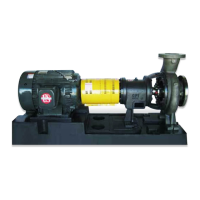
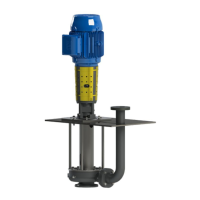
This document is an instruction manual for the MSC4 and MSC5 MSC4-19A Series of Gusher Pumps, specifically focusing on vertical multi-stage centrifugal pumps.
Function Description
Gusher Pumps are designed for optimal performance and long, trouble-free service in various industrial applications. These pumps are multi-stage centrifugal pumps, meaning they utilize multiple impellers to progressively increase the pressure of the fluid. The MSC4 and MSC5 models are end suction centrifugal multi-stage pumps, available in configurations from 3 through 10 stages and 1 ½ through 25 horsepower. They are designed to handle a range of fluids and are suitable for applications requiring high pressure or specific flow rates.
Important Technical Specifications
The MSC4 and MSC5 series pumps feature a robust construction with a rugged Grade 30 Cast Iron body and a balanced mechanical seal. They are built with a mounting flange for secure installation. The pumps are designed for above-mounting stage discharge. Bearings are greased for life, ensuring durability and reduced maintenance. Standard motors are 3-phase, 230/460 Volt, 3450 RPM, and TEFC (Totally Enclosed Fan Cooled). The discharge connections are 1 ½” NPT and 1 ¼” NPT.
The MSC4-19A model is a specific configuration within the MSC4 series, featuring a multi-stage design with components such as a motor, pump body, strainer, impellers, impeller housing, bearings, shaft, and mechanical seal. The MSC4 standard models also include similar components, with variations in the number of stages and overall design to accommodate different performance requirements. The MSC5 standard models are designed for 6 stages and above, with extended shafts and specific bushing/sleeve and O-ring configurations for enhanced performance and sealing.
Usage Features
The pumps offer dual discharges, providing flexibility in system design. They are available for both low volume and high pressure applications, as well as high volume and low pressure, catering to diverse operational needs. Both driven by one common motor, simplifying power requirements. The design allows for vertical multi-stage versatility, making them adaptable to various installation scenarios. Options include up to 36” of immersion with intermediate bushing, and standard models are available with Column Tank, with Flanged or Threaded intake for exterior tank mounting. Custom drawings are available upon request.
Maintenance Features
Regular maintenance is crucial for the longevity and optimal performance of Gusher Pumps. The manual outlines key maintenance practices, including:
- Operation & Maintenance: Before starting the pump, ensure the reservoir is filled to the minimum level, and the bottom pump impeller housing is submerged. Regularly check and maintain the minimum liquid level in the reservoir. Periodically check piping for leaks, and record pump discharge pressure, line voltage, and amperage. Bearings should be checked with a pyrometer, and temperatures should not exceed 225°F.
- Bearing Lubrication: Gusher pumps are designed with greased-for-life bearings, but regular inspection is recommended. For pumps that have been tested and greased at the plant, further lubrication is not necessary for approximately six to eight months. However, if the ball bearings show signs of run out or excessive grease bleed, more frequent lubrication may be required.
- Preventive Treatment: Bearings and machined surfaces should receive a preservative treatment of light oil.
- Packing and Stuffing Box: Remove packing on pumps with packed stuffing box, and ensure the stuffing box and shaft sleeve are well-lubricated to protect against moisture.
- Mechanical Seals: Units equipped with mechanical seals must have all oil lubricated with an oil can through the NPT port while rotating the shaft by hand.
- Discharge Ports: Pump suction and discharge ports must be covered to prevent foreign material from entering the pump and causing damage.
- Storage: Pumps must be stored in a dry location.
- Shaft Rotation: Rotate pump shaft several times every other month to prevent seizing.
Safety Precautions
The manual emphasizes several safety tips to prevent personal injury and equipment damage:
- Safety Apparel: Always wear insulated work gloves when handling hot bearings or using a bearing heater. Heavy work gloves are required when handling parts with sharp edges, especially impellers. Safety glasses (with side shields) are essential to protect eyes in machine shop areas. Steel-toed shoes protect feet when handling heavy tools and parts. Any other equipment needed to protect against hazardous/toxic fluids should be used.
- Coupling Guards: Never operate a pump without coupling guards properly installed.
- Flanged Connections: Never force piping to make connection with a pump. Use only fasteners of proper size and material. Ensure there are no missing fasteners. Be aware of corroded or loose fasteners.
- Operation: Do not operate below minimum rated flow or with suction/discharge valves closed. Do not open vent or drain valves, or remove plugs while the system is pressurized.
- Maintenance Safety: Always lockout power before performing maintenance. Ensure the pump is isolated from the system and pressure is relieved before disassembling the pump, removing plugs, or disconnecting piping. Use proper lifting and supporting equipment to prevent serious injury. Observe proper decontamination procedures. Know and follow company safety regulations. Never apply heat to remove an impeller.
- General Precautions: Never operate pump below recommended minimum flow or when dry. Always lockout power to the motor before performing pump maintenance. Never operate pump without safety devices installed. Never operate pump with discharge valve closed. Never operate pump with suction valve closed. Do not change conditions of service without approval of an authorized Gusher representative. Never apply heat to remove an impeller. Never use heat to disassemble the pump, as explosion could occur due to trapped liquid. Never operate pump without coupling guard correctly installed. Never operate pump beyond the rated conditions to which the pump was sold. Never start pump without proper prime (sufficient liquid in pump casing).
Troubleshooting
The manual provides a comprehensive troubleshooting guide for common issues:
- No liquid delivered: Possible causes include pump not primed, speed too low, discharge head too high, suction line or suction strainer clogged, impeller completely clogged, wrong direction of rotation, or too much clearance between impeller and intake flange.
- Not enough water delivered: Possible causes include air leaks in suction or stuffing boxes, speed too low, discharge head higher than anticipated, too much clearance between impeller and intake flange, impeller partially clogged, not enough suction head for hot water, or mechanical defects (worn or damaged impeller, too small impeller diameter, too small foot valve, or foot valve or suction opening not submerged deep enough).
- Vibration: Possible causes include bent shaft, pipe strain, impeller clogged, or coupling alignment off.
- Not enough pressure: Possible causes include speed too low, air in water, or mechanical defects (worn or damaged wear ring, too small impeller diameter).
- Pump works for a while then loses suction: Possible causes include leaky suction line, water seal plugged, impeller clogged, or air or gasses in liquid.
- Pump takes too much power: Possible causes include speed too high, head lower than rating, pumps too much water, specific gravity or viscosity too high, or mechanical defects (bent shaft, power frame in bind, worn wear ring, too large impeller diameter, or pump delivering too many gallons).
Disassembly and Reassembly
The manual outlines detailed procedures for disassembly and reassembly:
- Disassembly: Turn the pump over to where the intake flange is up. Remove the intake flange retaining bolts and the intake flange. Remove the impeller retaining nut and the impeller. Remove the impeller housing. Continue removing the impellers and impeller housings, remembering to mark impeller housings for position and the order they are in. When getting to the last impeller, extreme care should be taken in removing it, as the mechanical seal is directly behind this impeller.
- Reassembly: Check the seal. If it is worn, replace it. When pressing the seat of the seal on the impeller, use something that is non-metallic so that it won't damage the seal. Lubricate the impeller before pressing the seal onto the impeller hub. When installing the impellers and impeller housings, they must go back onto the shaft exactly the same way they were removed. Once the pump is reassembled, put the external fan back onto the shaft, rotate the pump shaft by hand to make sure that the pump turns freely and is not in a bind.
This comprehensive manual ensures safe and efficient operation, maintenance, and troubleshooting of Gusher MSC4 and MSC5 series pumps.

 Need help?
 General

 To Next Page