13
OPERATION
OPERATING THE SANDER
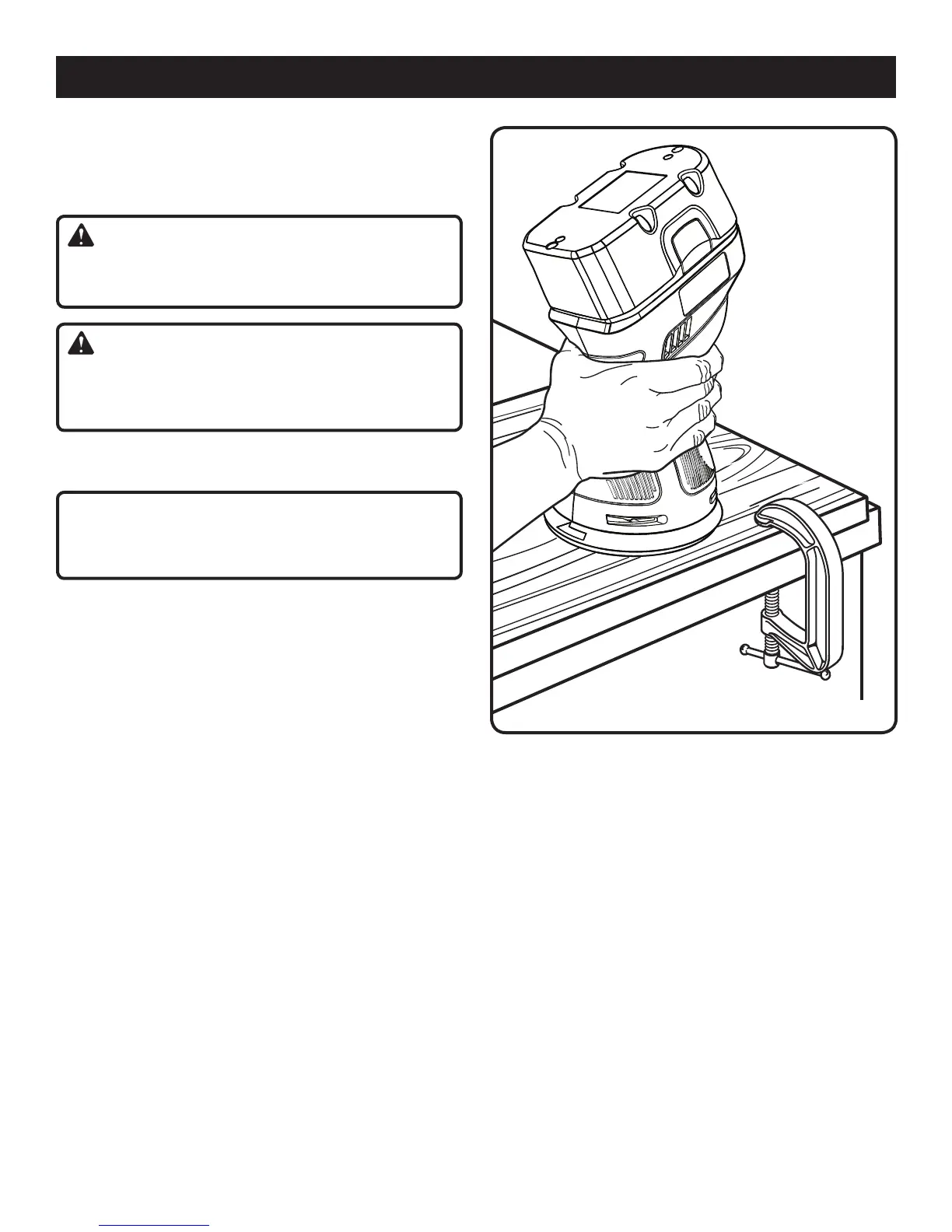
See Figure 6.
Secure the workpiece to prevent it from moving during
operation.
WARNING:
Unsecured workpieces could be thrown towards the
operator causing injury.
WARNING:
Keep your head away from the sander and the sanding
area. Your hair could be drawn into the sander, causing
serious injury.
Place the sander on the workpiece so that all of the
sanding disc surface is in contact with the workpiece.
CAUTION:
To avoid motor damage resulting from overheating, do
not cover the air vents with your hand.
Turn on the sander and move it slowly over the workpiece.
Make successive passes in parallel lines, circles, or
crosswise movements.
Turn off the sander and wait until the sanding disc
comes to a complete stop before removing it from the
workpiece.
Do not force. The weight of the sander supplies adequate
pressure to do the work. Applying additional pressure only
slows the motor, rapidly wears the sanding sheet, and greatly
reduces sander speed. Excessive pressure will overload the
motor causing possible damage from overheating and can
result in inferior work. Any finish or resin on wood may soften
from the frictional heat. Do not sand on one spot too long
as the sander’s rapid action may remove too much material,
making the surface uneven.
Extended periods of sanding may overheat the motor. If this
occurs, turn the sander off and wait until the sanding sheet
comes to a complete stop. Remove sander from workpiece.
Remove sanding disc, then turn sander on and run it free
without a load to cool the motor.
Fig. 6



 To Next Page