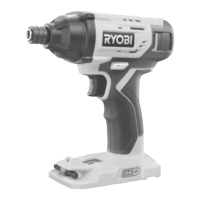
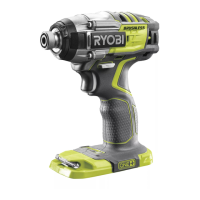
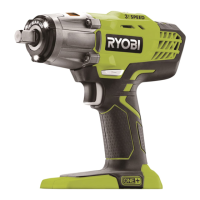
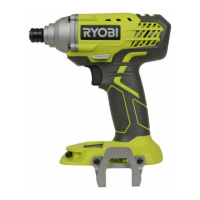
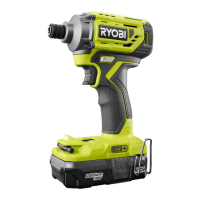
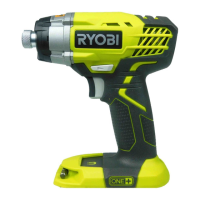
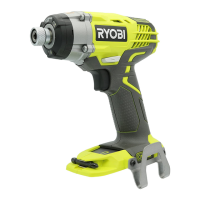
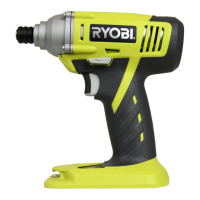
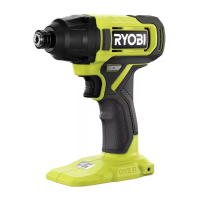
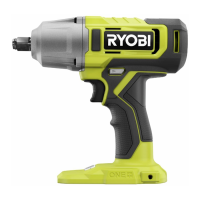
The device described in this manual is an 18V Impact Driver, model R18ID1, manufactured by RYOBI. It is a cordless power tool designed for driving and removing screws and bolts, as well as for fastening applications.
Function Description:
The 18V Impact Driver is a versatile tool intended for general power tool use, specifically for fastening and removing screws and bolts. Its impact mechanism allows it to deliver high torque, making it effective for driving fasteners into various materials. Being a cordless tool, it offers portability and freedom of movement, powered by an 18V Lithium-ion battery pack from the RYOBI ONE+ system. The tool features an auto-load chuck for easy bit changes and a variable speed trigger for precise control over the driving speed. A direction of rotation selector allows for both forward and reverse operation, while an LED light illuminates the work area.
Important Technical Specifications:
- Model: R18ID1
- Voltage: 18 V
- Coupler: 6.35 mm (1/4")
- Switch: Variable speed
- Impacts per minute: 0 - 3200 IPM
- No Load Speed: 0 - 2600 min⁻¹
- Torque: 180 Nm
- Weight (excluding battery pack): 1.2 kg
- Compatible Battery Packs (not included): RB18L13, RB18L15, RB18L20, RB18L25, RB18L40, RB18L50
- Compatible Chargers (not included): RC18120, RC18150, RC18627U, RC18120, RC18113 (and others like BCL14181H, BCL14183H, BCL14181HV, RC18120, RC18627U, RC18120, RC18113) – note that some chargers are for 12V DC outlets.
Usage Features:
The impact driver is designed for ease of use and safety.
- Bit Installation/Removal: The auto-load chuck simplifies the process of inserting and removing bits. Users simply push the bit into the chuck until it locks, and pull back the collar to release it. It's crucial to ensure the bit is properly seated to prevent it from flying out during operation.
- Battery Installation/Removal: The 18V Lithium-ion battery pack slides into the battery port at the base of the tool. To remove, a latch is pressed, and the battery slides out. Always ensure the battery is fully charged before use.
- Direction of Rotation: A selector switch allows users to choose between forward (for driving fasteners) and reverse (for removing fasteners). This selector also acts as a lock-off mechanism when in the center position, preventing accidental startup.
- Variable Speed Trigger: The tool's speed is controlled by the pressure applied to the trigger. This allows for precise control, especially when starting to drive a screw or working with delicate materials.
- Work Area Safety: Users are advised to keep the work area clean and well lit, avoid operating in explosive atmospheres, and prevent children and bystanders from accessing the tool. Always wear appropriate personal protective equipment (PPE), including eye protection, hearing protection, and non-skid safety shoes.
- Electrical Safety: The tool must be plugged into a matching outlet (via its charger). Avoid using damaged cords or operating in wet conditions. Ensure the power tool plug matches the outlet.
- Tool Handling: Maintain a firm grip on the tool, especially the insulated gripping surfaces. Avoid overreaching and maintain proper footing and balance. Keep hands and fingers away from moving parts.
- Fastening: The manual illustrates how to drive screws into various materials. It's important to select the correct bit for the application and ensure the fastener is properly aligned.
- Risk Reduction: The manual emphasizes the importance of reading all warnings and instructions to prevent electric shock, fire, and/or serious injury. It also highlights the need to be aware of vibration-related risks, such as Raynaud's Syndrome, and advises taking frequent work breaks and wearing gloves to keep hands warm.
Maintenance Features:
Proper maintenance is essential for ensuring the product's longevity and safe operation.
- General Maintenance: The product should never be connected to a power supply when assembling parts, making adjustments, cleaning, performing maintenance, or when the product is not in use. Disconnecting the product will prevent accidental starting that could cause serious injury.
- Cleaning: Regularly clean the tool to remove dust and debris. Avoid using solvents when cleaning plastic parts, as they can damage the plastic. Use a clean cloth to remove dirt and carbon dust. Do not use brake fluids, gasoline, petroleum-based products, penetrating oils, etc., as they can damage, weaken, or destroy plastic.
- Lubrication: All bearings are lubricated with a sufficient amount of high-grade lubricant for the life span of the product under normal operating conditions. Therefore, no further lubrication is required.
- Parts Replacement: When servicing, use only identical replacement parts. Use of any other parts may create a hazard or cause product damage.
- Storage: Store idle power tools out of the reach of children and do not allow persons unfamiliar with the power tool or these instructions to operate the power tool.
- Environmental Protection: Recycle raw materials instead of disposing of as waste. The machine, accessories, and packaging should be sorted for environment-friendly recycling. Waste electrical products should not be disposed of with household waste. Please recycle where facilities exist. Check with your local authority or retailer for recycling advice.
- Inspection: Regularly inspect the tool for damage, misalignment of moving parts, breakage of parts, and any other condition that may affect the power tool's operation. If damaged, have the power tool repaired before use. Maintain cutting tools with sharp cutting edges to prevent binding and ensure easier control.

 Need help?
 General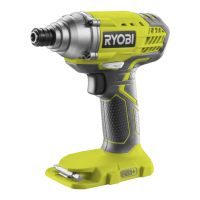

 To Next Page