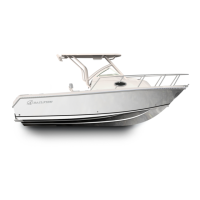
SAILFISH 272 CC | GEL COAT
Discolored areas are very shallow in
depth, literally right on the surface. The
discoloration may be removed by gently
wet-sanding the affected areas only
by using 600 grit, wet or dry specially
treated waterproof sandpaper. It’s im-
portant to always sand in one direction,
this includes the curves too. Use plenty
of water to cool and clean the sandpaper
and cut back on dust. After you are
finished sanding, dry the areas and verify
all the discoloration has been removed. If
not, repeat the process.
After all the discoloration has been
removed, the area will need to be buffed.
Using an electrical or pneumatic buffer,
buff at low speed (1750 rpm – 2250 rpm),
this will restore the luster to the sanded
surface. Using a generous amount of
rubbing compound, apply it in a circular
motion with a soft wool pad. When
buffing has been completed, wash off the
rubbing compound with clean water, and
dry the surface.
To restore the gloss to the affected area,
use a high-grade marine or automotive
wax.
Repairs
During the life of your boat, some
damage to the gel coat surface is un-
avoidable. We recommend repairs done
by trained, experienced professionals at
your local marine dealer.
Scratches
If the scratch is in the gel coat surface,
not penetrating the fiberglass, use an
automotive polishing compound and rub
it out. Apply the compound by hand using
a damp rag or by using a power buffer.
The scratch may not entirely disappear,
but it should be noticeably better.
Gouges and Chips
Our recommended patching procedure is
to first clean the area needing repair with
an acetone solvent to remove all traces
of wax and oil. Next, thoroughly mix one
tablespoon of “Patch Paste” with two or
three drops of catalyst on a scrap piece
of cardboard.
Apply the mixture to the pit, chip or
gouge with a single-edge razor blade,
matching the surface and contour of
the area being repaired. Apply slightly
more mixture to avoid having to fill the
damaged section a second time. Allow
the patch to harden thoroughly for a
minimum of two to three hours.
Using a fine grit “wet or dry” sandpaper
on a sanding block, wet-sand the patch
until it is level with the surrounding
surface. Finish with a marine or automo-
tive rubbing compound using the same
approach as used for the scratches.
Refinishing
For a severely scratched or weathered
fiberglass boat that is no longer restor-
able by using the previous methods,
it may then be necessary to refinish it
with two-package or two-part aliphatic
urethane enamel. This can be done
very effectively, but it is recommended
refinishing should only be done by
experienced professionals.
56


 To Next Page